Currently Empty: R0.00

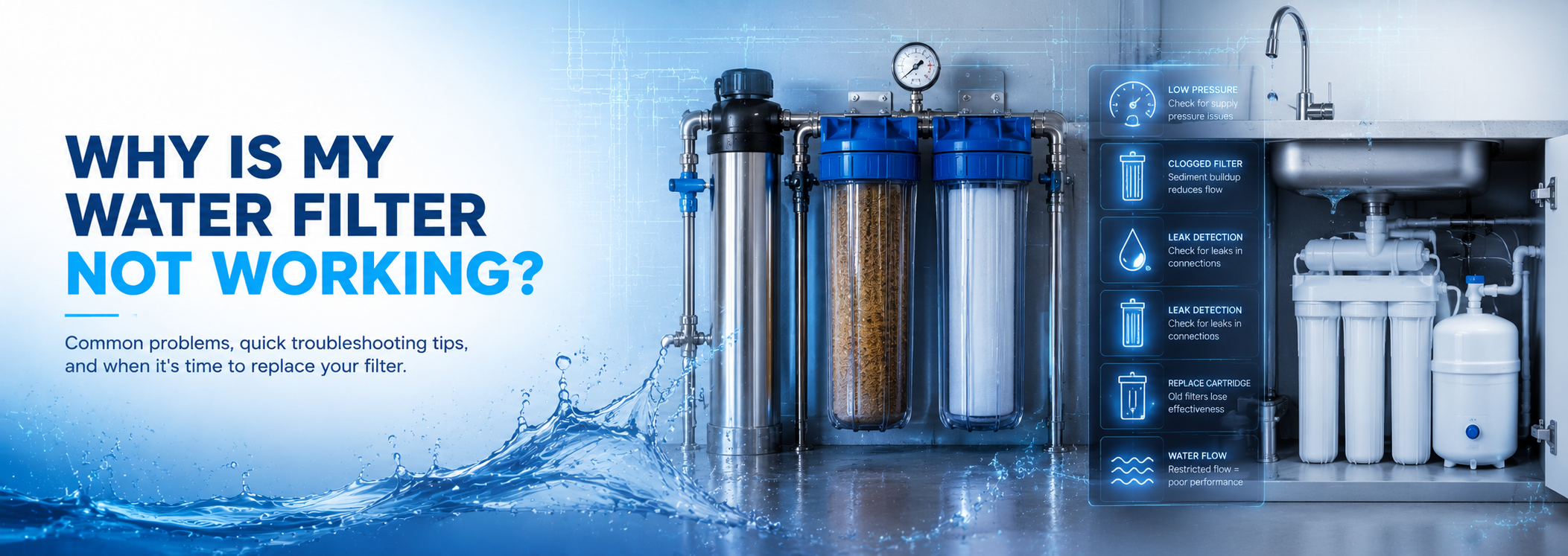
Water Filter Not Working? Common Causes and Solutions
A water filter not working properly can quickly affect the quality, taste and flow of your water. Whether you have a whole-house filtration system, reverse osmosis unit, under-sink filter or commercial water treatment system, identifying the cause early can prevent expensive repairs and poor water quality.
Fortunately, most filtration problems are easy to diagnose. In this guide, we’ll explain the most common reasons a water filter is not working properly and what you can do to fix it.
Signs Your Water Filter Is Not Working
Several warning signs indicate that your filtration system may need attention.
Common symptoms include:
- Reduced water pressure
- Bad taste or odour
- Cloudy water
- Slow water flow
- Water leaks
- Unusual noises
- Frequent filter blockages
- Poor water quality
If you notice one or more of these problems, inspect your filtration system as soon as possible.
Common Reasons a Water Filter Is Not Working
1. The Filter Cartridge Needs Replacing
The most common reason for a water filter not working is a clogged filter cartridge.
As the filter captures dirt, rust, and other contaminants, it gradually becomes blocked. Eventually, water flow decreases, and filtration performance suffers.
Replace cartridges according to the manufacturer’s recommended schedule.
2. Incorrect Filter Installation
Improper installation may prevent the filter from sealing correctly.
Check that:
- The cartridge is seated correctly.
- O-rings are properly fitted.
- The housing is tightened securely.
- Water flows in the correct direction.
3. Low Water Pressure
Filtration systems require adequate incoming pressure to operate efficiently.
Low pressure may result from the following:
- Municipal supply problems
- Blocked pipes
- Faulty pumps
- Dirty pre-filters
Addressing the underlying cause usually restores performance.
4. Poor Water Quality
Water containing excessive sediment, iron, or organic matter can overload a filtration system.
A professional water analysis helps determine whether additional pre-treatment is required.
5. Incorrect Filter Selection
Not every filter removes every contaminant.
For example:
- Sediment filters remove sand and rust.
- Carbon filters reduce chlorine and odours.
- Reverse osmosis removes many dissolved contaminants.
- UV systems disinfect microorganisms.
Choosing the correct filter is essential.
How to Troubleshoot Your Water Filter
Before calling a technician, perform a few simple checks.
Inspect the Filter Cartridge
Remove the cartridge and check for heavy discolouration or visible sediment build-up.
Check for leaks.
Inspect the housing, fittings, and pipe connections.
Small leaks may indicate damaged seals or loose fittings.
Test Water Pressure
Measure the pressure before and after the filter.
A significant pressure drop often indicates a blocked cartridge.
Review the maintenance schedule.
If you cannot remember the last filter replacement, it is probably time to install a new cartridge.
Preventing Future Problems
Regular maintenance helps keep your filtration system operating efficiently.
Recommended maintenance includes:
- Replacing cartridges on schedule
- Cleaning filter housings
- Inspecting O-rings
- Monitoring water pressure
- Testing water quality annually
- Servicing commercial systems regularly
Preventative maintenance is usually less expensive than emergency repairs.
When Should You Replace Your Water Filter?
Replacement intervals vary depending on:
- Water quality
- Daily water usage
- Filter type
- System size
A professional inspection can help determine the correct maintenance schedule.
Frequently Asked Questions
Why is my water filter producing slow water flow?
A clogged cartridge is the most common cause, although low supply pressure or blocked plumbing can also contribute.
Why does my filtered water still taste bad?
The filter may have reached the end of its service life, or it may not be designed to remove the contaminants affecting taste.
Can I clean a filter cartridge instead of replacing it?
Some reusable filters can be cleaned, but most disposable cartridges should be replaced according to the manufacturer’s recommendations.
How often should I service my filtration system?
Residential systems typically require routine inspections every 6 to 12 months, while commercial systems may need more frequent servicing depending on water usage.
Conclusion
A water filter not working properly does not always mean the entire system needs replacing. In many cases, replacing a cartridge, correcting an installation issue or performing routine maintenance restores normal operation.
Puritech supplies replacement filter cartridges, complete filtration systems and expert advice to help homeowners and businesses maintain clean, reliable water throughout the year.