Currently Empty: R0.00

Borehole Water Treatment for Safe, Clean Water
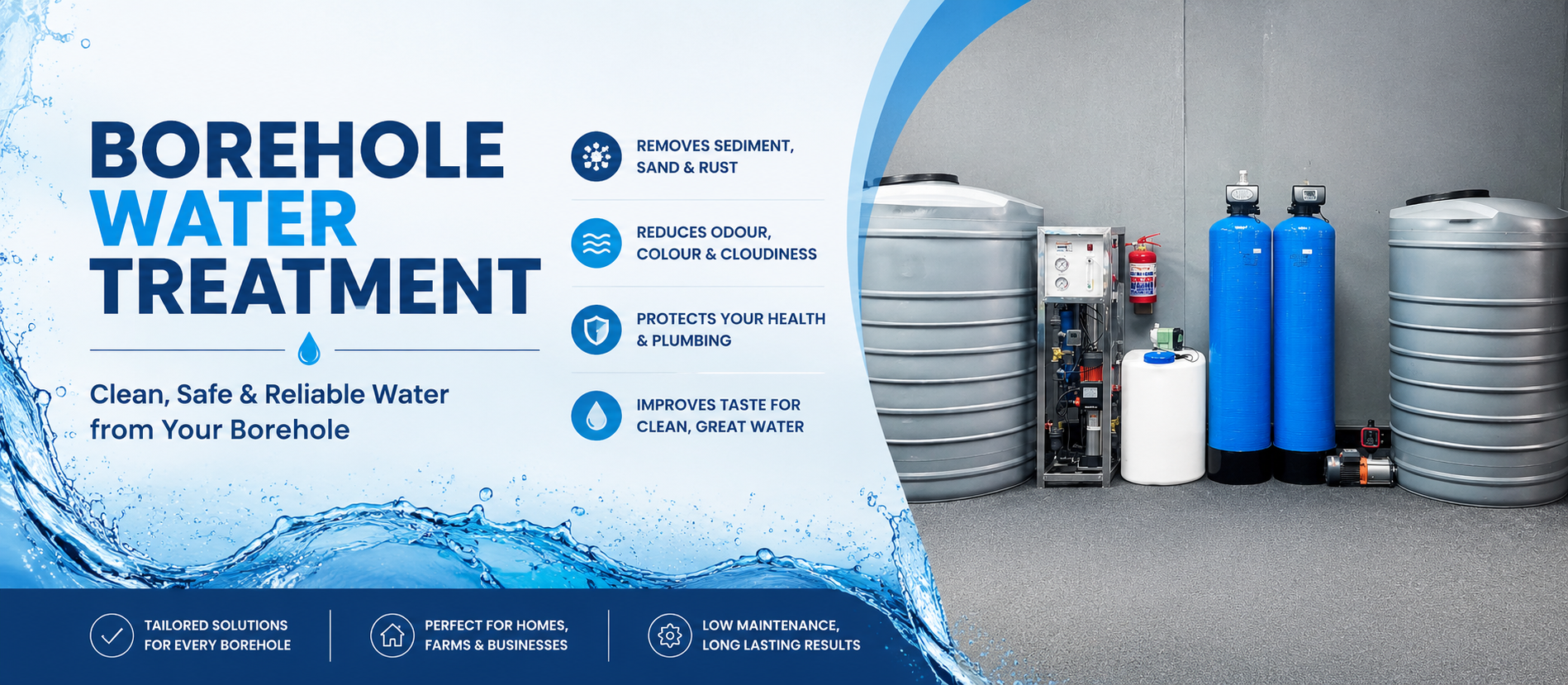
Borehole water treatment is essential if you want clean, safe, and reliable water for your home, business, or farm. Although groundwater often looks clear, it can still contain bacteria, heavy metals, dissolved minerals, iron, manganese, nitrates, and other contaminants. Therefore, every borehole should be tested before the water is used for drinking or food preparation.
At Puritech, we design complete treatment systems based on your water analysis. As a result, you receive a solution that removes the contaminants found in your borehole while protecting your plumbing, appliances, and your family’s health.
Why Borehole Water Needs Treatment
Many people believe groundwater is naturally pure because it passes through layers of rock and soil. However, underground water can still collect contaminants from natural mineral deposits, farming activities, industrial processes, and ageing infrastructure.
Untreated borehole water may contain:
- Iron
- Manganese
- Calcium
- Magnesium
- Nitrates
- Fluoride
- Heavy metals
- Bacteria
- Viruses
- Sediment
Because every borehole is different, no single treatment system works for every property.
Start with a water quality test.
The first step in effective borehole water treatment is professional water testing.
A laboratory analysis identifies:
- pH
- Total Dissolved Solids (TDS)
- Iron levels
- Manganese levels
- Hardness
- Nitrates
- Bacteria
- Heavy metals
- Turbidity
Once the results are available, the correct treatment equipment can be selected. This prevents unnecessary costs while improving long-term performance.
Borehole Water Filtration Systems
Filtration removes suspended particles before the water reaches the rest of the treatment system.
Common filtration equipment includes:
- Sediment filters
- Multi-media filters
- Sand filters
- Activated carbon filters
In addition, these filters protect downstream equipment such as UV systems and reverse osmosis membranes.
Removing Iron and Manganese
Iron and manganese are common groundwater contaminants.
They can cause:
- Brown staining
- Black staining
- Metallic taste
- Bad smells
- Blocked plumbing
- Damaged appliances
Fortunately, oxidation and specialized filtration systems remove these minerals effectively, improving both water quality and appearance.
Treating Hard Borehole Water
Hard water contains high levels of calcium and magnesium.
Over time, hard water can:
- Cause scale build-up
- Reduce appliance efficiency
- Increase electricity costs
- Leave white marks on taps
- Reduce soap performance
Therefore, many homeowners install water softeners as part of their borehole water filtration system.
Reverse Osmosis for Advanced Purification
Some boreholes contain high levels of dissolved salts and minerals.
In these situations, reverse osmosis provides one of the most effective treatment methods.
A reverse osmosis system helps remove:
- Dissolved salts
- Heavy metals
- Fluoride
- Nitrates
- Arsenic
- Harmful microorganisms
As a result, the treated water becomes suitable for drinking, food preparation, and many commercial applications.
UV Disinfection for Safe Drinking Water
Even clear water can contain harmful bacteria and viruses.
For this reason, many borehole water systems include ultraviolet (UV) sterilisation as the final treatment stage.
UV treatment:
- Inactivates bacteria
- Controls viruses
- Reduces microorganisms
- Uses no chemicals
- Preserves the natural taste of water
Furthermore, UV systems work best when combined with proper pre-filtration.
Where Borehole Water Treatment Is Used
Puritech supplies treatment systems for many applications.
These include:
- Homes
- Farms
- Schools
- Hotels
- Offices
- Restaurants
- Factories
- Hospitals
- Guest houses
- Commercial buildings
Because every site has different water conditions, each system is designed to suit the customer’s needs.
Why Choose Puritech?
Puritech has supplied water treatment equipment since 2006.
The company offers:
- Water quality testing guidance
- Borehole water treatment systems
- Reverse osmosis plants
- UV sterilisers
- Water softeners
- Iron removal systems
- Carbon filters
- Sediment filters
- Installation support
- Technical assistance
Most importantly, Puritech recommends equipment based on laboratory water results instead of guesswork.
Maintaining Your Borehole Water System
Regular maintenance keeps your system performing efficiently.
Maintenance normally includes:
- Replacing filter cartridges
- Servicing UV lamps
- Cleaning filter vessels
- Checking pressure
- Monitoring water quality
- Servicing pumps when required
By maintaining the system regularly, you improve reliability and extend equipment life.
Frequently Asked Questions
Why is borehole water treatment important?
It removes harmful contaminants, improves water quality, and helps ensure the water is safe for drinking and everyday use.
Should I test my borehole water?
Yes. Water testing identifies the contaminants in your groundwater and helps determine the correct treatment system.
Can reverse osmosis treat borehole water?
Yes. Reverse osmosis removes many dissolved minerals, salts, heavy metals, and other contaminants that standard filters cannot remove.
How often should a borehole treatment system be serviced?
Most systems should be serviced at least once a year, although filter replacement depends on water quality and daily usage.
Conclusion
A professionally designed borehole water treatment system provides safe, clean, and dependable water for residential, commercial, and agricultural use. By combining water testing, effective filtration, UV disinfection, and advanced purification where needed, you can improve water quality while protecting your family, equipment, and investment.
Whether you need a simple filtration unit or a complete treatment plant, Puritech offers customised solutions backed by years of industry experience and technical expertise.