Currently Empty: R0.00

Water Analysis Report: How to Read Your Test Results
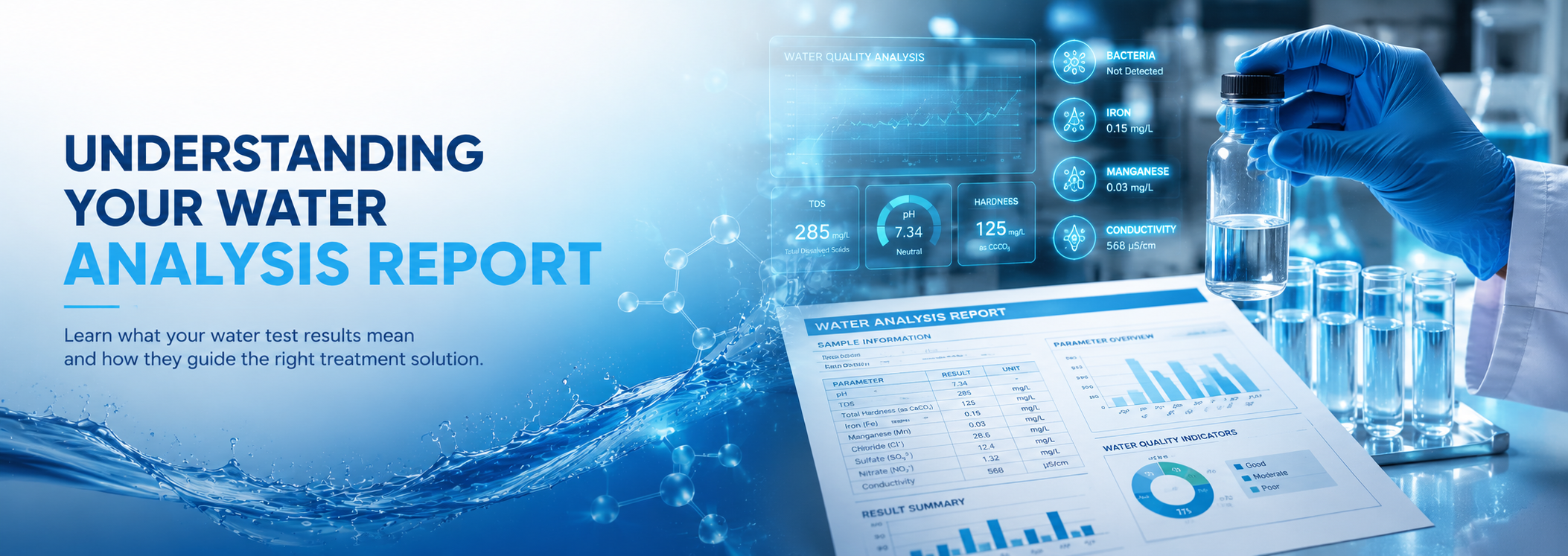
A water analysis report is one of the most valuable tools for understanding the quality of your water. Whether your water comes from a municipal supply, a borehole or a rainwater harvesting system, the report helps identify what is in your water and which treatment solution is most suitable.
Many homeowners and business owners receive laboratory results filled with unfamiliar terms and measurements. Fortunately, once you understand the basics, interpreting these results becomes much easier. This guide explains the most common values found in a water analysis report and shows how they influence water treatment decisions.
What Is a Water Analysis Report?
A water analysis report is a laboratory document that measures the physical, chemical and microbiological properties of a water sample.
The results help determine whether your water contains excessive minerals, harmful microorganisms or contaminants that require treatment.
Before purchasing water treatment equipment, it is advisable to test your water. The results help you choose the correct solution instead of relying on guesswork.
Common systems selected after water testing include:
- Reverse osmosis systems
- Water softeners
- Sediment filters
- Activated carbon filters
- UV sterilisation systems
Why Is a Water Analysis Report Important?
A water analysis report provides accurate information about your water quality. As a result, you can select equipment that addresses the actual problem instead of treating symptoms.
A professional analysis helps you:
- Identify contaminants
- Protect plumbing systems
- Improve drinking water quality
- Extend appliance life
- Reduce unnecessary equipment costs
- Improve treatment efficiency
Furthermore, regular testing allows you to monitor changes in your water over time.
Understanding Your Water Analysis Report Results
Every laboratory report contains measurements that describe different aspects of your water quality.
pH
The pH value indicates whether water is acidic, neutral or alkaline.
- Below 7 – Acidic
- 7 – Neutral
- Above 7 – Alkaline
If the pH is too low, water may corrode plumbing. Conversely, high pH can contribute to scale formation inside pipes and appliances.
Total Dissolved Solids (TDS)
TDS measures dissolved minerals and salts in the water.
High TDS may affect:
- Taste
- Water quality
- Industrial processes
- Scaling
Therefore, reverse osmosis systems are often recommended where TDS levels are excessive.
Water Hardness
Hardness refers to dissolved calcium and magnesium.
High hardness may cause the following:
- Limescale
- Soap scum
- Poor detergent performance
- Reduced appliance efficiency
In many cases, a water softener provides an effective solution.
Iron
Excessive iron can cause the following:
- Brown stains
- Metallic taste
- Blocked plumbing
- Laundry discolouration
Fortunately, specialised iron removal systems can treat these problems effectively.
Manganese
High manganese levels may result in:
- Black staining
- Sediment deposits
- Unpleasant taste
Similarly, dedicated filtration systems can reduce manganese levels.
Turbidity
Turbidity measures how cloudy the water appears.
High turbidity often indicates suspended particles such as the following:
- Sand
- Silt
- Clay
- Organic matter
For this reason, sediment filtration is usually the first stage of treatment.
Chlorine
Municipal water commonly contains chlorine to destroy harmful microorganisms.
However, chlorine can affect the taste and smell of drinking water. Activated carbon filters help reduce chlorine and improve overall water quality.
Bacteria
Laboratories may also test for bacteria such as the following:
- Total coliforms
- E. coli
If bacteria are detected, immediate treatment is important. UV sterilisation or other disinfection methods may be recommended.
How Your Water Analysis Report Helps You Choose the Right Treatment
Every water analysis report provides valuable information for selecting the correct treatment system.
For example:
| Water Quality Issue | Recommended Solution |
|---|---|
| High sediment | Sediment filter |
| High chlorine | Activated carbon filter |
| High TDS | Reverse osmosis system |
| Hard water | Water softener |
| Iron contamination | Iron removal filter |
| Bacterial contamination | UV sterilisation |
Sometimes, a combination of treatment systems delivers the best results because water may contain more than one type of contaminant.
When Should You Get a Water Analysis Report?
Testing your water is recommended in several situations.
Consider a professional analysis when you:
- Install a new filtration system
- Use borehole water
- Purchase a new property
- Notice changes in taste, colour or odour
- Expand a commercial operation
- Experience recurring water quality problems
In addition, regular testing helps confirm that your treatment system continues to perform effectively.
Common Mistakes When Reading a Water Analysis Report
Many people misunderstand laboratory results. Avoid these common mistakes.
Looking at Only One Result
Every measurement contributes to the overall picture. Instead of focusing on a single value, evaluate the report as a whole.
Assuming Clear Water Is Safe
Although water may appear clean, it can still contain dissolved minerals or harmful microorganisms that are invisible to the eye.
Buying Equipment Without Testing
Choosing filtration equipment without reviewing your laboratory results often leads to incorrect system selection and unnecessary costs.
Frequently Asked Questions
Can I understand a water analysis report myself?
Yes. You can understand many of the basic measurements. However, a water treatment specialist can help interpret the results and recommend the most suitable solution.
How often should I test my water?
Municipal water can be tested periodically, while borehole water should be tested more frequently, especially if water quality changes.
Do I need a laboratory test before buying a filtration system?
Although not always mandatory, testing your water helps ensure you purchase the correct treatment system for your specific needs.
Can one filtration system solve every water problem?
No. Different contaminants require different treatment technologies. Therefore, many installations combine several filtration methods.
Conclusion
A water analysis report provides the information needed to make informed decisions about water treatment. By understanding the results, you can identify water quality problems, select the right filtration equipment, and protect your plumbing and appliances.
Whether you need a reverse osmosis system, a sediment filter, an activated carbon filter, or a water softener, Puritech can help you interpret your test results and recommend a solution that suits your home or business.