Currently Empty: R0.00

Reverse Osmosis Pre-Treatment: Why It Matters
A reverse osmosis (RO) system is one of the most effective water purification technologies available. However, many people overlook one critical factor that determines its long-term performance: reverse osmosis pre-treatment.
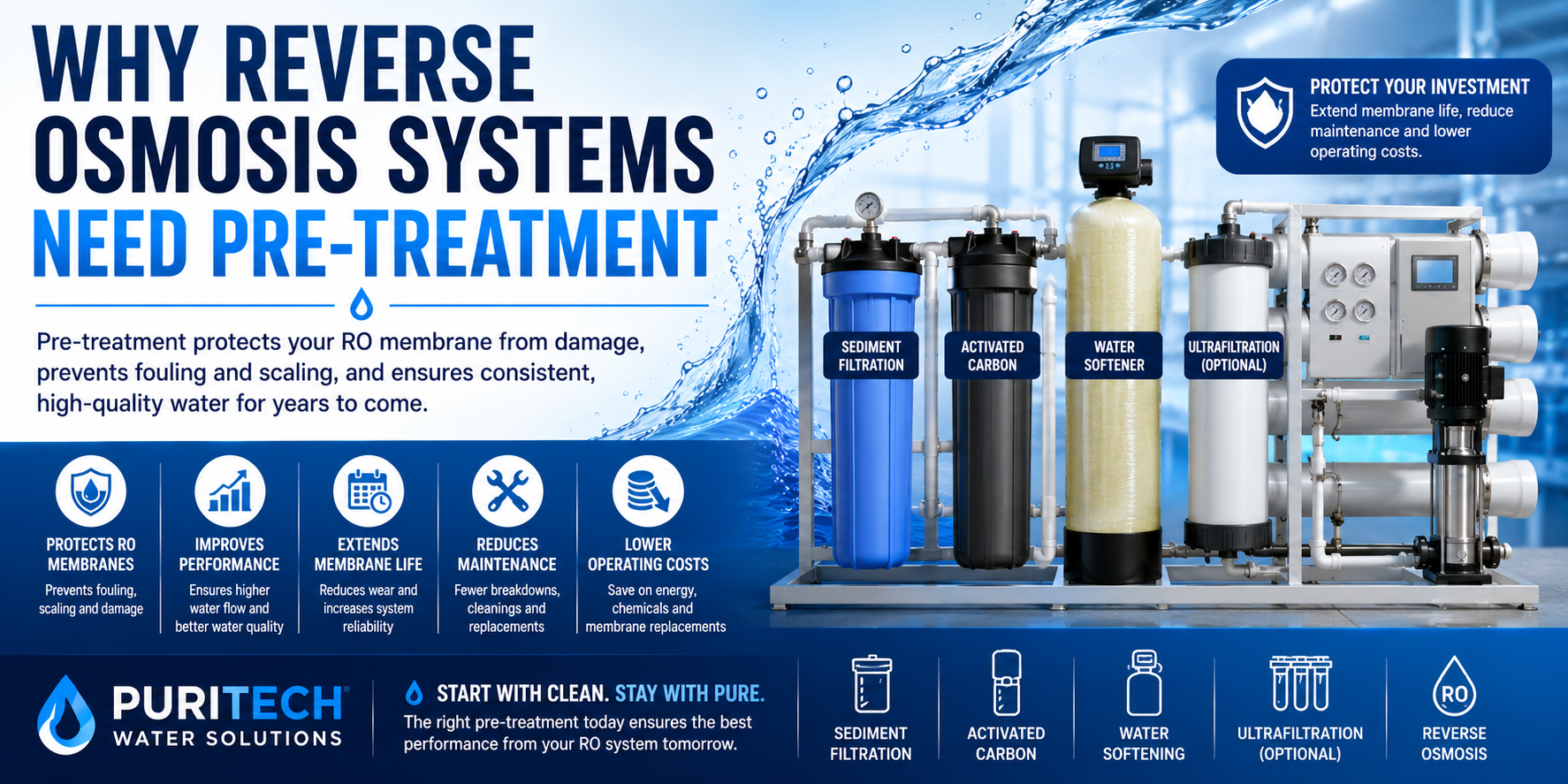
Before water reaches the RO membrane, it should pass through treatment stages that remove contaminants that can damage the membrane. Without proper pre-treatment, the membrane can foul, scale or degrade much faster, leading to reduced water production, poor water quality and higher maintenance costs.
Whether you are installing a residential, commercial or industrial RO system, understanding the importance of reverse osmosis pre-treatment will help you maximise system performance and extend membrane lifespan.
What Is Reverse Osmosis Pre-Treatment?
Reverse osmosis pre-treatment refers to all the filtration and conditioning processes that occur before water enters the RO membrane.
Its purpose is to remove contaminants that could:
- Block the membrane
- Cause mineral scaling
- Promote biological fouling
- Damage membrane materials
- Reduce water flow
- Increase operating pressure
Proper pre-treatment allows the RO membrane to operate efficiently while producing consistently high-quality purified water.
Why Pre-Treatment Is So Important
Although RO membranes remove extremely small dissolved contaminants, they are also sensitive to poor water quality.
Without effective reverse osmosis pre-treatment, the membrane must handle contaminants that should have been removed earlier in the treatment process.
Consequently, this can lead to:
- Lower water production
- Higher energy consumption
- Frequent membrane cleaning
- Shorter membrane lifespan
- Increased operating costs
- Reduced system reliability
Investing in the correct pre-treatment protects one of the most expensive components of the entire system.
Common Pre-Treatment Stages
The exact pre-treatment process depends on the water source and the results of a professional water analysis. However, most RO systems include one or more of the following stages.
Sediment Filtration
Sediment filters remove the following:
- Sand
- Silt
- Rust
- Dirt
- Suspended solids
Removing these larger particles prevents the RO membrane from becoming physically blocked.
Activated Carbon Filtration
Activated carbon filters reduce:
- Chlorine
- Taste and odour compounds
- Organic contaminants
- Certain chemicals
This stage is particularly important for municipal water because chlorine can damage many RO membrane materials.
Water Softening
Hard water contains dissolved calcium and magnesium.
These minerals can form hard scale deposits on the membrane surface, reducing efficiency and increasing operating pressure.
Water softeners remove hardness before the water reaches the RO system.
Iron and Manganese Removal
High levels of iron or manganese can foul RO membranes and stain system components.
Where these contaminants are present, dedicated treatment equipment should remove them before reverse osmosis.
Ultrafiltration (UF)
Ultrafiltration is an excellent pre-treatment option for many commercial and industrial RO systems.
It removes:
- Suspended solids
- Fine colloids
- Bacteria
- Algae
- Many microorganisms
As a result, UF significantly reduces membrane fouling and improves overall RO performance.
Chemical Dosing
Some industrial systems use chemical dosing to control scaling, adjust pH or protect the membrane from specific contaminants.
The required chemicals depend entirely on the water analysis and system design.
Why Water Analysis Comes First
Every water source is different.
Municipal water, borehole water, river water and dam water each contain unique combinations of contaminants.
For this reason, Puritech recommends carrying out a professional water analysis before selecting any reverse osmosis pre-treatment equipment.
The results determine:
- Which contaminants are present
- Which pre-treatment stages are required
- The correct equipment size
- Expected membrane performance
- Long-term operating costs
A properly designed system begins with accurate water quality data.
Common Mistakes When Skipping RO Pre-Treatment
Some users assume that a reverse osmosis membrane can remove every contaminant on its own. However, skipping reverse osmosis pre-treatment often results in poor performance and higher operating costs.
The following mistakes are among the most common.
Installing an RO System Without a Water Analysis
Every water source has a unique chemical composition.
Without a professional water analysis, it is impossible to know which contaminants require treatment before the water reaches the RO membrane. As a result, the system may be undersized, oversized, or incorrectly configured.
Ignoring Hard Water
Hard water contains calcium and magnesium that can form scale on the membrane surface.
Over time, scaling reduces water production, increases operating pressure, and shortens membrane life. Therefore, a water softener is often recommended where hardness levels are high.
Failing to Remove Chlorine
Municipal water usually contains chlorine to control bacteria.
Although chlorine is beneficial in the distribution network, it can damage many reverse osmosis membranes. Consequently, activated carbon filtration is an essential pre-treatment stage for many municipal water supplies.
Using Incorrect Pre-Filters
Selecting the wrong sediment filter or failing to replace cartridges regularly allows suspended solids to reach the membrane.
As a result, fouling increases, cleaning becomes more frequent, and system performance gradually declines.
Signs Your RO System Needs Better Pre-Treatment
Even a well-designed RO system can experience problems if the incoming water quality changes or pre-treatment equipment is neglected.
Common warning signs include:
- Reduced purified water production
- Higher operating pressure
- Frequent membrane cleaning
- Declining water quality
- Increased maintenance costs
- Shorter membrane lifespan
- Frequent pre-filter blockages
If any of these issues occur, the pre-treatment process should be evaluated before replacing the RO membrane.
Best Practices for Reverse Osmosis Pre-Treatment
Following good maintenance practices helps protect your investment and maximise system performance.
Puritech recommends:
- Conducting a professional water analysis before selecting equipment.
- Installing pre-treatment that matches your water quality.
- Replacing sediment and activated carbon filters on schedule.
- Monitoring operating pressure and water flow regularly.
- Servicing water softeners and chemical dosing systems where installed.
- Cleaning the RO system according to the manufacturer’s recommendations.
- Reviewing water quality periodically, especially if the water source changes.
By following these steps, you can improve efficiency, reduce operating costs and extend membrane life.
Frequently Asked Questions
Why is reverse osmosis pre-treatment important?
Reverse osmosis pre-treatment removes contaminants that can foul, scale or damage the RO membrane. As a result, it improves system performance, reduces maintenance and extends membrane lifespan.
Does every RO system need pre-treatment?
Yes. The type of pre-treatment depends on the water source and the contaminants identified during a professional water analysis.
Can activated carbon protect an RO membrane?
Yes. Activated carbon removes chlorine and certain organic compounds that may damage many reverse osmosis membranes supplied with municipal water.
Is ultrafiltration a good pre-treatment for reverse osmosis?
Yes. Ultrafiltration removes suspended solids, bacteria, and fine particles before they reach the RO membrane. Consequently, it helps reduce membrane fouling and improves overall system performance.
Conclusion
Proper reverse osmosis pre-treatment is essential for protecting the RO membrane and ensuring long-term system performance. Although reverse osmosis can remove a wide range of dissolved contaminants, the membrane performs best when pre-treatment removes sediment, chlorine, hardness, and other substances that contribute to fouling and scaling.
Furthermore, every water source presents different treatment challenges. For this reason, a professional water analysis should always be the first step before selecting pre-treatment equipment or installing a reverse osmosis system.
With the right combination of sediment filtration, activated carbon, water softening, ultrafiltration, and other technologies, Puritech can design a reliable reverse osmosis solution that delivers high-quality water and minimises maintenance and operating costs.