Currently Empty: R0.00

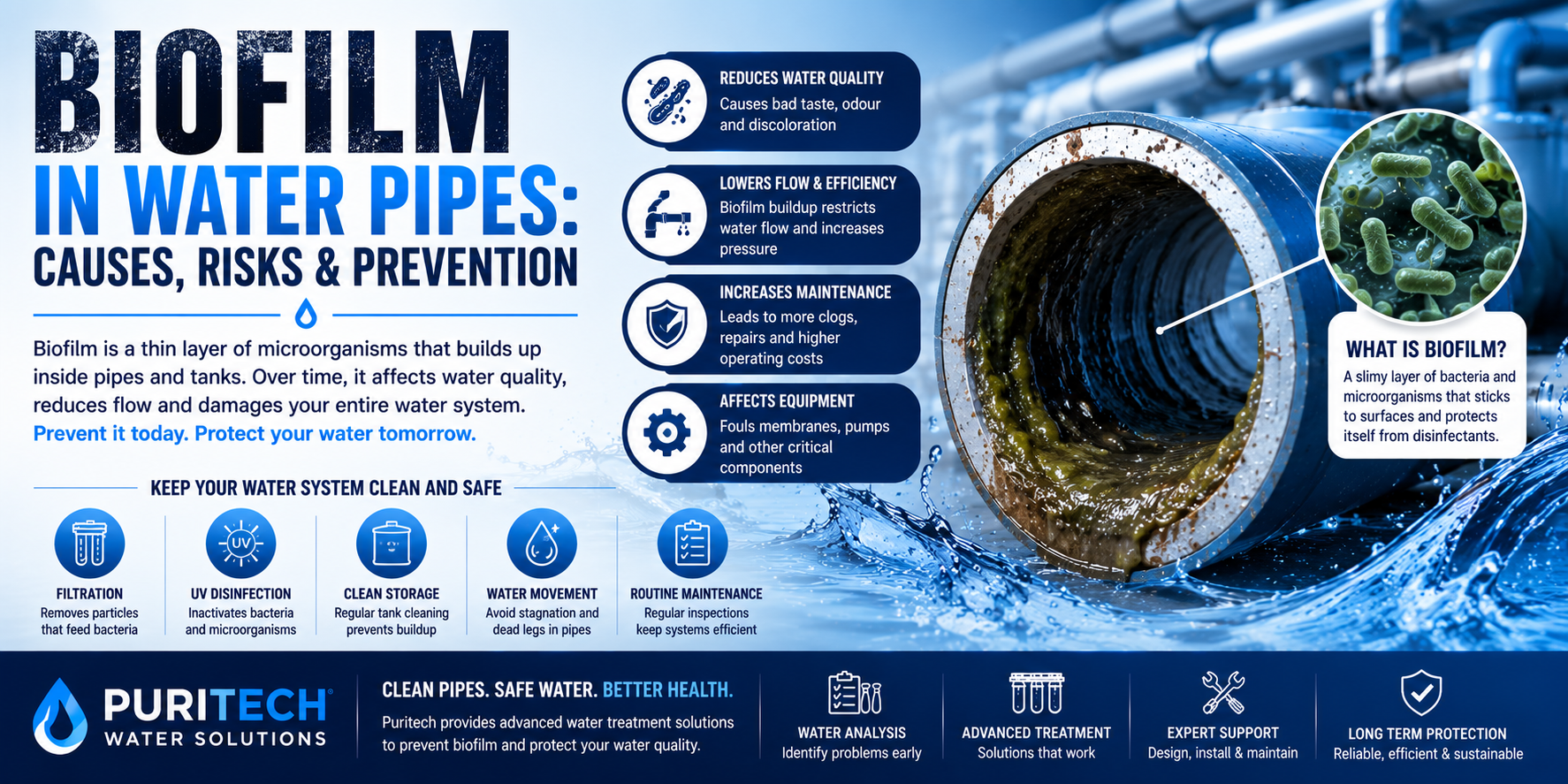
Biofilm in Water Pipes: Causes, Risks and Prevention
Many people assume that if water looks clean, it is free from contamination. However, microscopic organisms can attach themselves to the inside of pipes and form a thin, slimy layer known as biofilm. Over time, biofilm in water pipes can affect water quality, reduce system efficiency, and create ongoing maintenance challenges.
Biofilm develops when microorganisms attach to pipe surfaces and begin producing a protective layer that allows them to multiply. Once established, it becomes difficult to remove through normal water flow alone.
Understanding what causes biofilm in water pipes and how to prevent it is essential for maintaining safe, high-quality water in homes, businesses, and industrial facilities.
What Is Biofilm?
Biofilm is a community of microorganisms that attaches to a surface and produces a protective coating known as an extracellular polymeric substance (EPS), often described as a slimy layer.
This protective layer helps microorganisms survive and makes them more resistant to environmental changes.
Biofilm can develop on:
- Water pipes
- Storage tanks
- Water filters
- Heat exchangers
- Cooling towers
- Reverse osmosis membranes
- Ultrafiltration membranes
Once established, biofilm continues to grow unless it is properly managed.
How Does Biofilm Form?
Biofilm develops in several stages.
Stage 1: Surface Attachment
Individual microorganisms attach to the inside of a pipe or storage tank.
Stage 2: Growth
The attached microorganisms begin to multiply while producing a sticky protective layer.
Stage 3: Maturation
The biofilm thickens and traps nutrients, allowing additional microorganisms to colonise the surface.
Stage 4: Dispersion
Small sections of the biofilm can detach and travel through the water system, allowing new colonies to develop elsewhere.
What Causes Biofilm in Water Pipes?
Several conditions encourage biofilm formation.
These include:
- Stagnant water
- High water age
- Warm temperatures
- Low disinfectant levels
- Organic matter
- Poor plumbing design
- Dead legs in pipework
- Infrequent maintenance
The longer these conditions persist, the greater the likelihood that biofilm will develop.
Why Is Biofilm a Problem?
Although biofilm is microscopic, it can create significant operational challenges.
Potential problems include the following:
- Reduced water quality
- Unpleasant taste and odour
- Increased bacterial growth
- Reduced disinfectant effectiveness
- Pipe fouling
- Reduced flow rates
- Increased maintenance
- Membrane fouling in UF and RO systems
Consequently, preventing biofilm is often easier and more cost-effective than removing it after it has formed.
Where Does Biofilm Commonly Occur?
Biofilm frequently develops in:
- Hotels
- Hospitals
- Schools
- Office buildings
- Apartment complexes
- Factories
- Food processing facilities
- Cooling water systems
- Municipal distribution networks
- Water storage tanks
Facilities with complex plumbing systems or intermittent water use require particular attention.
How to Prevent Biofilm in Water Pipes
Preventing biofilm in water pipes requires a combination of good system design, routine maintenance and appropriate water treatment. Although no system is completely immune to biofilm, the following practices can significantly reduce the risk.
Keep Water Moving
Water that flows regularly is less likely to support biofilm growth.
Where possible:
- Avoid long periods of stagnation.
- Flush low-use outlets regularly.
- Maintain good water circulation.
- Use storage tanks that match daily water demand.
These measures help reduce water age and maintain better water quality.
Eliminate Dead Legs
Dead legs are sections of pipe where water rarely moves.
Because these areas experience little or no flow, they provide ideal conditions for microorganisms to attach to pipe surfaces and develop biofilm.
Removing unnecessary pipework or improving plumbing design helps eliminate these stagnant zones.
Clean Water Storage Tanks
Storage tanks should be inspected and cleaned on a routine schedule.
Cleaning removes:
- Sediment
- Organic matter
- Sludge
- Debris
As a result, microorganisms have fewer nutrients available to support biofilm growth.
Maintain Disinfectant Levels
Municipal water normally contains a disinfectant residual that helps control bacterial growth.
However, chlorine levels gradually decrease as water ages.
Monitoring disinfectant levels and maintaining appropriate residuals, where applicable, helps reduce the likelihood of biofilm developing.
Replace Filters on Schedule
Dirty or clogged filters can reduce system performance and create conditions that encourage biological growth.
Replacing filter cartridges according to the manufacturer’s recommendations helps maintain efficient operation and protects downstream equipment.
Water Treatment Technologies That Help Control Biofilm
Several treatment technologies help minimise the conditions that allow biofilm to develop.
Sediment Filtration
Sediment filters remove suspended particles that may provide surfaces and nutrients for microbial growth.
Activated Carbon Filtration
Activated carbon improves taste and odour by reducing chlorine and certain organic compounds.
Because activated carbon also removes chlorine, systems that use it should be correctly designed and maintained to minimise biological growth downstream.
Ultrafiltration (UF)
Ultrafiltration removes suspended solids, bacteria and many microorganisms before they enter the distribution system.
As a result, UF significantly reduces the microbial load and supports better water quality.
UV Disinfection
Ultraviolet disinfection inactivates bacteria, viruses, and other microorganisms without adding chemicals.
Many commercial and industrial facilities install UV systems as the final treatment stage before water enters the distribution network.
Chemical Dosing
Where appropriate, controlled chemical dosing helps maintain water quality and supports microbial control throughout larger water systems.
The correct dosing strategy depends on water quality, system design, and local regulations.
Frequently Asked Questions
Can biofilm form in clean-looking water?
Yes. Water may appear clear even when microorganisms have formed biofilm on the inside of pipes or storage tanks. Because biofilm develops on surfaces, it is often invisible without specialised inspection.
Does biofilm only occur in old plumbing?
No. Biofilm can develop in both new and old plumbing systems if water remains stagnant, disinfectant levels decline or maintenance is neglected.
Can biofilm damage water treatment equipment?
Yes. Biofilm can foul reverse osmosis membranes, ultrafiltration membranes, valves, sensors and pipework. Consequently, regular maintenance helps protect both water quality and equipment performance.
How can I reduce the risk of biofilm?
You can reduce the risk by maintaining good water circulation, cleaning storage tanks, replacing filters on schedule, eliminating dead legs and installing appropriate water treatment technologies where necessary.
Conclusion
Preventing biofilm in water pipes is essential for maintaining water quality, protecting treatment equipment and reducing long-term maintenance costs. Although biofilm develops naturally under favourable conditions, proper plumbing design, routine cleaning and regular water movement significantly reduce the risk of microbial growth.
Furthermore, combining good maintenance practices with suitable treatment technologies—such as sediment filtration, ultrafiltration, UV disinfection and controlled chemical dosing—helps maintain a cleaner and more reliable water system.
The most effective strategy begins with understanding your water. A professional water analysis and a properly designed treatment solution enable Puritech to recommend the right approach for homes, commercial buildings and industrial facilities.