Currently Empty: R0.00

Water Contaminants: Types, Risks and How to Remove Them
Water contaminants can affect the quality, safety, and taste of your drinking water. Whether your water comes from a municipal supply, a borehole, or rainwater harvesting, contaminants may be present without being visible. Understanding the different types of water contaminants helps you choose the right water treatment solution to protect your family, employees, and equipment.
What Are Water Contaminants?
Water contaminants are substances that reduce water quality or make it unsafe for drinking and everyday use. They can occur naturally or enter water supplies through human activities, aging infrastructure, agriculture, and industrial processes.
The four main categories include the following:
- Biological contaminants
- Chemical contaminants
- Physical contaminants
- Radiological contaminants
Each type requires different treatment methods to ensure safe drinking water.
Biological Water Contaminants
Biological water contaminants include living organisms that can cause illness.
Common examples include:
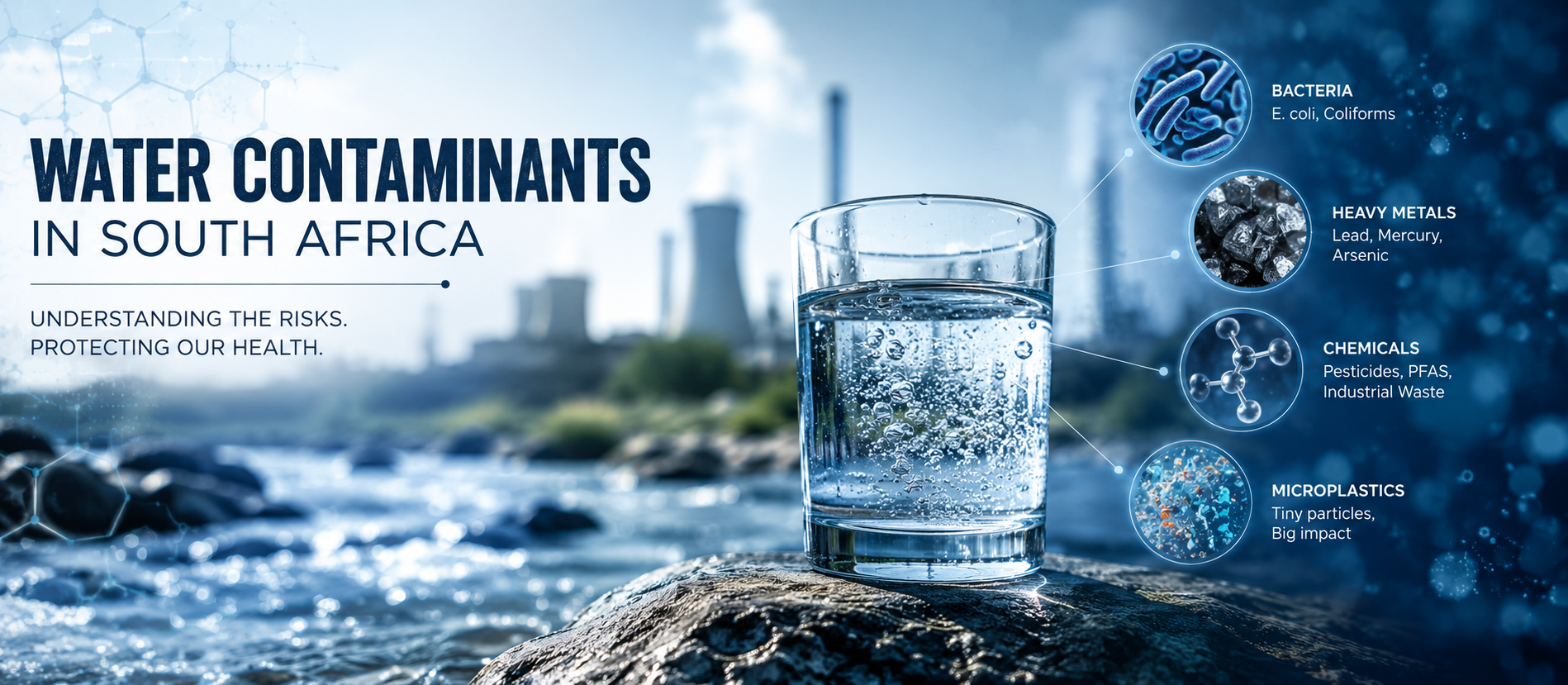
- E. coli
- Salmonella
- Norovirus
- Giardia
- Cryptosporidium
These microorganisms often enter water through sewage, animal waste, or contaminated surface water. They can lead to diarrhea, stomach cramps, vomiting, and other gastrointestinal illnesses.
Chemical Water Contaminants
Chemical contamination may result from industrial activities, agriculture, or naturally occurring minerals.
Examples include:
- Lead
- Mercury
- Arsenic
- Pesticides
- Herbicides
- PFAS (“forever chemicals”)
- Industrial solvents
Long-term exposure to certain chemicals has been linked to neurological disorders, kidney damage, hormonal disruption, and increased cancer risk.
Physical Water Contaminants
Physical contaminants affect the appearance and quality of water.
Typical examples are the following:
- Sand
- Silt
- Rust
- Sediment
- Microplastics
Although sediment is not always harmful on its own, it can reduce water clarity, damage plumbing, clog filtration equipment, and provide a place for harmful microorganisms to grow.
Radiological Water Contaminants
Radiological contaminants occur naturally in certain geological formations.
Examples include:
- Radon
- Uranium
While less common, prolonged exposure to elevated levels may pose health risks, making regular water testing important in affected areas.
How Water Contaminants Enter Your Water Supply
Understanding where contamination comes from helps reduce future risks.
Common sources include:
- Agricultural runoff
- Industrial discharge
- Ageing water pipes
- Flooding
- Septic systems
- Mining activities
- Natural mineral deposits
Routine water testing is one of the most effective ways to identify contamination before it becomes a health concern.
How to Remove Water Contaminants
Different contaminants require different treatment technologies.
Depending on your water quality, effective solutions include the following:
- Sediment filtration
- Activated carbon filters
- Reverse osmosis systems
- UV water purification
- Water softeners
- Chemical disinfection
Professional water testing helps determine which treatment system is best suited to your home or business.
Why Regular Water Testing Matters
Regular testing identifies changes in water quality before they affect your health or damage appliances.
Testing can help:
- Detect harmful bacteria
- Identify heavy metals
- Measure pH levels
- Monitor mineral content
- Confirm filtration system performance
Annual testing is recommended for most households, while borehole water may require more frequent analysis.
Conclusion
Understanding water contaminants is the first step towards protecting your drinking water. From bacteria and heavy metals to sediment and chemicals, different contaminants require different treatment solutions.
By testing your water regularly and investing in the right filtration system, you can enjoy cleaner, safer water while protecting your family, plumbing, and appliances for years to come.