
Currently Empty: R0.00

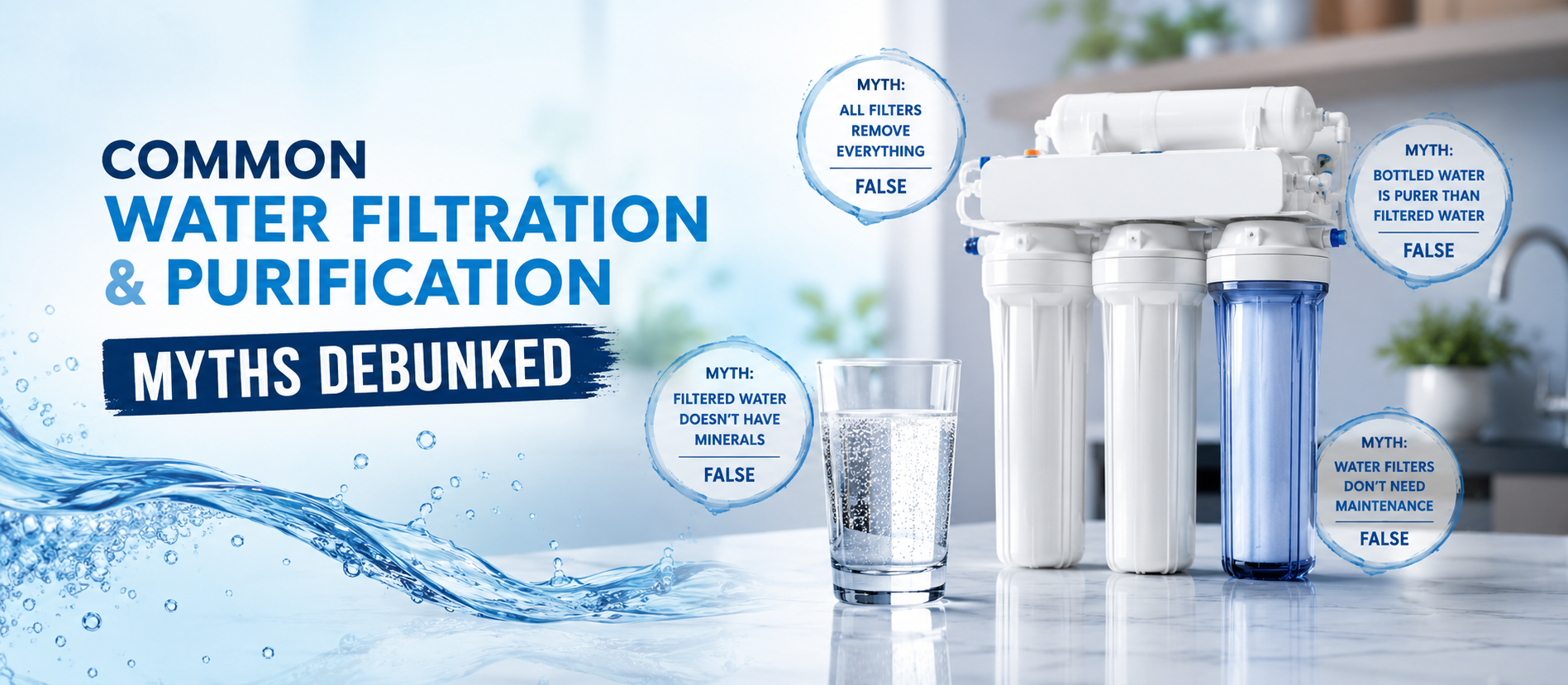
Water Filtration Myths Debunked: Facts vs Fiction
When it comes to drinking water, misinformation can be just as harmful as contamination itself. Many homeowners and businesses believe water filtration myths that influence how they choose and maintain their water treatment systems. Understanding the facts behind these common misconceptions can help you make informed decisions and ensure your water is clean, safe, and great-tasting.
In this article, we’ll separate fact from fiction by addressing some of the most common misunderstandings about water filtration and purification.
Water Filtration Myths Explained
Modern filtration technology has advanced significantly over the years, yet several misconceptions persist. Let’s examine the most common myths and uncover the truth.
Myth 1: Tap Water Is Always Safe to Drink
Many people assume that if water comes from the municipal supply, it is always completely safe to drink.
The Truth
Municipal water is treated to meet safety standards, but contaminants can still enter the water through aging pipes, infrastructure damage, or household plumbing. A quality filtration system provides an additional layer of protection by reducing unwanted substances and improving taste and odor.
Myth 2: All Water Filters Work the Same
One of the most common water filtration myths is that every filter removes the same contaminants.
The Truth
Different filtration systems are designed for different purposes.
For example:
- Activated carbon filters reduce chlorine, unpleasant tastes, and odors.
- Reverse osmosis systems remove dissolved salts, heavy metals, and many other contaminants.
- UV purification systems help neutralize bacteria and viruses.
Choosing the correct solution depends on your specific water quality and treatment requirements.
Myth 3: Bottled Water Is Better Than Filtered Water
Many consumers believe bottled water is cleaner or healthier than filtered tap water.
The Truth
In many cases, bottled water comes from municipal sources and undergoes additional treatment before packaging. Properly maintained filtration systems can produce excellent-quality drinking water while reducing plastic waste and long-term costs.
Myth 4: Water Filters Remove All Healthy Minerals
This is another example of water filtration myths that often causes unnecessary concern.
The Truth
Some advanced systems, such as reverse osmosis, remove a wide range of dissolved minerals. However, many systems include remineralisation stages that restore beneficial minerals while maintaining excellent water quality.
Myth 5: Water Filtration Is Too Expensive
Cost is often seen as a barrier to cleaner water.
The Truth
Modern filtration systems are available for a wide range of budgets. Compared with the ongoing cost of bottled water, replacing appliances damaged by poor water quality, or unexpected plumbing repairs, investing in filtration can provide excellent long-term value.
Why Clean Water Matters
Reliable water treatment offers more than improved taste. It can help protect your family’s health, extend the lifespan of appliances, reduce scale build-up, and improve the efficiency of household plumbing systems.
Whether your water comes from a municipal supply, a borehole, or rainwater harvesting, selecting the right filtration solution ensures greater confidence in the quality of your drinking water.
Choosing the Right Water Treatment System
Rather than relying on water filtration myths, consider these important factors before selecting a system:
- Your water source
- The contaminants present
- Household water usage
- Maintenance requirements
- Long-term operating costs
Professional water testing can help identify the most suitable treatment solution for your needs.
Final Thoughts
Believing water filtration myths can lead to poor decisions about your home’s water quality. By understanding the facts and choosing the right filtration technology, you can enjoy cleaner, safer, and better-tasting water every day.
If you’re unsure which filtration system is right for your home or business, speaking with a water treatment specialist can help you find a solution tailored to your specific water quality needs.