Currently Empty: R0.00

Solar Panel Power Output: What Affects Performance?
Understanding solar panel power output is essential if you want to maximise the performance of your solar energy system. Although manufacturers rate solar panels under ideal laboratory conditions, real-world electricity production varies throughout the day and across different seasons.
Several environmental and installation factors influence how much electricity your panels generate. By understanding these factors, homeowners and businesses can improve system performance and make informed purchasing decisions.
What Is Solar Panel Power Output?
Solar panel power output refers to the amount of electrical power a solar panel can produce under specific conditions.
Manufacturers usually express this rating in watts (W).
For example:
- 450 W solar panel
- 550 W solar panel
- 600 W solar panel
Higher wattage panels generally produce more electricity, provided installation conditions are the same.
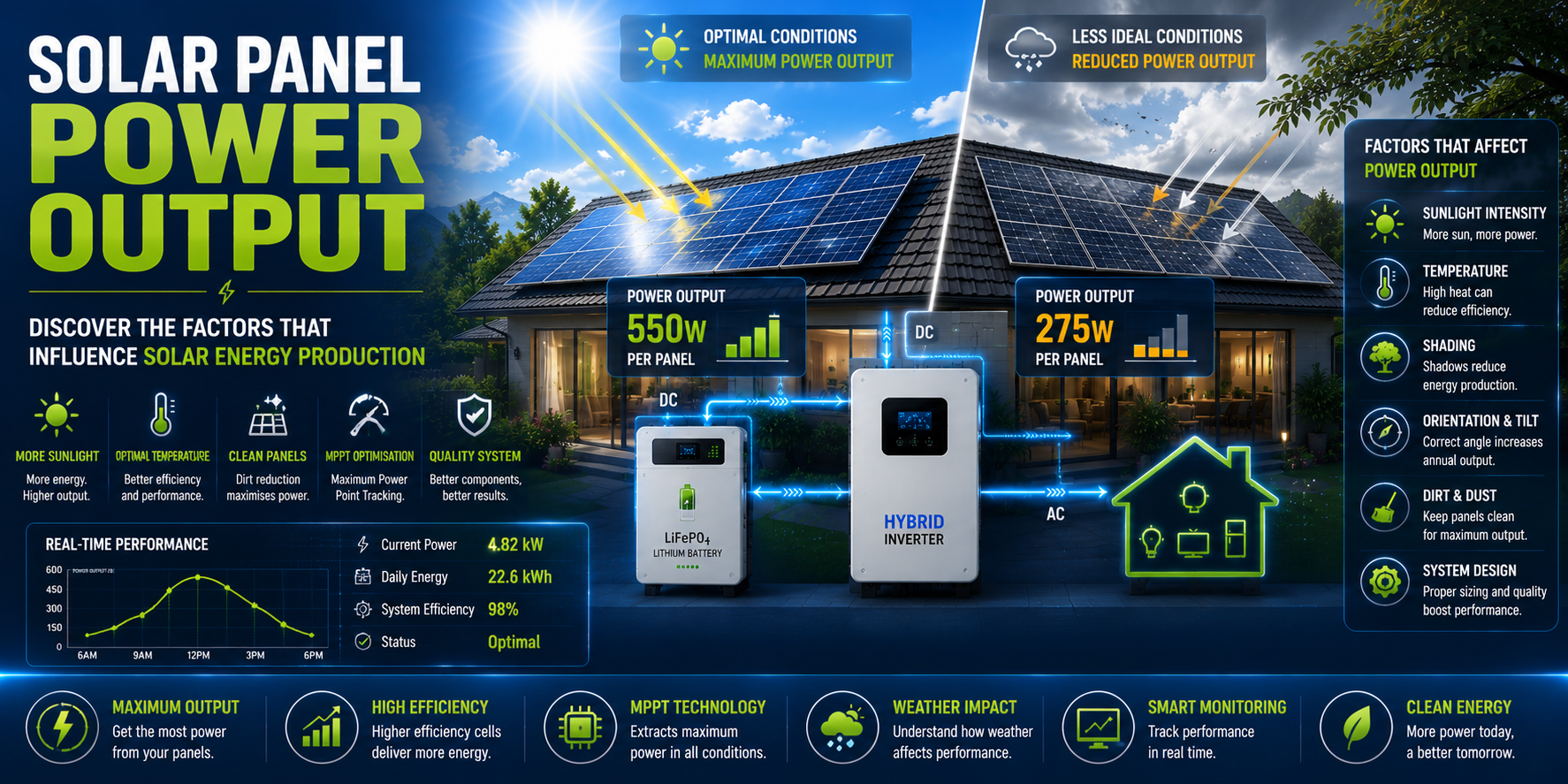
Factors That Affect Solar Panel Power Output
Several important factors determine how much energy your solar panels produce.
Sunlight Intensity
Solar panels generate more electricity when they receive stronger sunlight.
Clear, sunny conditions usually produce the highest power output.
Temperature
Although solar panels need sunlight, excessive heat can reduce efficiency slightly.
Most panels perform best in bright conditions with moderate operating temperatures.
Panel Orientation
The direction your panels face influences daily energy production.
Correct positioning helps maximise exposure to sunlight throughout the day.
Tilt Angle
The installation angle affects how much sunlight reaches the panels.
An appropriate tilt improves annual energy production.
Shading
Trees, chimneys, nearby buildings and other obstructions reduce solar panel power output by blocking sunlight.
Even partial shading can significantly affect performance.
Dirt and Dust
Dust, pollen and bird droppings reduce the amount of sunlight reaching the photovoltaic cells.
Regular cleaning helps maintain optimal output.
Does Panel Quality Matter?
Yes.
Premium solar panels often include:
- Higher efficiency cells
- Better temperature performance
- Improved durability
- Longer warranties
- Enhanced low-light performance
Higher-quality panels usually deliver more consistent energy production over their lifespan.
Does Weather Affect Solar Panel Power Output?
Weather plays an important role.
Typical performance varies under different conditions:
| Weather | Expected Performance |
|---|---|
| Bright sunshine | Excellent |
| Light cloud | Good |
| Heavy cloud | Reduced |
| Rain | Lower output |
| Early morning | Moderate |
| Late afternoon | Moderate |
Even on cloudy days, solar panels continue generating electricity.
How to Improve Solar Panel Power Output
You can maximise system performance by:
- Keeping panels clean
- Avoiding shading
- Choosing high-efficiency panels
- Installing quality MPPT technology
- Selecting the correct inverter
- Performing regular maintenance
Small improvements can increase annual energy production.
Frequently Asked Questions
Why do identical solar panels produce different amounts of power?
Differences in shading, orientation, temperature, and installation conditions all affect output.
Do higher-watt panels always produce more electricity?
Generally yes, although weather, location and installation quality also influence actual performance.
Does dirt reduce solar panel output?
Yes. Heavy dirt accumulation can noticeably reduce electricity generation.
Can MPPT improve power output?
Yes. MPPT technology helps extract the maximum available power from solar panels under changing conditions.
Conclusion
Understanding solar panel power output allows you to get the most from your solar investment. By choosing quality equipment, minimising shading, maintaining clean panels and installing the system correctly, you can maximise energy production throughout the year.
A professionally designed solar system delivers reliable performance, lower electricity costs and better long-term value.