
Currently Empty: R0.00

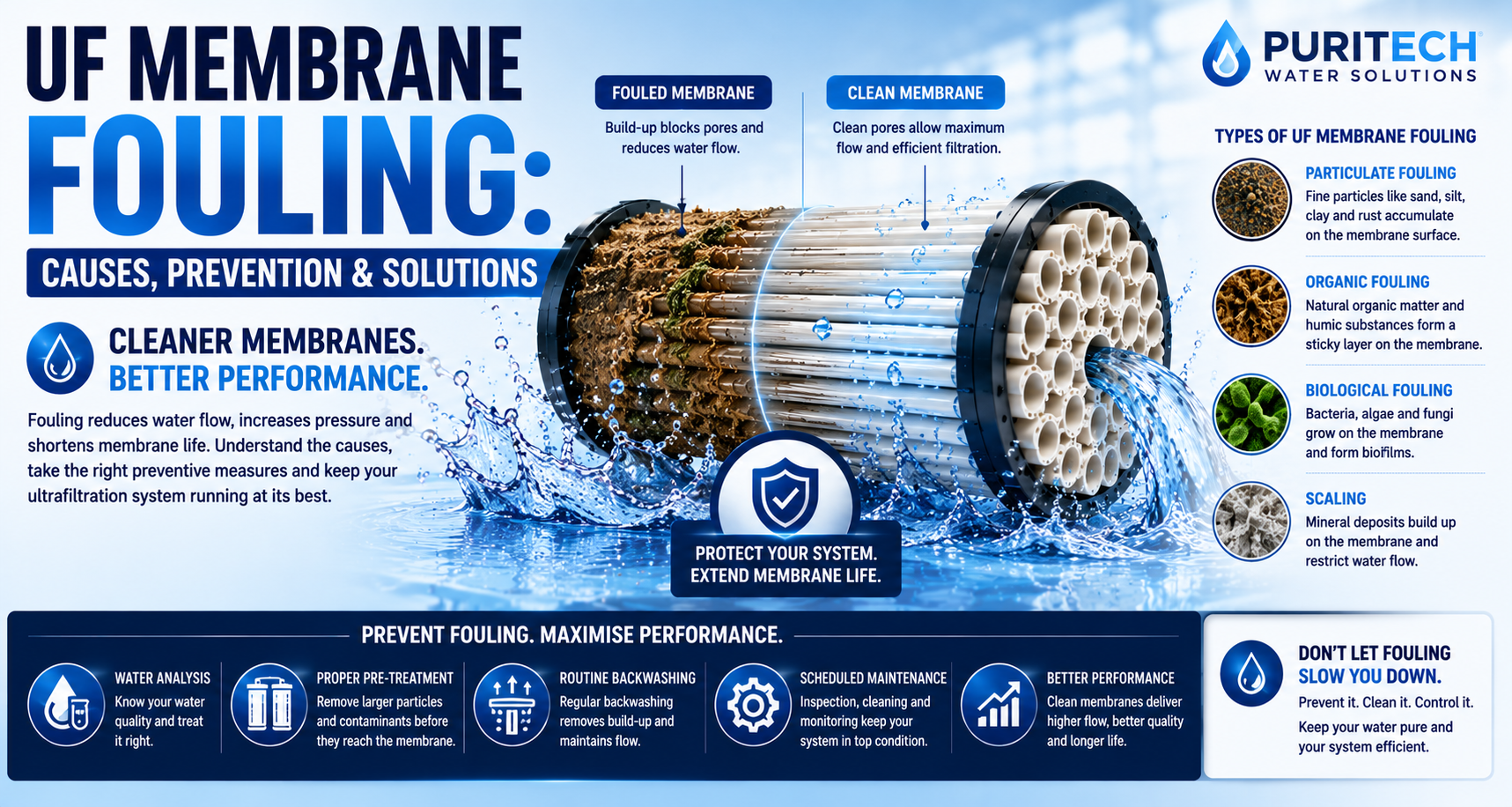
UF Membrane Fouling: Causes, Prevention and Solutions
UF membrane fouling is one of the most common challenges affecting ultrafiltration systems. Although fouling is a natural part of the filtration process, excessive build-up can reduce water flow, increase operating pressure, and lower overall system performance.
Fortunately, proper system design, routine maintenance and appropriate pre-treatment can minimise fouling and extend membrane life significantly.
Understanding the causes of UF membrane fouling helps homeowners, businesses and industries maintain efficient water treatment while reducing maintenance costs and unplanned downtime.
What Is UF Membrane Fouling?
During normal operation, suspended contaminants collect on the surface of the ultrafiltration membrane.
As filtration continues, these materials gradually form a layer that restricts water flow.
This accumulation is known as UF membrane fouling.
A small amount of fouling is expected and is usually removed during routine backwashing or cleaning. However, excessive fouling requires additional maintenance to restore system performance.
Why Does UF Membrane Fouling Occur?
The membrane is designed to trap contaminants while allowing clean water to pass through.
Consequently, the very contaminants being removed eventually accumulate on the membrane surface.
The rate of fouling depends on several factors, including:
- Feed water quality
- Suspended solids concentration
- Organic matter
- Biological activity
- Operating pressure
- Flow rate
- Cleaning frequency
Systems treating poor-quality water generally experience fouling more quickly than those treating relatively clean water.
Types of UF Membrane Fouling
Different contaminants create different types of fouling.
Understanding these categories helps determine the most effective cleaning method.
Particulate Fouling
Fine particles such as:
- Sand
- Silt
- Clay
- Rust
collect on the membrane surface and restrict water flow.
Organic Fouling
Natural organic matter can gradually coat the membrane.
Sources include:
- Decaying vegetation
- Humic substances
- Organic debris
Organic fouling often develops slowly and requires periodic chemical cleaning.
Biological Fouling
Microorganisms can grow on the membrane surface and form biofilms.
Common contributors include:
- Bacteria
- Algae
- Fungi
Routine cleaning helps minimise biological fouling.
Scaling
Although ultrafiltration does not typically remove dissolved minerals, certain water conditions can allow mineral deposits to form on the membrane surface.
Scaling is more common where hard water or elevated mineral concentrations are present.
Signs of UF Membrane Fouling
Several warning signs indicate that fouling may be developing.
These include:
- Reduced water production
- Increased operating pressure
- More frequent cleaning cycles
- Higher energy consumption
- Reduced filtration efficiency
- Uneven flow rates
Recognising these symptoms early helps prevent more serious performance issues.
Why Prevention Is Better Than Repair
Preventing UF membrane fouling is usually far easier and less expensive than restoring a heavily fouled membrane.
Effective prevention helps:
- Maintain stable water production
- Reduce operating costs
- Extend membrane lifespan
- Improve system reliability
- Reduce unplanned downtime
For this reason, prevention should form part of every maintenance programme.
How to Prevent UF Membrane Fouling
Preventing UF membrane fouling begins long before the membrane is installed. A combination of proper system design, suitable pre-treatment and routine maintenance helps keep the membrane clean and operating efficiently.
Start with a professional water analysis.
Every water source is different. Therefore, a professional water analysis should always be completed before selecting an ultrafiltration system.
The results identify contaminants that may contribute to membrane fouling and help determine whether additional treatment stages are required.
Install the Correct Pre-Treatment
Pre-treatment removes larger contaminants before they reach the ultrafiltration membrane.
Depending on the feed water quality, pre-treatment may include the following:
- Sediment filtration
- Activated carbon filtration
- Iron and manganese removal
- Water softening
Proper pre-treatment reduces the amount of material that accumulates on the membrane surface.
Perform Routine Backwashing
Many ultrafiltration systems automatically perform backwashing at scheduled intervals.
During backwashing, clean water flows through the membrane in the opposite direction, dislodging trapped contaminants and carrying them to the drain.
Regular backwashing is one of the most effective ways to control UF membrane fouling.
Maintain Recommended Operating Conditions
Running the system within the manufacturer’s recommended pressure and flow ranges helps minimise unnecessary stress on the membrane.
Stable operating conditions also support consistent filtration performance and reduce the likelihood of excessive fouling.
Follow the Maintenance Schedule
Routine inspections allow potential issues to be identified before they affect water quality or system performance.
A typical maintenance programme includes:
- Replacing pre-filter cartridges
- Checking operating pressure
- Monitoring flow rates
- Inspecting membrane performance
- Performing chemical cleaning when required
Consistent maintenance helps extend membrane life and maintain reliable operation.
Cleaning UF Membrane Fouling
Even with good maintenance, some fouling will still occur over time.
Cleaning methods depend on the type and severity of the fouling.
Physical Cleaning
Physical cleaning removes loose deposits from the membrane surface.
Common methods include:
- Backwashing
- Forward flushing
- Air scouring
These procedures are often performed automatically as part of normal system operation.
Chemical Cleaning
When fouling becomes more persistent, chemical cleaning may be necessary.
Appropriate cleaning solutions help remove:
- Organic deposits
- Biological growth
- Mineral scale
- Stubborn fouling
Cleaning chemicals should always be selected according to the membrane manufacturer’s recommendations to avoid damaging the membrane.
Why Early Detection Matters
Monitoring system performance helps identify UF membrane fouling before it becomes severe.
Warning signs include:
- A gradual decline in water production
- Increasing pressure across the membrane
- More frequent cleaning cycles
- Reduced filtration efficiency
Addressing these changes early often restores performance more easily and helps avoid unnecessary membrane replacement.
Frequently Asked Questions
Is UF membrane fouling normal?
Yes. A certain amount of fouling is expected during normal operation because the membrane is designed to capture contaminants. Routine cleaning keeps fouling under control.
Can UF membrane fouling be prevented completely?
No. Fouling cannot be eliminated. However, proper pre-treatment, routine backwashing and regular maintenance significantly reduce its impact.
How often should an ultrafiltration membrane be cleaned?
Cleaning frequency depends on feed water quality, system design and operating conditions. Many systems perform automatic backwashing daily, while chemical cleaning is carried out only when performance indicates it is necessary.
Does poor water quality increase membrane fouling?
Yes. Water with high levels of suspended solids, algae, organic matter, or biological contamination generally causes fouling to develop more quickly. A professional water analysis helps determine the most suitable treatment strategy.
Conclusion
Understanding UF membrane fouling is essential for maintaining efficient ultrafiltration systems. Although fouling is a normal part of the filtration process, excessive build-up can reduce water flow, increase operating pressure, and shorten membrane lifespan.
Fortunately, proper system design, appropriate pre-treatment, routine backwashing and scheduled maintenance help control fouling and keep the system operating at peak performance. Regular monitoring also allows potential issues to be identified early, reducing maintenance costs and improving long-term reliability.
By combining these best practices with a professional water analysis, homeowners, businesses and industries can maximise membrane performance while extending the life of their ultrafiltration systems.