Currently Empty: R0.00

Solar Inverter Lifespan: How Long Do Inverters Last?
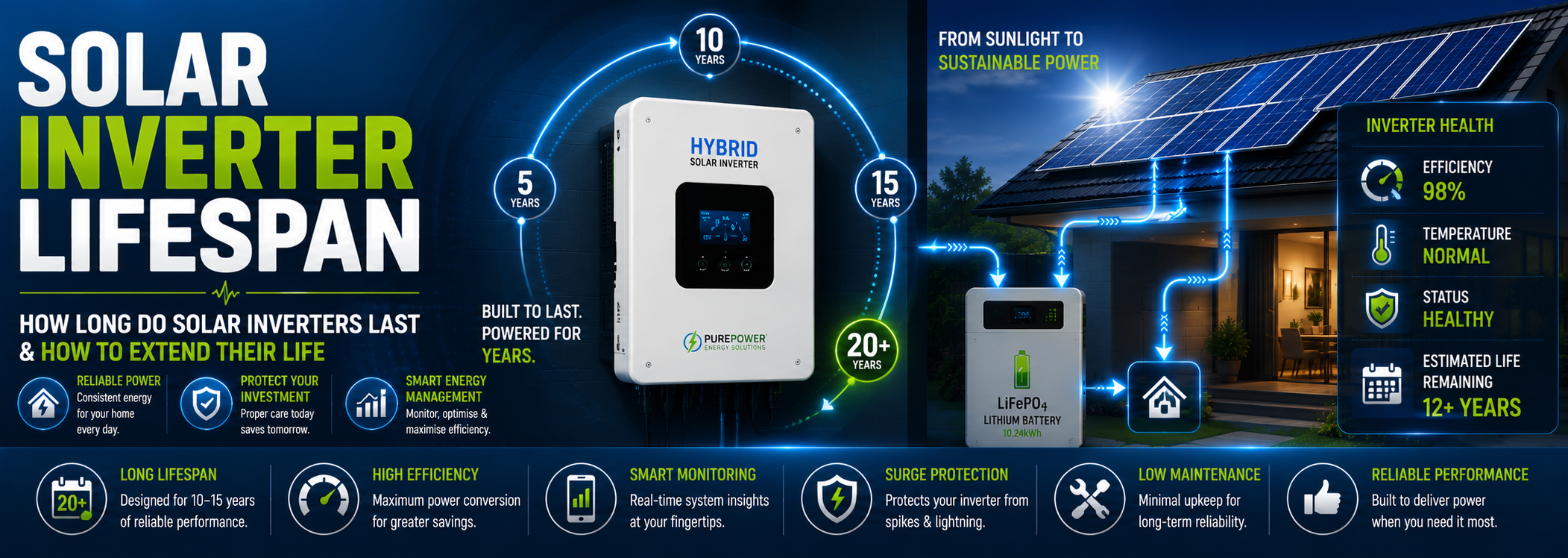
A solar inverter is one of the hardest-working components in a solar energy system. While solar panels often last for decades, inverters have a shorter service life because they continuously convert direct current (DC) electricity into alternating current (AC) electricity for your home or business. Understanding solar inverter lifespan helps you plan maintenance, budgeting and future upgrades.
Fortunately, today’s quality inverters are designed for long-term reliability and can deliver years of dependable performance when installed and maintained correctly.
What Is the Average Solar Inverter Lifespan?
The lifespan of a solar inverter depends on its type, operating conditions and build quality.
Typical lifespans include the following:
| Inverter Type | Expected Lifespan |
|---|---|
| String Inverter | 10–15 years |
| Hybrid Inverter | 10–15 years |
| Microinverter | 20–25 years |
| Off-Grid Inverter | 10–15 years |
Actual performance varies depending on installation quality, ventilation, and usage.
What Affects Solar Inverter Lifespan?
Several factors influence how long an inverter will operate efficiently.
Installation Location
Install the inverter in a cool, dry, and well-ventilated area.
Excessive heat, moisture, and direct sunlight can shorten its lifespan.
Ambient Temperature
Electronic components perform best within the manufacturer’s recommended temperature range.
Continuous overheating accelerates component wear.
System Loading
An inverter that constantly operates near its maximum capacity may experience increased stress.
Correct system sizing improves reliability.
Build Quality
Premium inverters often include better cooling systems, higher-quality components, and longer warranties.
Investing in quality equipment usually results in greater long-term value.
Maintenance
Although inverters require little maintenance, regular inspections help identify dust buildup, loose wiring, or ventilation problems before they become serious.
Signs Your Solar Inverter May Need Attention
Watch for these warning signs:
- Frequent error messages
- Reduced energy production
- Unexpected shutdowns
- Warning lights
- Unusual noises
- Overheating
If you notice these symptoms, contact a qualified solar technician.
How to Extend Solar Inverter Lifespan
You can maximise inverter life by following a few simple practices.
Ensure Good Ventilation
Allow adequate airflow around the inverter.
Avoid installing equipment inside confined spaces without ventilation.
Keep It Clean
Remove dust from air vents and ensure cooling fans remain unobstructed.
Schedule Regular Inspections
Annual servicing allows technicians to check electrical connections, firmware updates, and overall system performance.
Protect Against Power Surges
Install surge protection devices to reduce the risk of lightning and voltage spikes damaging sensitive electronics.
Can a Solar Inverter Be Repaired?
Many inverter problems can be repaired if diagnosed early.
Common repairable issues include:
- Cooling fan replacement
- Communication faults
- Firmware updates
- Loose electrical connections
However, severe internal damage may require inverter replacement.
Frequently Asked Questions
Can my solar panels outlast my inverter?
Yes. Solar panels often operate for 25 to 30 years or longer, while most inverters require replacement sooner.
Does a hybrid inverter last longer?
Not necessarily. Lifespan depends more on product quality, operating conditions, and maintenance than on inverter type alone.
Is it expensive to replace an inverter?
Replacement costs vary depending on inverter size, features and installation requirements.
Can I upgrade to a larger inverter later?
Yes. Many systems can be upgraded if your electricity demand increases or you expand your solar installation.
Conclusion
Understanding solar inverter lifespan helps you make informed decisions about your solar investment. Although inverters typically require replacement before solar panels, choosing quality equipment, ensuring proper installation, and performing regular maintenance can maximise reliability and reduce long-term costs.
A well-maintained inverter will continue delivering efficient energy conversion and dependable performance for many years.