Currently Empty: R0.00

Ultrafiltration Maintenance: Keeping Your System Running Efficiently
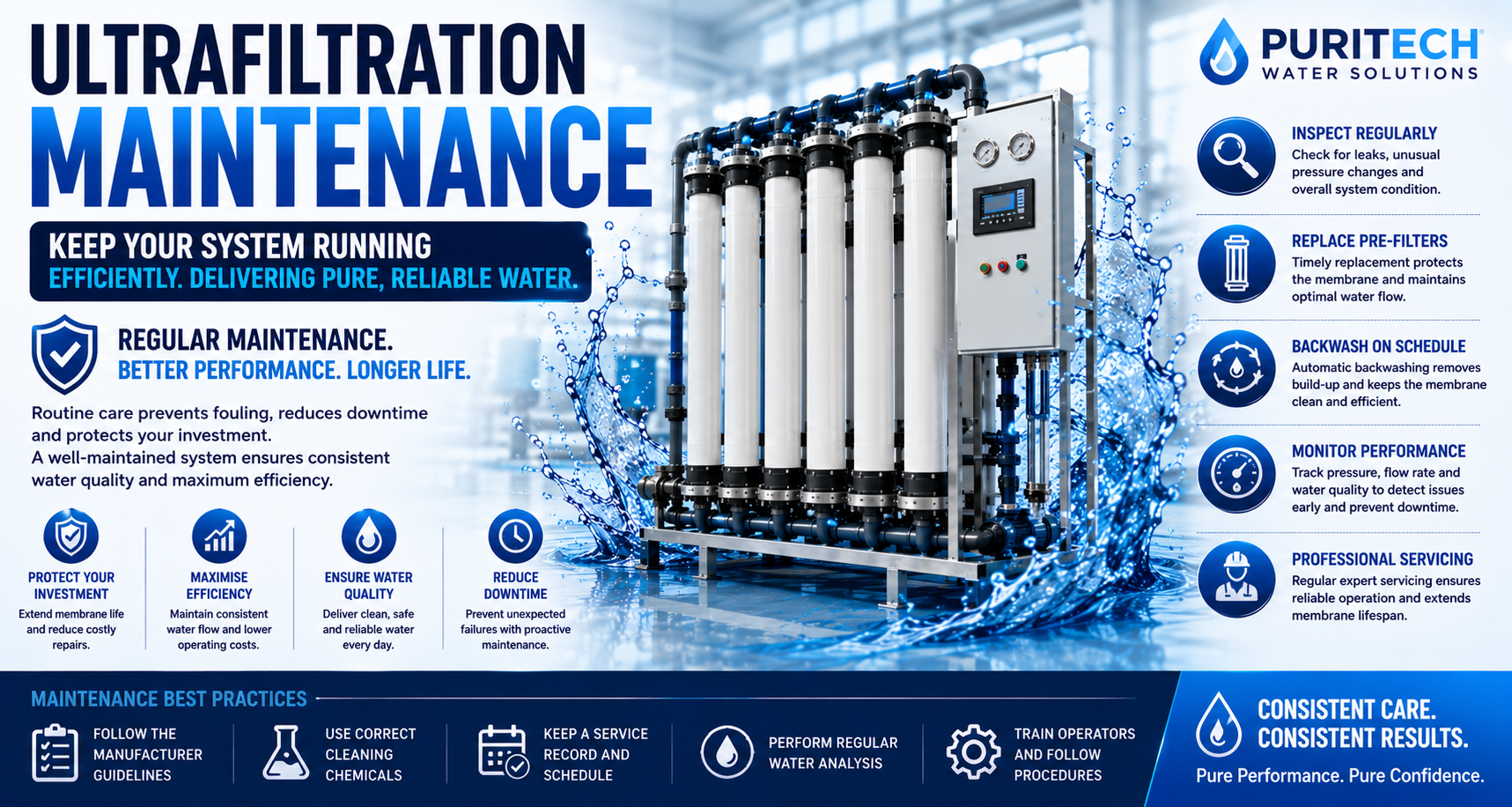
Ultrafiltration maintenance is essential for ensuring consistent water quality, reliable system performance, and a long membrane lifespan. Although ultrafiltration systems are designed to operate efficiently for many years, routine maintenance helps prevent unnecessary wear, reduces operating costs and minimises unexpected downtime.
Fortunately, maintaining an ultrafiltration system is straightforward when the correct procedures are followed. Regular inspections, scheduled cleaning and timely replacement of consumable components all contribute to dependable long-term performance.
Understanding ultrafiltration maintenance helps homeowners, businesses, industries and municipalities protect their investment while ensuring their water treatment system continues to operate at peak efficiency.
Why Ultrafiltration Maintenance Is Important
Every ultrafiltration system continuously removes suspended solids, bacteria, algae and other microscopic contaminants.
As filtration continues, these contaminants gradually accumulate within the system.
Without routine maintenance, this build-up can lead to:
- Reduced water flow
- Increased operating pressure
- More frequent cleaning
- Membrane fouling
- Lower filtration efficiency
- Shorter membrane lifespan
Consequently, scheduled maintenance forms an essential part of every successful ultrafiltration installation.
How Often Should an Ultrafiltration System Be Serviced?
The maintenance schedule depends on several factors, including:
- Feed water quality
- Daily water usage
- System size
- Operating conditions
- Manufacturer recommendations
Some maintenance tasks are completed automatically by the system, while others require periodic inspection by qualified technicians.
For systems treating challenging water sources, more frequent servicing may be necessary.
Routine Ultrafiltration Maintenance Tasks
A comprehensive maintenance programme includes several routine procedures.
Inspect the System
Regular visual inspections help identify leaks, damaged fittings, and unusual operating conditions before they develop into larger problems.
Replace Pre-Filters
Pre-filters protect the ultrafiltration membrane by removing larger contaminants.
Replacing these filters at the recommended intervals helps reduce membrane fouling and maintain water flow.
Perform Backwashing
Many ultrafiltration systems automatically perform scheduled backwashing.
This process removes accumulated contaminants from the membrane surface and restores filtration performance.
Monitor Operating Pressure
Pressure gauges provide valuable information about system condition.
Changes in pressure may indicate blocked filters, membrane fouling or other maintenance requirements.
Check Water Quality
Routine water quality testing confirms that the system continues to perform as expected.
Monitoring water quality also helps identify developing issues before they affect the treated water supply.
Why Water Analysis Supports Better Maintenance
A professional water analysis provides valuable information throughout the life of an ultrafiltration system.
Changes in feed water quality may require adjustments to maintenance schedules or additional pre-treatment.
Consequently, periodic water testing helps optimise ultrafiltration maintenance while protecting membrane performance.
Common Ultrafiltration Maintenance Mistakes
Even the best ultrafiltration system can experience reduced performance if routine maintenance is neglected. Avoiding these common mistakes helps maintain reliable operation and extends the life of the membrane.
Skipping Pre-Filter Replacement
Pre-filters capture larger particles before they reach the ultrafiltration membrane.
If these filters become blocked or are not replaced on time, additional contaminants reach the membrane, increasing the risk of fouling and reducing system performance.
Ignoring Pressure Changes
A sudden increase or decrease in operating pressure often indicates that something requires attention.
Ignoring pressure readings can allow small problems to develop into more expensive repairs.
Routine monitoring helps identify maintenance needs early.
Delaying Cleaning
Backwashing and scheduled cleaning remove contaminants before they accumulate excessively.
Delaying these procedures can reduce water production, increase operating pressure and shorten membrane lifespan.
Using Incorrect Cleaning Chemicals
Not all cleaning chemicals are suitable for every membrane material.
Always use cleaning products recommended by the membrane manufacturer to avoid damaging the membrane.
Overlooking Water Quality Changes
Water quality can change over time due to seasonal variations, municipal supply changes or borehole conditions.
Periodic water analysis helps ensure the maintenance programme remains appropriate for the current water quality.
Professional Servicing vs Routine Owner Maintenance
Some ultrafiltration maintenance tasks can be carried out by the system owner, while others are best performed by trained technicians.
Routine Owner Maintenance
Depending on the system, owners may be responsible for:
- Inspecting the system for leaks
- Monitoring operating pressure
- Replacing sediment pre-filters
- Checking water quality
- Keeping the installation area clean
Professional Maintenance
Qualified technicians typically perform:
- Membrane performance assessments
- Chemical cleaning procedures
- Integrity testing
- Flow rate verification
- Pressure calibration
- System troubleshooting
- Replacement of worn components
Professional servicing helps identify potential issues before they affect system performance.
Ultrafiltration Maintenance Checklist
A structured maintenance plan makes it easier to keep the system operating efficiently.
Daily
- Check for leaks
- Verify normal operating pressure
- Observe water production
Weekly
- Inspect pressure gauges
- Check flow rate
- Confirm automatic backwashing is functioning correctly
Monthly
- Inspect pre-filters
- Review water quality
- Check pipework and fittings
Annually (or as recommended)
- Professional system inspection
- Membrane performance evaluation
- Chemical cleaning if required
- Replace worn consumable components
- Review overall system performance
The exact schedule should always follow the manufacturer’s recommendations and reflect the quality of the incoming water.
Frequently Asked Questions
How often should ultrafiltration maintenance be performed?
Basic inspections should be carried out regularly, while servicing intervals depend on feed water quality, system usage and the manufacturer’s recommendations.
Can I perform ultrafiltration maintenance myself?
Routine inspections, monitoring and pre-filter replacement are often straightforward. However, specialised procedures such as membrane integrity testing and chemical cleaning are generally best performed by qualified technicians.
Why is water analysis important for maintenance?
Water quality directly affects membrane fouling, cleaning frequency and overall system performance. Periodic water analysis helps ensure the maintenance programme remains effective.
Does regular maintenance extend membrane life?
Yes. Consistent ultrafiltration maintenance helps reduce fouling, maintain stable performance and maximise membrane lifespan.
Conclusion
Effective ultrafiltration maintenance is essential for keeping a water treatment system operating reliably and efficiently. Regular inspections, timely pre-filter replacement, scheduled backwashing and professional servicing all contribute to consistent water quality and long membrane life.
Monitoring operating pressure, observing changes in water quality and responding quickly to maintenance requirements help prevent costly repairs and unexpected downtime. Combined with periodic water analysis, a well-planned maintenance programme protects your investment and ensures dependable performance for years to come.
Whether your ultrafiltration system serves a home, business, industrial facility or municipal application, proactive maintenance remains one of the most important factors in achieving reliable, long-term water treatment.