Currently Empty: R0.00

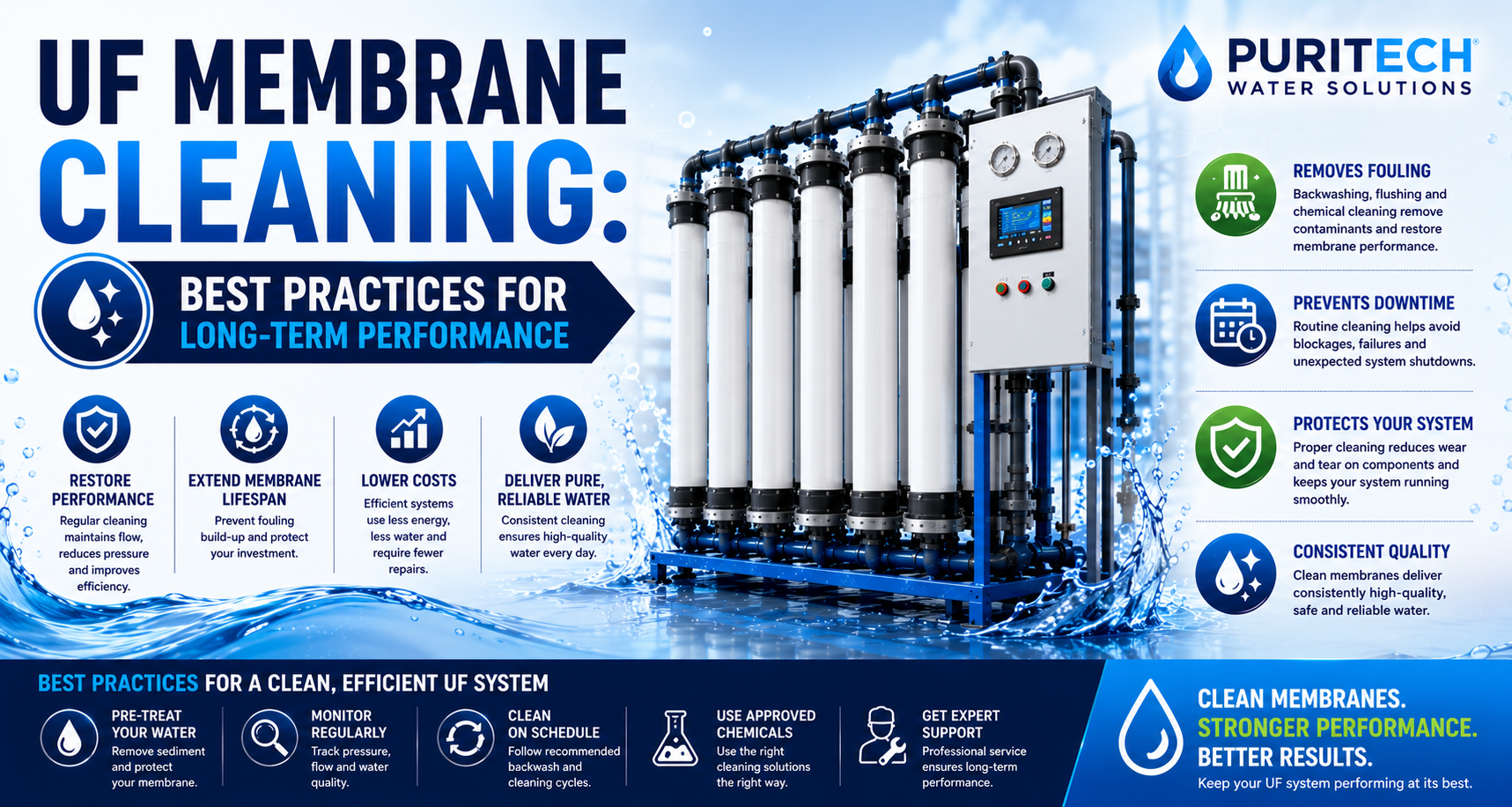
UF Membrane Cleaning: Best Practices for Long-Term Performance
UF membrane cleaning is one of the most important maintenance procedures for keeping an ultrafiltration system operating efficiently. During normal filtration, suspended solids, organic matter, and microorganisms gradually accumulate on the membrane surface. If these contaminants are not removed, water flow decreases, operating pressure increases, and overall system performance declines.
Fortunately, routine cleaning restores membrane performance, helps control fouling and extends membrane lifespan. Whether an ultrafiltration system is installed in a home, factory, commercial building or municipal treatment plant, following the correct cleaning procedures is essential for reliable long-term operation.
Understanding UF membrane cleaning helps system owners reduce operating costs, maintain water quality, and protect their investment.
Why UF Membrane Cleaning Is Necessary
An ultrafiltration membrane continuously traps contaminants while allowing clean water to pass through.
Over time, the trapped material forms a layer on the membrane surface.
Without regular UF membrane cleaning, this build-up can cause the following:
- Reduced water production
- Increased operating pressure
- More frequent membrane fouling
- Lower filtration efficiency
- Higher energy consumption
- Shorter membrane lifespan
Routine cleaning restores water flow and keeps the system operating as designed.
What Causes a Membrane to Become Dirty?
Several types of contaminants contribute to membrane fouling.
Common causes include:
Suspended Solids
Fine sand, silt, clay, and rust particles accumulate during filtration.
Organic Matter
Natural organic material from surface water or boreholes gradually coats the membrane.
Biological Growth
Bacteria, algae and biofilms can develop on the membrane if cleaning is delayed.
Mineral Deposits
Certain water conditions may lead to scaling, particularly when minerals accumulate on the membrane surface over time.
Types of UF Membrane Cleaning
Different cleaning methods are used depending on the type and severity of fouling.
Backwashing
Backwashing is the most common cleaning method.
Clean water flows through the membrane in the reverse direction, lifting contaminants from the membrane surface before they are discharged to drain.
Many ultrafiltration systems perform this process automatically.
Forward Flushing
Forward flushing helps remove loose particles from the membrane housing and associated pipework.
This procedure is often performed between filtration cycles.
Air Scouring
Some industrial ultrafiltration systems use compressed air to loosen stubborn deposits before backwashing.
This improves cleaning efficiency and helps reduce membrane fouling.
Chemical Cleaning
When physical cleaning is no longer sufficient, chemical cleaning may be required.
Suitable cleaning chemicals help remove:
- Organic fouling
- Biological contamination
- Mineral scaling
- Persistent membrane deposits
Cleaning chemicals should always be compatible with the membrane material and used according to the manufacturer’s recommendations.
When Should UF Membranes Be Cleaned?
Cleaning frequency depends on the following:
- Feed water quality
- Daily water usage
- Membrane fouling rate
- Operating pressure
- Manufacturer recommendations
Many systems perform automatic backwashing several times each day, while chemical cleaning is carried out only when monitoring indicates that membrane performance has declined.
Signs Your UF Membrane Needs Cleaning
Recognising the early signs of reduced membrane performance helps prevent unnecessary downtime and costly repairs. For example, monitoring system performance regularly makes it easier to determine when UF membrane cleaning is required.
Common warning signs include:
- Reduced filtered water flow
- Increased operating pressure
- More frequent backwashing cycles
- Declining water quality
- Higher energy consumption
- Uneven system performance
If these symptoms persist after routine backwashing, a more thorough cleaning or professional inspection may be necessary.
Common UF Membrane Cleaning Mistakes
Cleaning a membrane incorrectly can reduce its performance and, in some cases, permanently damage it.
Avoid these common mistakes.
Delaying Cleaning
Waiting too long before cleaning allows contaminants to become more firmly attached to the membrane surface, making them more difficult to remove.
Routine maintenance is far more effective than corrective cleaning.
Using the Wrong Cleaning Chemicals
Not every cleaning solution is suitable for every membrane.
Using incompatible chemicals may damage the membrane material and shorten its lifespan.
Always follow the membrane manufacturer’s recommendations.
Ignoring Pre-Treatment
Poor pre-treatment allows excessive sediment and organic matter to reach the membrane.
As a result, cleaning becomes more frequent and membrane performance declines more rapidly.
Skipping Routine Inspections
Monitoring operating pressure, flow rate, and water quality helps identify cleaning requirements before serious fouling develops.
Regular inspections are an essential part of UF membrane cleaning.
Automatic Cleaning vs Professional Cleaning
In most cases, ultrafiltration systems combine automatic cleaning with scheduled professional maintenance to deliver reliable long-term performance.
Automatic Cleaning
Modern systems often perform the following:
- Automatic backwashing
- Forward flushing
- Scheduled rinse cycles
These automated processes remove routine contamination and maintain day-to-day filtration efficiency.
Professional Cleaning
Qualified technicians may perform:
- Chemical cleaning
- Membrane integrity testing
- Performance evaluations
- Pressure testing
- Inspection of pumps, valves and instrumentation
Professional servicing restores membrane performance when automatic cleaning alone is no longer sufficient.
Best Practices for Long-Term Membrane Performance
To maximise the benefits of UF membrane cleaning, follow these best practices:
- Conduct a professional water analysis before selecting a system.
- Install the correct pre-treatment for your water source.
- Replace pre-filter cartridges at the recommended intervals.
- Monitor operating pressure and water flow regularly.
- Perform scheduled backwashing and flushing.
- Use only manufacturer-approved cleaning chemicals.
- Arrange periodic inspections by qualified technicians.
Following these recommendations helps improve filtration efficiency, extend membrane lifespan and reduce operating costs.
Frequently Asked Questions
How often should a UF membrane be cleaned?
Most ultrafiltration systems perform automatic backwashing several times a day, depending on the feed water quality and system design. However, technicians normally carry out chemical cleaning only after performance monitoring shows that the membrane requires additional cleaning.
Can backwashing replace chemical cleaning?
No. Backwashing removes loose contaminants from the membrane surface. However, stubborn organic deposits, biological fouling and mineral scale often require chemical cleaning to restore optimum performance.
Can improper cleaning damage a UF membrane?
Yes. If you use unsuitable cleaning chemicals or incorrect cleaning procedures, you can permanently damage the membrane and shorten its service life. Therefore, always follow the membrane manufacturer’s cleaning recommendations.
Does good maintenance reduce cleaning frequency?
Yes. Proper pre-treatment, routine inspections, and scheduled servicing reduce membrane fouling and help maintain efficient operation. Consequently, the system often requires less intensive cleaning while continuing to produce consistently high-quality water.
Conclusion
Overall, UF membrane cleaning plays a vital role in maintaining efficient ultrafiltration performance and extending membrane lifespan. Although routine fouling is a normal part of the filtration process, regular backwashing, scheduled maintenance, and professional cleaning help prevent contaminants from reducing water flow and filtration efficiency.
In addition, appropriate pre-treatment, routine monitoring and manufacturer-approved cleaning procedures keep the membrane operating at peak performance while reducing long-term operating costs. Furthermore, a professional water analysis helps technicians select the correct treatment solution and establish an effective maintenance programme based on the quality of the incoming water.
As a result, homeowners, businesses, industries and municipalities can improve system reliability, reduce maintenance costs and maximise membrane life. Therefore, investing in routine UF membrane cleaning is one of the most effective ways to protect your ultrafiltration system and ensure a consistent supply of high-quality treated water.