Currently Empty: R0.00

Inside an Ultrafiltration Membrane: How Water Is Filtered
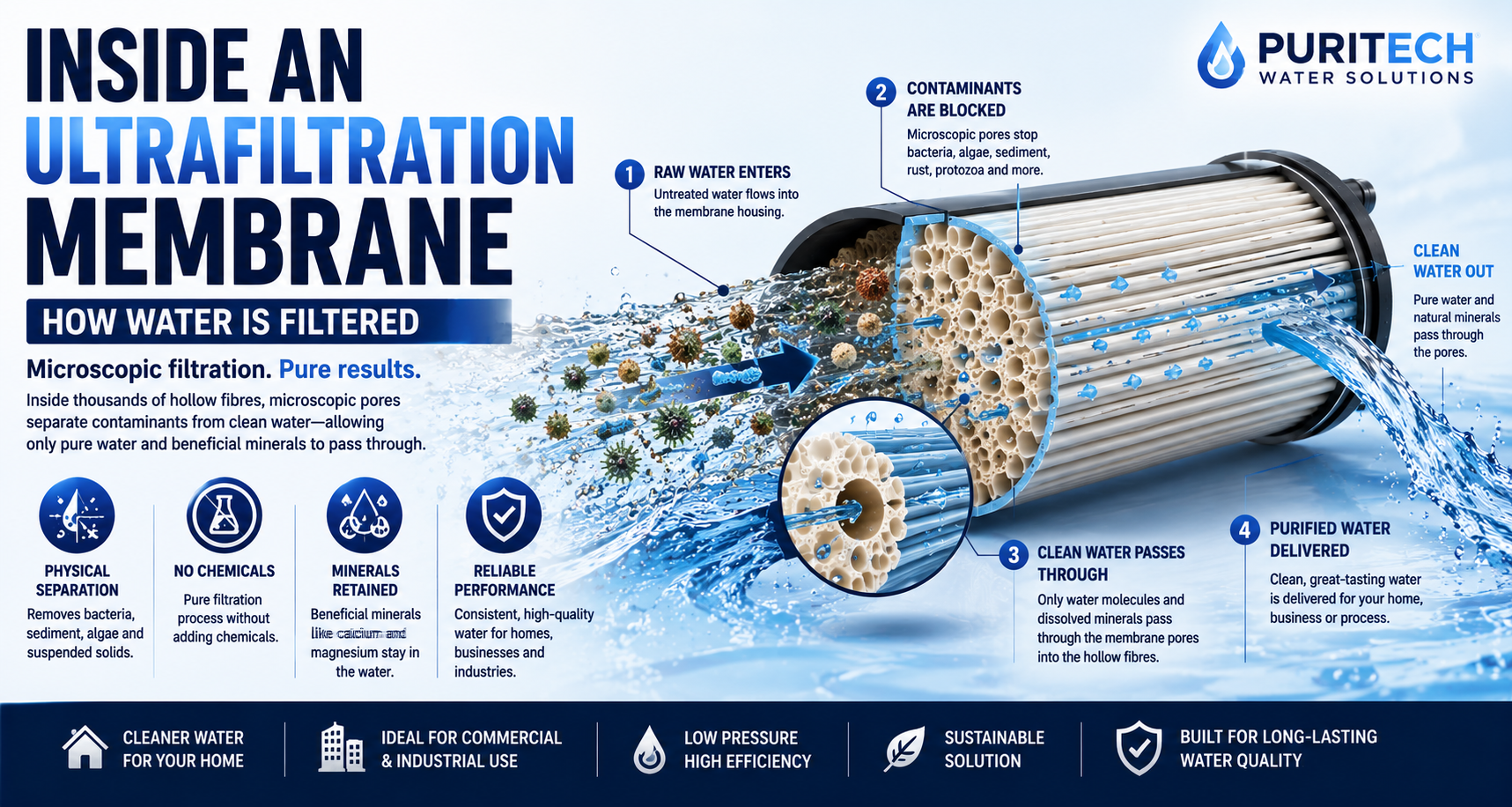
Inside an ultrafiltration membrane, thousands of microscopic hollow fibres work together to separate suspended contaminants from clean water. Although the process happens at a microscopic level, it is one of the most effective physical filtration methods used in modern water treatment.
Every second, water flows through tiny membrane pores that are carefully engineered to block contaminants such as bacteria, sediment, algae and suspended solids while allowing clean water and naturally dissolved minerals to pass through. This precise separation process enables ultrafiltration systems to deliver consistently high water quality without relying on chemical treatment.
Understanding what happens inside an ultrafiltration membrane helps explain why this technology is trusted in residential, commercial, industrial, and municipal water treatment applications worldwide.
What Is Inside an Ultrafiltration Membrane?
An ultrafiltration membrane contains thousands of hollow fibres bundled together inside a pressure vessel.
Each hollow fibre resembles a tiny tube with microscopic pores distributed evenly across its wall.
Although each fibre is extremely small, the combined filtration surface created by thousands of fibres allows large volumes of water to be treated efficiently.
The membrane housing protects these delicate fibres while directing water through the filtration process.
The Journey of Water Through the Membrane
To understand what is inside an ultrafiltration membrane, it helps to follow the path of water through the system.
Step 1: Raw Water Enters the Membrane Housing
Untreated water enters the pressure vessel and surrounds the hollow fibres or flows through their centres, depending on the membrane design.
Step 2: Pressure Pushes Water Through the Membrane
Operating pressure forces the water against the microscopic membrane pores.
Because the pores are precisely engineered, only water molecules and very small dissolved substances can pass through.
Step 3: Contaminants Remain Behind
Larger particles cannot fit through the membrane pores.
These contaminants include:
- Sand
- Silt
- Rust particles
- Bacteria
- Protozoa
- Algae
- Microplastics
- Suspended solids
Instead of passing through the membrane, these contaminants remain on the feed side until they are removed during flushing or backwashing.
Step 4: Clean Water Leaves the Membrane
Once filtered, clean water collects inside the hollow fibres before flowing to the outlet.
Because dissolved minerals such as calcium and magnesium are much smaller than the membrane pores, they remain in the treated water.
Why Microscopic Pores Matter
The membrane pores typically measure between 0.01 and 0.1 microns.
For comparison:
- Human hair: approximately 70 microns
- Fine sand: around 90 microns
- Most bacteria: 0.2–5 microns
This enormous difference in size allows the membrane to block contaminants that are invisible to the human eye while maintaining an efficient flow of clean water.
Why This Process Is So Effective
The filtration process occurring inside an ultrafiltration membrane offers several advantages:
- Physical separation without chemicals
- Consistent water quality
- Removal of microscopic suspended contaminants
- Retention of beneficial dissolved minerals
- Low operating pressure
- Reliable long-term performance
These advantages make ultrafiltration one of the most widely used membrane technologies in the water treatment industry.
What Happens When Contaminants Build Up?
Over time, contaminants collect on the surface of the membrane fibres. This process is known as membrane fouling.
Although fouling is a normal part of filtration, excessive build-up can reduce water flow and lower system efficiency. Fortunately, modern ultrafiltration systems are designed to minimise fouling through routine cleaning and proper pre-treatment.
Common materials that contribute to fouling include:
- Fine sediment
- Organic matter
- Algae
- Bacteria
- Biofilm
- Suspended solids
Regular maintenance keeps the membrane operating efficiently and helps extend its service life.
How an Ultrafiltration Membrane Cleans Itself
Many commercial and industrial ultrafiltration systems include automatic cleaning cycles.
During backwashing, clean water flows through the membrane in the opposite direction. This reverse flow loosens contaminants trapped on the membrane surface and carries them to the drain.
Some systems also perform periodic air scouring or chemical cleaning to remove stubborn deposits and restore filtration performance.
As a result, the membrane continues to produce consistent, high-quality water over long operating periods.
Factors That Affect Membrane Performance
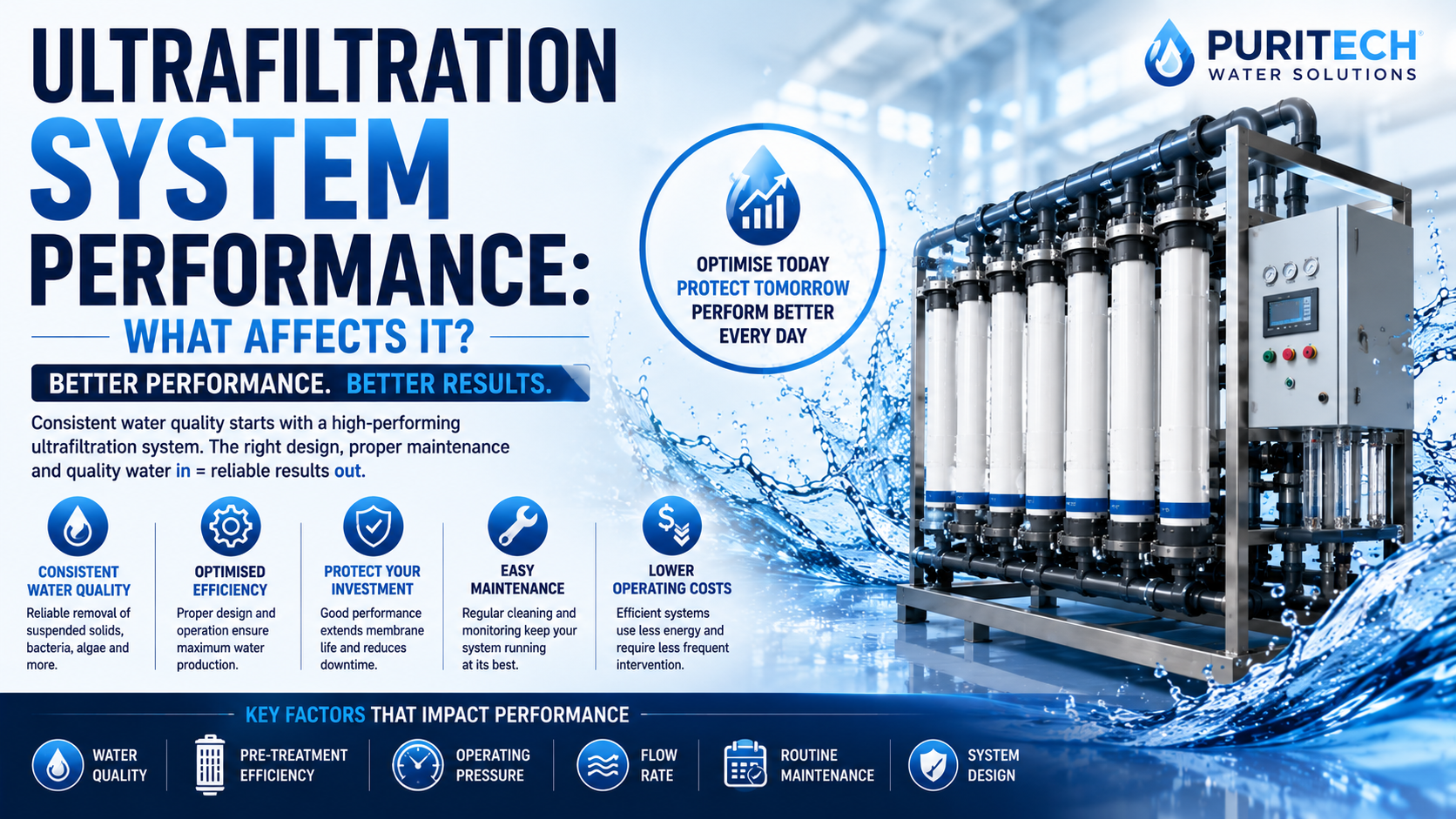
Several factors influence what happens inside an ultrafiltration membrane and how efficiently it filters water.
Incoming Water Quality
Water with high levels of suspended solids or organic matter places a greater load on the membrane. Appropriate pre-filtration helps reduce fouling and improves overall system performance.
Operating Pressure
Ultrafiltration requires enough pressure to move water through the microscopic pores.
However, excessive pressure can increase membrane stress and is not always beneficial. Operating the system within the manufacturer’s recommended pressure range delivers the best balance between flow rate and membrane life.
Flow Rate
Water should move through the membrane at the correct flow rate.
Flow rates that are too high may reduce filtration efficiency, while unnecessarily low flow rates can limit water production.
Maintenance
Routine servicing plays a major role in maintaining membrane performance.
Typical maintenance includes the following:
- Replacing pre-filter cartridges
- Performing scheduled backwashing
- Inspecting operating pressure
- Monitoring flow rates
- Carrying out chemical cleaning when required
Following the recommended maintenance schedule helps maximise membrane lifespan and maintain consistent water quality.
Where This Technology Is Used
Because of the advanced filtration process taking place inside an ultrafiltration membrane, this technology is used in a wide range of applications.
Residential Water Treatment
Homeowners use ultrafiltration to improve drinking water quality while preserving naturally occurring minerals.
Commercial Buildings
Offices, hotels and shopping centres rely on ultrafiltration to provide clean, reliable water for employees, guests and customers.
Food and Beverage Production
Manufacturers use ultrafiltration to improve process water quality and protect production equipment.
Healthcare Facilities
Hospitals, clinics and laboratories benefit from dependable water treatment for many non-sterile applications.
Industrial Water Treatment
Industries frequently use ultrafiltration as a pre-treatment stage before reverse osmosis systems, helping reduce membrane fouling and improve overall efficiency.
Municipal Water Treatment
Water treatment facilities use ultrafiltration to remove suspended contaminants before distributing drinking water or as part of advanced treatment processes.
Frequently Asked Questions
What is inside an ultrafiltration membrane?
Inside an ultrafiltration membrane are thousands of hollow fibres with microscopic pores. These fibres separate suspended contaminants from clean water while allowing beneficial dissolved minerals to pass through.
Does an ultrafiltration membrane remove dissolved salts?
No. Dissolved salts are much smaller than the membrane pores and therefore pass through the membrane. Reverse osmosis is typically used when dissolved salt removal is required.
Why do ultrafiltration membranes need backwashing?
Backwashing removes contaminants that accumulate on the membrane surface. Regular cleaning helps maintain water flow, filtration efficiency and membrane lifespan.
Can contaminants damage the membrane?
If maintenance is neglected, excessive fouling may reduce performance. However, routine servicing and proper system operation help protect the membrane and extend its useful life.
Conclusion
Understanding what happens inside an ultrafiltration membrane reveals why this technology has become a trusted solution for modern water treatment. Thousands of microscopic hollow fibres work together to remove suspended solids, bacteria, algae, protozoa and other contaminants while allowing clean water and beneficial dissolved minerals to pass through.
Although the filtration process takes place on a microscopic scale, its impact is significant. When combined with proper maintenance, regular backwashing and a professional water analysis, ultrafiltration delivers reliable, efficient and long-lasting water treatment for residential, commercial, industrial and municipal applications.