Currently Empty: R0.00

Solar Battery Size: How to Choose the Right Capacity
Choosing the correct solar battery size is one of the most important decisions when designing a solar energy system. A battery that is too small may not provide enough backup power during outages, while one that is too large can increase your installation costs without delivering additional value.
Fortunately, selecting the right capacity is easier when you understand your electricity usage, backup requirements, and future energy goals.
Why Solar Battery Size Matters
The size of your battery determines how much electricity it can store and how long it can power your home or business.
A correctly sized battery helps you:
- Keep essential appliances running during outages.
- Maximise the use of solar energy.
- Reduce electricity purchased from the grid.
- Improve energy independence.
- Protect against load shedding.
Choosing the right capacity ensures your system performs efficiently without unnecessary expense.
Understand Battery Capacity
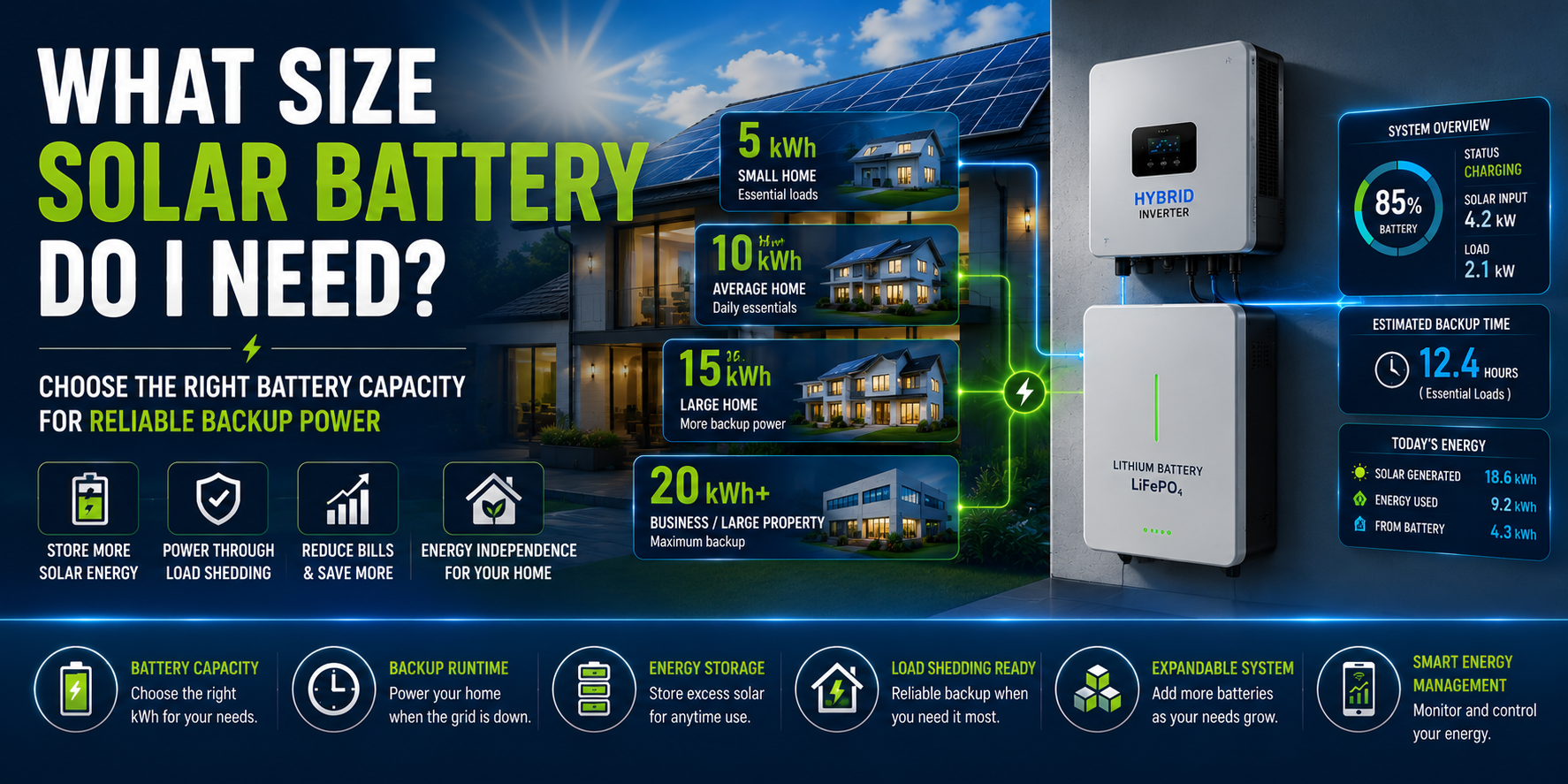
Battery capacity is measured in kilowatt-hours (kWh).
The higher the kWh rating, the more energy the battery can store.
For example:
| Battery Capacity | Typical Use |
|---|---|
| 5 kWh | Small home or essential loads |
| 10 kWh | Average family home |
| 15 kWh | Large home |
| 20 kWh+ | Commercial applications |
Actual requirements depend on your daily electricity consumption.
Calculate Your Daily Electricity Usage
Before selecting a battery, determine how much electricity you use each day.
You can find this information on your electricity bill or through an energy monitor.
For example:
| Daily Usage | Suggested Battery Capacity |
|---|---|
| 5–8 kWh | 5 kWh |
| 8–15 kWh | 10 kWh |
| 15–25 kWh | 15 kWh |
| 25–40 kWh | 20 kWh or more |
These figures provide a useful starting point. A professional assessment can refine the final system size.
Decide What You Want to Power
Not every property requires whole-house backup.
Many homeowners choose to power only essential appliances, including:
- Refrigerator
- Lights
- Wi-Fi router
- Television
- Security system
- Computer
Businesses may also prioritise critical equipment to extend battery runtime.
Factors That Affect Solar Battery Size
Several factors influence the ideal battery capacity.
Load Shedding Duration
Longer power outages require greater energy storage.
Solar Panel Capacity
Your solar panels must generate enough electricity to recharge the battery efficiently.
Inverter Size
The inverter should be compatible with your chosen battery capacity.
Future Expansion
If you expect your electricity usage to increase, consider selecting a battery system that supports additional modules.
Battery Technology
Modern LiFePO4 batteries provide greater usable capacity than many traditional battery technologies because they support deeper discharge levels.
Should You Install More Than One Battery?
Many modern systems allow multiple batteries to operate together.
Benefits include:
- Longer backup time
- Increased storage capacity
- Easier future expansion
- Improved energy management
This modular approach allows your system to grow with your needs.
Common Mistakes to Avoid
Avoid these common sizing errors:
- Choosing the cheapest battery.
- Ignoring future energy needs.
- Forgetting inverter compatibility.
- Underestimating daily electricity usage.
- Not allowing for cloudy weather.
Planning usually results in a better long-term investment.
Frequently Asked Questions
Can one battery power an entire house?
Yes, provided the battery has sufficient capacity and the inverter supports the required load.
Can I add another battery later?
Many lithium battery systems are modular and can be expanded in the future.
Does a larger battery always save more money?
Not necessarily. The best value comes from choosing a battery that matches your actual energy requirements.
Is a 5 kWh battery enough?
For many homes, a 5 kWh battery can power essential appliances during shorter outages. Larger households often require additional storage.
Conclusion
Choosing the correct solar battery size ensures your solar energy system provides reliable backup power while making efficient use of your investment. By calculating your electricity usage, understanding your backup needs, and planning for future expansion, you can select a battery that delivers dependable performance for years to come.
If you’re unsure which capacity is right for your property, consult a qualified solar specialist who can recommend a solution tailored to your energy requirements.