Currently Empty: R0.00

Solar Panel Weather Resistance: Can Solar Panels Survive Storms?
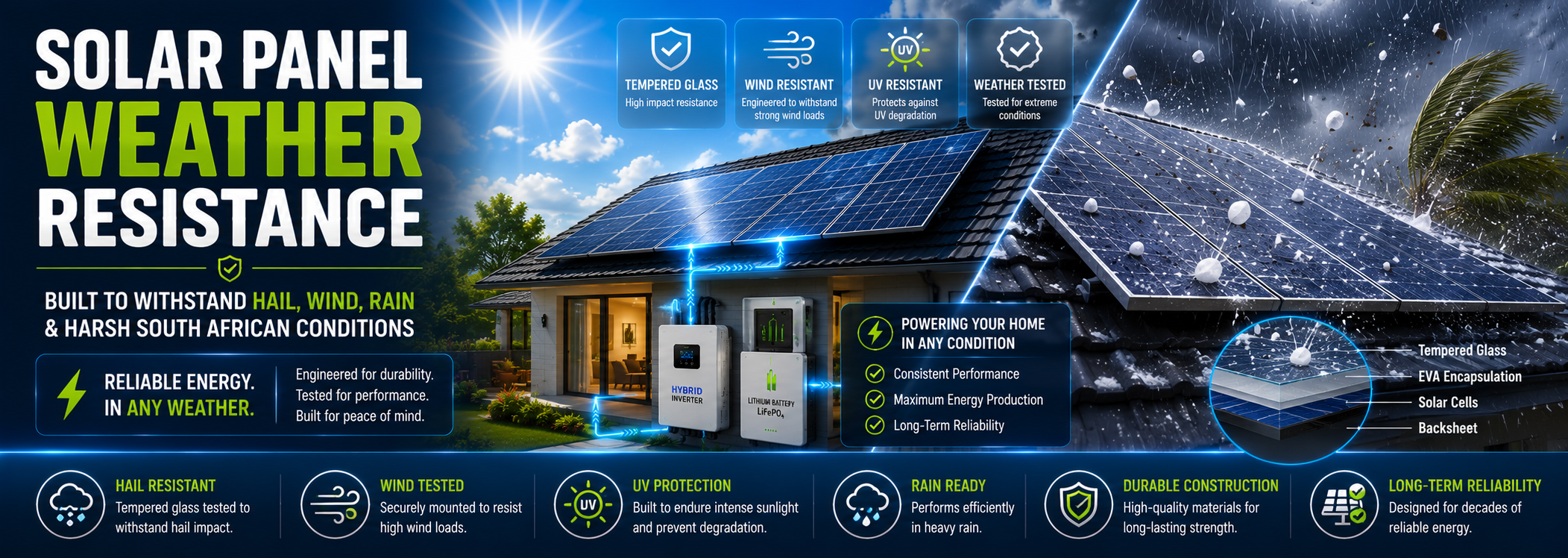
Modern solar panels are built to withstand harsh outdoor conditions throughout their lifespan. Solar panel weather resistance is one of the reasons why homeowners and businesses confidently invest in solar energy, even in areas that experience heavy rain, strong winds or hailstorms.
Although severe weather can occasionally cause damage, quality solar panels undergo rigorous testing to ensure they perform reliably in challenging environments.
Are Solar Panels Designed for Extreme Weather?
Yes.
Manufacturers design premium solar panels to operate safely in a wide range of environmental conditions.
Most quality panels are tested for:
- Heavy rainfall
- Strong winds
- Hail impact
- High temperatures
- UV exposure
- Temperature fluctuations
These tests help verify durability before the panels reach the market.
Can Hail Damage Solar Panels?
Quality solar panels use tempered glass designed to withstand normal hail conditions.
Many products are tested using ice balls fired at high speed to simulate real-world storms.
While extremely severe hail can still cause damage, modern panels are far more durable than many people expect.
How Strong Winds Affect Solar Panels
Wind generally affects the mounting system more than the panels themselves.
Professional installers secure panels using engineered mounting structures designed to resist high wind loads.
Proper installation plays a major role in long-term reliability.
Do Solar Panels Work During Rain?
Yes.
Rain itself does not stop solar panels from generating electricity.
Although cloud cover reduces sunlight, panels continue producing energy from available daylight.
An added benefit is that rain helps wash away dust and light dirt, keeping the panels cleaner.
How Hot Weather Affects Solar Panels
Solar panels generate electricity from sunlight rather than heat.
In fact, extremely high temperatures can reduce efficiency slightly.
However, quality panels are designed to operate effectively in hot climates such as South Africa.
Tips to Improve Solar Panel Weather Resistance
To maximise durability:
- Choose certified, high-quality panels.
- Use professional installers.
- Inspect mounting hardware regularly.
- Remove nearby branches that could fall during storms.
- Schedule annual inspections.
- Replace damaged components promptly.
Preventive maintenance helps protect your investment.
What to Do After a Severe Storm
After extreme weather, inspect your system safely.
Look for:
- Cracked glass
- Loose mounting brackets
- Damaged wiring
- Water ingress
- Reduced power production
If you notice any issues, contact a qualified solar technician before using the system extensively.
Frequently Asked Questions
Can solar panels survive hail?
Yes. Most quality panels are tested to withstand normal hail conditions and are built with durable tempered glass.
Should I switch my solar system off during a storm?
In most situations, no. However, if you suspect damage or your installer recommends a shutdown, follow professional advice.
Can lightning damage a solar system?
Lightning can damage electrical equipment. Proper earthing and surge protection help reduce the risk.
Will strong winds blow solar panels off my roof?
Properly installed systems are designed to withstand high wind loads according to applicable engineering standards.
Conclusion
Understanding solar panel weather resistance gives homeowners and businesses greater confidence when investing in solar energy. Quality panels are engineered to withstand hail, wind, rain, and harsh sunlight while continuing to generate reliable electricity.
Choosing certified equipment, professional installation, and regular maintenance will help ensure your solar system performs safely and efficiently for many years.