Currently Empty: R0.00

How to Choose the Right Solar Inverter for Your Home or Business
Choosing the right solar inverter is one of the most important decisions when installing a solar energy system. The inverter converts the direct current (DC) electricity generated by your solar panels into alternating current (AC) electricity that powers your appliances and equipment.
However, not every inverter is suitable for every installation. The correct choice depends on your electricity consumption, future expansion plans, battery requirements and budget. By understanding the available options, you can invest in a system that performs efficiently for many years.
Why the Solar Inverter Is So Important
The inverter acts as the control centre of your solar system.
It performs several essential functions:
- Converts DC electricity into AC electricity
- Manages energy from the solar panels
- Charges compatible battery systems
- Supplies electricity to your property
- Monitors system performance
- Protects equipment from electrical faults
Because the inverter controls the flow of energy, selecting the correct model has a direct impact on system efficiency and reliability.
Understand the Different Types of Solar Inverters
Before making a decision, it helps to understand the main inverter categories.
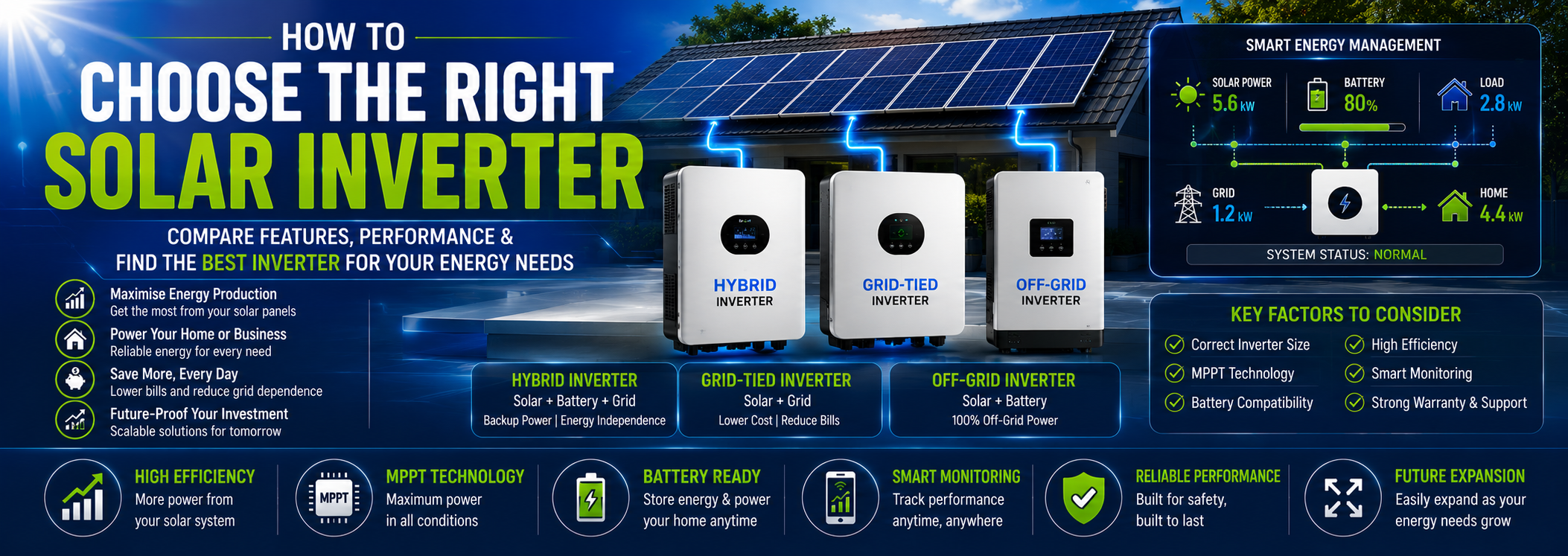
Hybrid Inverters
Hybrid inverters work with both solar panels and battery storage. They can power your property, charge batteries, and draw electricity from the grid when necessary.
They are ideal for:
- Homes affected by load shedding
- Businesses requiring backup power
- Future battery expansion
- Energy independence
Grid-Tied Inverters
Grid-tied inverters operate alongside the utility grid and do not normally provide backup power during an outage unless they form part of a system designed for that purpose.
They are suitable for:
- Lower installation costs
- Daytime energy savings
- Properties with reliable grid power
Off-Grid Inverters
Off-grid inverters operate independently from the electricity grid and rely on batteries and solar panels to supply power.
They are commonly used for:
- Farms
- Remote homes
- Lodges
- Rural businesses
Choose the Correct Inverter Size
Inverter size should match both your solar array and your expected electricity demand.
An undersized inverter may limit system performance, while an oversized inverter can increase costs unnecessarily.
A professional installer will calculate the correct capacity based on the following:
- Daily electricity consumption
- Maximum appliance load
- Solar panel capacity
- Battery storage requirements
- Future expansion plans
Important Features to Look For
Modern solar inverters include advanced technology that improves system performance.
Consider the following features:
MPPT Technology
Maximum Power Point Tracking (MPPT) helps your solar panels produce the highest possible output under changing weather conditions.
Battery Compatibility
If you plan to install batteries now or later, choose an inverter that supports compatible lithium battery systems.
Monitoring
Many modern inverters offer Wi-Fi or mobile app monitoring so you can track energy production, battery status and electricity consumption in real time.
Efficiency
Look for an inverter with a high conversion efficiency. Higher efficiency means more of your solar energy becomes usable electricity.
Warranty
A strong manufacturer’s warranty often reflects confidence in product quality and provides additional peace of mind.
Common Mistakes to Avoid
Avoid these common purchasing mistakes:
- Choosing the cheapest inverter without comparing features
- Buying an inverter that is too small
- Ignoring future battery requirements
- Forgetting warranty coverage
- Choosing equipment without local technical support
Taking time to evaluate these factors helps you make a better long-term investment.
Frequently Asked Questions
Can I add batteries later?
Many hybrid inverters allow battery storage to be added when your energy needs increase.
Is a larger inverter always better?
No. The inverter should be correctly matched to your system size and electricity requirements.
Do all inverters include Wi-Fi monitoring?
No. Some models include built-in monitoring, while others require optional accessories.
How long does a solar inverter last?
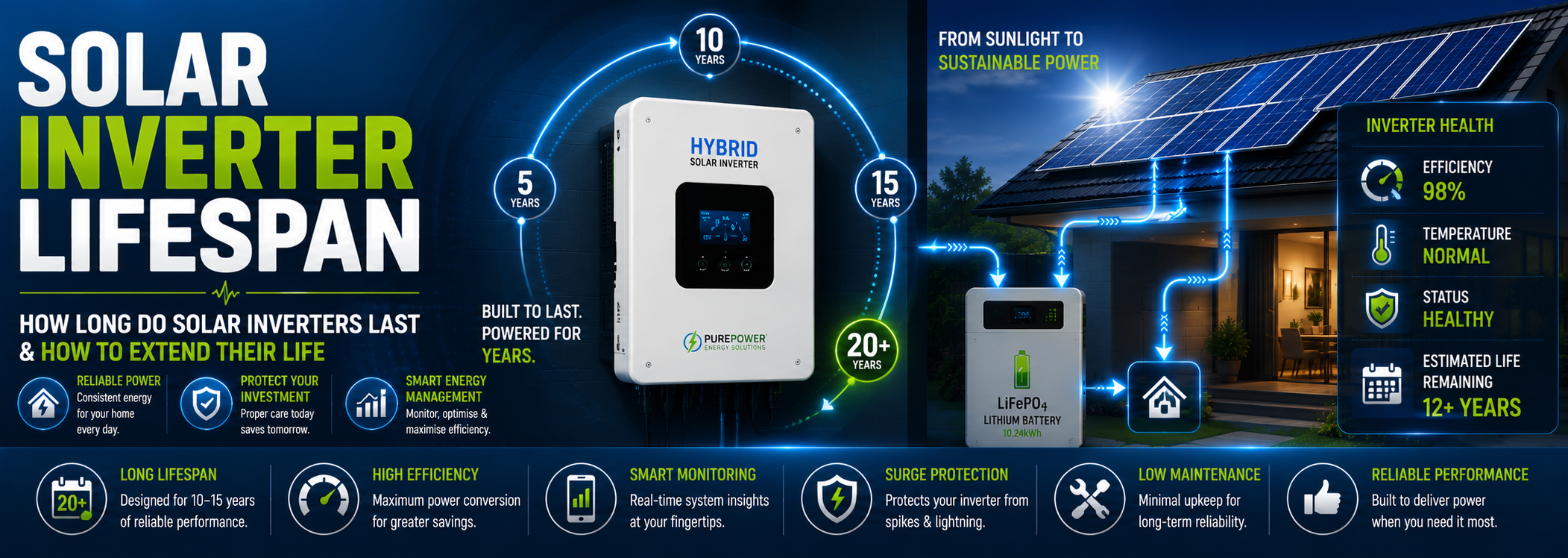
Many quality inverters have an expected lifespan of 10 to 15 years, depending on operating conditions and maintenance.
Conclusion
Learning how to choose the right solar inverter will help you build a reliable and efficient solar energy system. By comparing inverter types, selecting the correct size and considering features such as MPPT, battery compatibility and monitoring, you can invest with confidence.
A properly selected inverter not only improves daily performance but also supports future expansion, helping your solar system deliver dependable energy for years to come.