
Currently Empty: R0.00

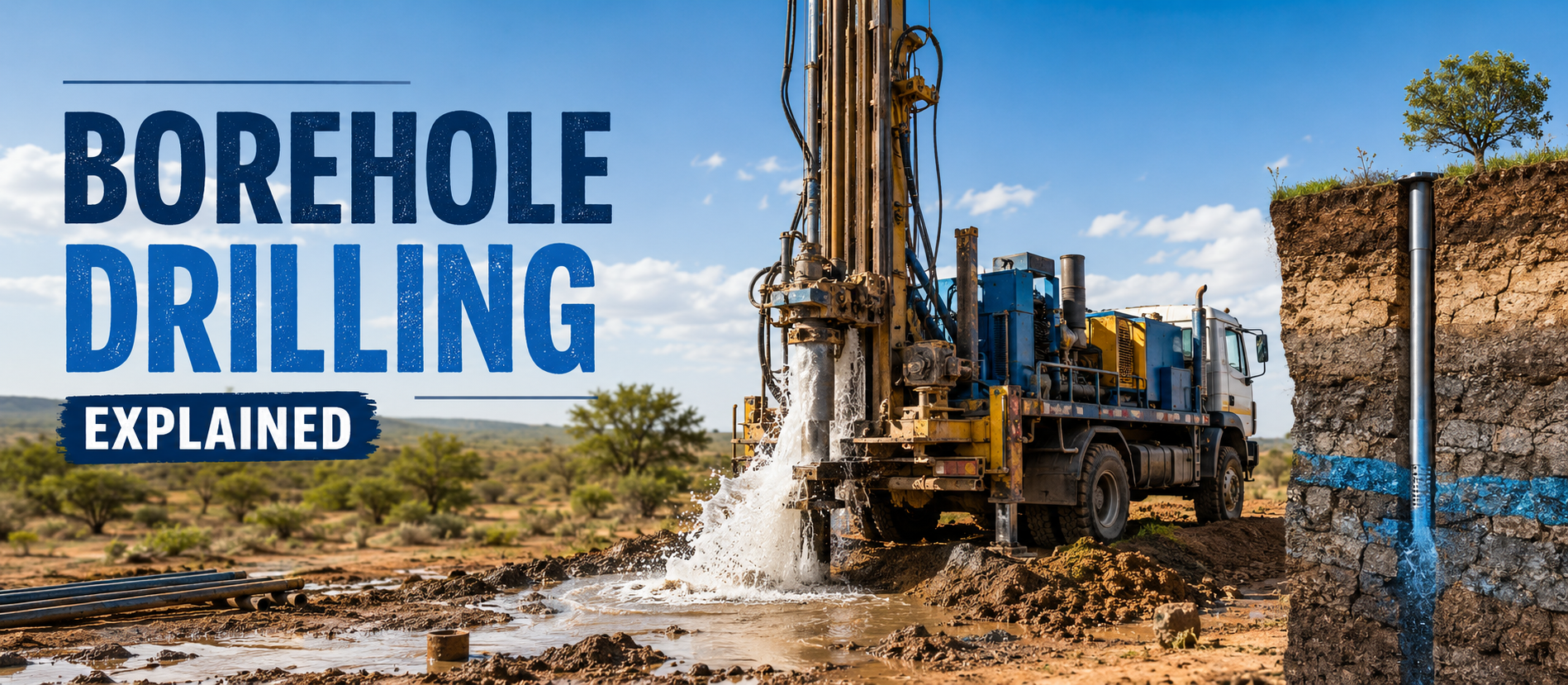
Borehole Drilling
Borehole drilling provides a dependable way to access underground groundwater for homes, farms, businesses, and industrial facilities. As municipal water costs continue to rise, many property owners choose boreholes to improve water security and reduce long-term expenses. As a result, a professionally drilled borehole becomes a valuable long-term investment.
Whether you require water for domestic use, irrigation, agriculture, or industrial operations, successful borehole drilling begins with proper planning and experienced professionals.
What Is Borehole Drilling?
Borehole drilling is the process of drilling deep into the ground to reach underground aquifers that contain groundwater. After the drilling process is complete, installers fit casing, screens, and a submersible pump to deliver water safely to the surface.
Unlike shallow wells, boreholes reach much deeper water sources. Consequently, they usually provide cleaner and more reliable water throughout the year.
Why Install a Borehole?
A professionally installed borehole offers several important advantages.
Reliable Water Supply
Firstly, a borehole provides an independent source of water during municipal shortages and water restrictions.
Lower Water Costs
Furthermore, many property owners reduce monthly water bills after installing a borehole.
Increased Property Value
In addition, properties with reliable water supplies often become more attractive to buyers.
Sustainable Water Source
Moreover, groundwater provides a renewable water source when managed responsibly.
The Borehole Drilling Process
Professional borehole drilling follows several important steps.
Site Assessment
Firstly, drilling specialists assess the property and identify the most suitable drilling location.
Geophysical Survey
Next, technicians may perform a geophysical survey to identify potential underground water-bearing formations.
Drilling the Borehole
Afterwards, specialized drilling equipment penetrates the ground until it reaches a productive aquifer.
Installing the Borehole Casing
Once drilling is complete, installers fit durable casing to prevent the borehole walls from collapsing and to protect the water supply.
Pump Installation
Finally, technicians install a submersible pump together with the required pipework and electrical components.
Consequently, the borehole becomes ready for testing and commissioning.
Borehole Construction Specifications
Professional boreholes typically include:
Borehole Casing
- PVC or steel casing
- Corrosion-resistant materials
- Long service life
- Protection against collapse
Borehole Screen
The borehole screen:
- Allows groundwater to enter
- Prevents sand from entering the system
- Improves water quality
- Protects the pump
Submersible Pump
Most systems include the following:
- Stainless steel construction
- Energy-efficient operation
- Automatic control options
- High reliability
Factors That Affect Borehole Yield
Every borehole produces a different amount of water.
Several factors influence production.
Geological Conditions
Firstly, rock formations determine how much groundwater is available.
Borehole Depth
Furthermore, deeper boreholes often reach more productive aquifers.
Rainfall
Seasonal rainfall influences groundwater recharge.
Pump Selection
Finally, selecting the correct pump ensures efficient water delivery without over-pumping the borehole.
Common Applications
Professional borehole drilling serves many industries.
Residential Properties
- Homes
- Estates
- Holiday properties
Agriculture
- Irrigation
- Livestock
- Crop production
Commercial Buildings
- Hotels
- Schools
- Hospitals
- Office parks
Industrial Facilities
- Manufacturing
- Mining
- Food processing
- Construction
- Municipal infrastructure
Therefore, boreholes provide reliable water across a wide range of applications.
Water Testing After Drilling
Completing the drilling process is only the first step.
Therefore, every new borehole should undergo professional laboratory water testing before the water is used for drinking or food preparation.
Water testing checks:
- pH
- Iron
- Manganese
- Hardness
- Total Dissolved Solids (TDS)
- Bacteria
- Nitrates
- Fluoride
- Salinity
As a result, the correct water treatment system can be selected if necessary.
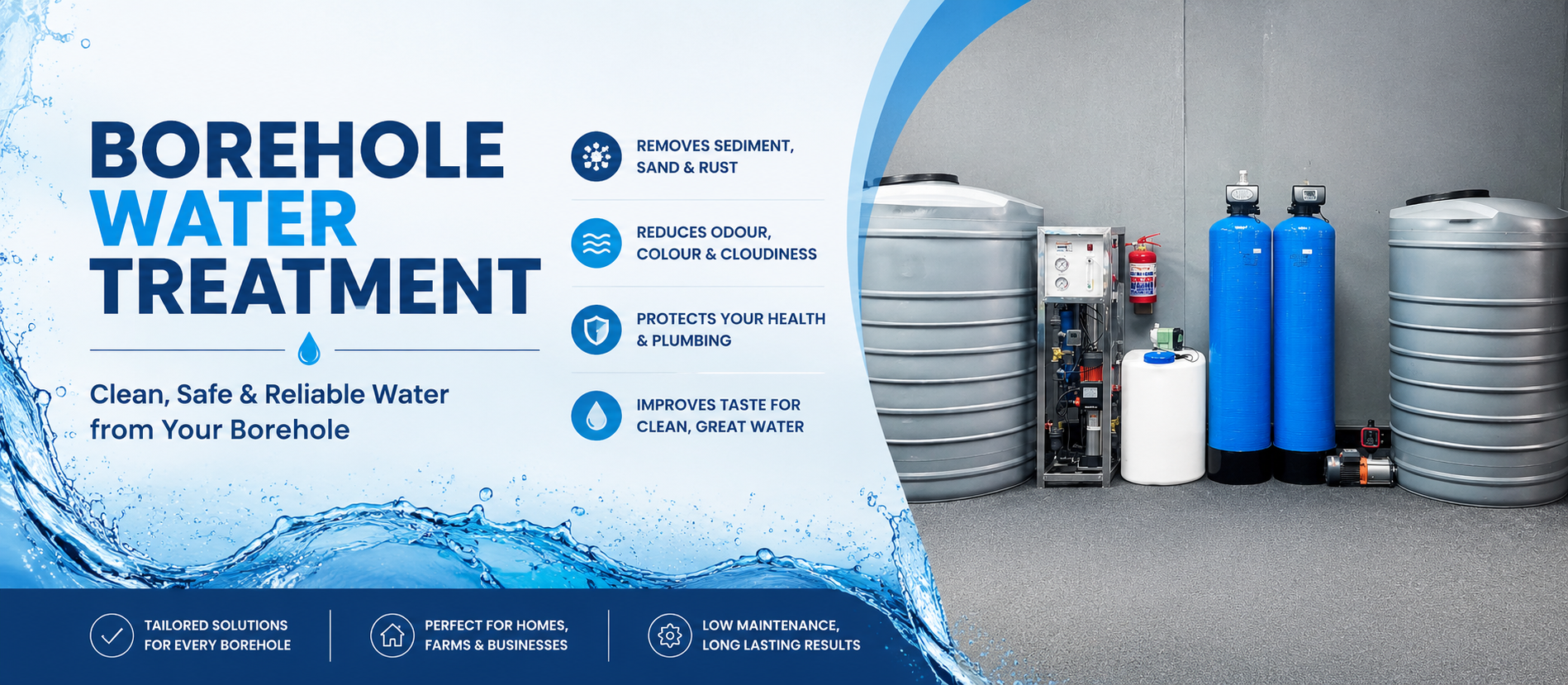
Borehole Water Treatment
Some boreholes deliver excellent water immediately. However, others require treatment before use.
Treatment options may include:
- Sediment filtration
- Sand filtration
- Iron removal filters
- Activated carbon filters
- Water softeners
- Reverse osmosis systems
- UV sterilisation
Consequently, homeowners and businesses receive clean, safe, and reliable water.
Why Choose Puritech?
Puritech offers complete groundwater solutions throughout South Africa.
Our Services
We provide:
- Borehole consultation
- Water testing
- Water treatment system design
- Pump selection
- Filtration equipment
- Reverse osmosis systems
- UV sterilisation
- Technical support
Our Water Treatment Products
Puritech supplies:
- Sediment filters
- Sand filters
- Activated carbon filters
- Iron removal filters
- Water softeners
- Reverse osmosis systems
- UV sterilisers
Therefore, we help customers protect both their borehole investment and their water quality.
Frequently Asked Questions
How deep is a borehole?
The depth depends on local geology. However, many South African boreholes range from 40 to 150 meters, while some extend even deeper.
How long does borehole drilling take?
Most residential boreholes can be drilled within one to three days. However, difficult geological conditions may require additional time.
Does every borehole produce water?
No. Although geophysical surveys improve the chances of success, no drilling contractor can guarantee groundwater.
Should borehole water be tested?
Yes. Finally, laboratory testing confirms whether the water is suitable for drinking and identifies any treatment requirements.
Conclusion
Borehole drilling provides a reliable and cost-effective solution for accessing groundwater. Whether you need water for a home, farm, commercial property, or industrial facility, a professionally drilled borehole offers long-term water security and independence.
Furthermore, professional drilling, proper construction, and regular water testing help maximize the lifespan and performance of your borehole. Finally, Puritech supports borehole owners with expert water testing, filtration systems, and customized water treatment solutions to ensure safe and dependable water quality.





3 Comments
What meant to know is how much is minimum work for the requirement
I was excited to uncover this page. I want to to thank you for your time for this particularly fantastic read!! I definitely enjoyed every bit of it and I have you saved to fav to check out new stuff in your website.
I ԝas suggested this blog by my cousin. I am not sure whether
this post is written by him as no one else know such ⅾetaiⅼed about my problem.
You’re incredible! Τhanks!