Currently Empty: R0.00

Ultrafiltration Membrane Lifespan: How Long Does It Last?
Ultrafiltration membrane lifespan is one of the most common concerns for homeowners, businesses and industries investing in water treatment systems. While ultrafiltration membranes are designed for long-term performance, their service life depends on several factors, including water quality, operating conditions and maintenance practices.
A well-maintained membrane can provide reliable filtration for many years. However, poor maintenance, unsuitable feed water or incorrect system operation can shorten its lifespan significantly.
Understanding what influences ultrafiltration membrane lifespan helps system owners protect their investment, reduce operating costs and maintain consistent water quality.
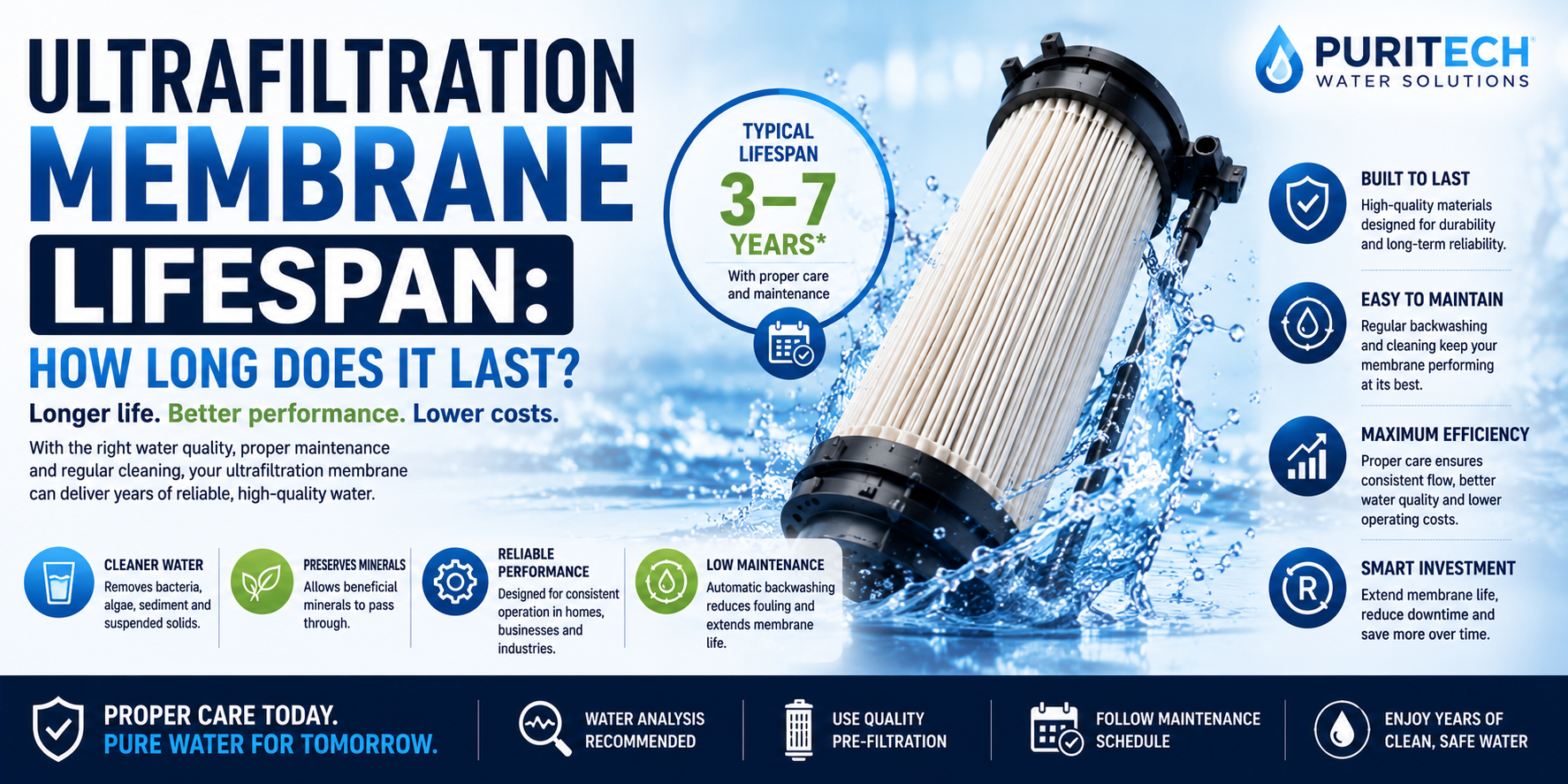
How Long Does an Ultrafiltration Membrane Last?
There is no single answer because every installation operates under different conditions.
Many ultrafiltration membranes remain in service for between 3 and 7 years, while some commercial and industrial systems operate even longer when properly maintained.
The actual lifespan depends on:
- Incoming water quality
- Daily operating hours
- System design
- Membrane material
- Cleaning frequency
- Maintenance quality
- Operating pressure
For this reason, manufacturers typically recommend regular inspections rather than replacing membranes after a fixed period.
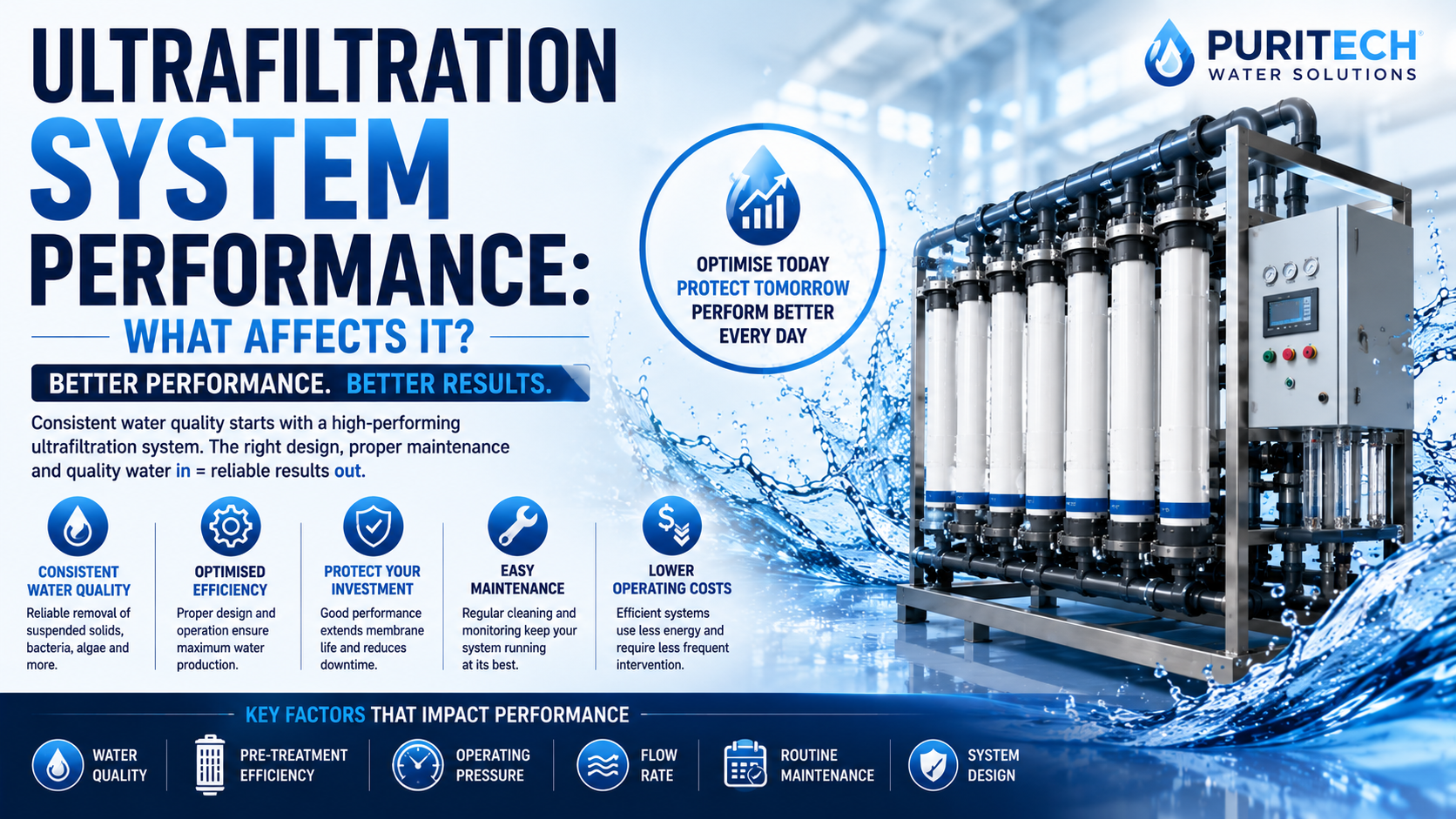
What Affects Ultrafiltration Membrane Lifespan?
Several factors influence how long a membrane continues to perform efficiently.
Water Quality
Feed water quality has the greatest impact on ultrafiltration membrane lifespan.
Water containing high levels of sediment, organic matter or biological contamination places additional stress on the membrane.
A professional water analysis helps identify potential challenges before selecting a treatment system.
Pre-Filtration
Effective pre-filtration removes larger particles before they reach the ultrafiltration membrane.
Sediment filters and other pre-treatment equipment reduce fouling and help extend membrane life.
Routine Cleaning
Regular cleaning removes contaminants that accumulate on the membrane surface.
Backwashing, flushing, and periodic chemical cleaning all help maintain filtration efficiency and prevent excessive fouling.
Operating Pressure
Running the system within the recommended pressure range protects the membrane.
Excessive pressure does not necessarily improve filtration and may increase wear over time.
System Design
Correct system sizing is equally important.
An undersized system may operate continuously under heavy demand, while an oversized system may not operate as efficiently as intended.
Proper design helps maximise both performance and membrane lifespan.
Signs That a Membrane May Need Attention
Although membranes do not usually fail suddenly, several warning signs may indicate that maintenance or replacement is required.
These include:
- Reduced water flow
- Increased pressure drop
- Declining water quality
- More frequent cleaning cycles
- Persistent fouling
- Physical damage to the membrane module
Early intervention often restores performance and prevents more serious problems.
Can Ultrafiltration Membranes Be Cleaned?
Yes. In many cases, cleaning restores much of the membrane’s original performance.
Depending on the system, maintenance may include the following:
- Automatic backwashing
- Forward flushing
- Air scouring
- Chemical cleaning
- Membrane integrity testing
Regular cleaning not only improves performance but also helps maximise ultrafiltration membrane lifespan.
How to Maximise Ultrafiltration Membrane Lifespan
Extending ultrafiltration membrane lifespan begins with good system design and consistent maintenance. Although every installation is different, a few best practices can significantly improve long-term performance.
Start with a water analysis.
Every water source has unique characteristics. Therefore, a professional water analysis should always be completed before selecting an ultrafiltration system.
The results help determine whether additional pre-treatment is required and reduce the risk of premature membrane fouling.
Install the Correct Pre-Treatment
Pre-treatment protects the membrane by removing larger contaminants before they reach the ultrafiltration module.
Depending on the water quality, pre-treatment may include the following:
- Sediment filtration
- Activated carbon filtration
- Iron and manganese removal
- Water softening
Selecting the correct pre-treatment helps reduce fouling and extends membrane life.
Follow the Recommended Cleaning Schedule
Routine cleaning prevents contaminants from building up on the membrane surface.
Most systems use a combination of:
- Automatic backwashing
- Forward flushing
- Periodic chemical cleaning
- Routine inspections
Following the manufacturer’s maintenance schedule keeps the system operating efficiently and helps maximise ultrafiltration membrane lifespan.
Operate the System Correctly
Operating the system within its recommended flow rate and pressure range reduces unnecessary stress on the membrane.
In addition, avoid making unauthorised adjustments to system settings without professional guidance.
Replace Consumable Filters on Time
Sediment filters and other consumables protect the membrane from excessive contamination.
Replacing these filters at the recommended intervals reduces the load on the ultrafiltration membrane and supports consistent performance.
When Should an Ultrafiltration Membrane Be Replaced?
Even with excellent maintenance, every membrane eventually reaches the end of its service life.
Replacement may be necessary when:
- Water flow remains low after cleaning
- Water quality no longer meets system specifications
- The membrane fails an integrity test
- Physical damage is detected
- Fouling cannot be removed effectively
Rather than replacing a membrane based only on age, it is better to evaluate its condition through performance testing and professional inspection.
Is Replacing a Membrane Better Than Replacing the Entire System?
In many cases, replacing the membrane is more cost-effective than replacing the complete ultrafiltration system.
The pressure vessel, pipework, and control components often remain in good condition for many years.
A qualified technician can determine whether replacing only the membrane is the most practical solution.
Frequently Asked Questions
What is the average ultrafiltration membrane lifespan?
Although operating conditions vary, many ultrafiltration membranes provide reliable performance for 3 to 7 years when properly maintained.
Can cleaning extend ultrafiltration membrane lifespan?
Yes. Routine backwashing, flushing and chemical cleaning help remove fouling and maintain filtration efficiency, which can extend membrane life.
Does poor water quality reduce membrane lifespan?
Yes. Water containing high levels of sediment, organic matter or biological contamination places additional stress on the membrane. Appropriate pre-treatment helps minimise this impact.
Should a membrane be replaced on a fixed schedule?
Not necessarily. Membrane condition should be assessed through inspections, performance monitoring and, where appropriate, integrity testing. A well-maintained membrane may continue operating effectively beyond its expected service life.
Conclusion
Understanding ultrafiltration membrane lifespan helps system owners protect their investment and maintain reliable water treatment. While most membranes provide years of dependable service, their actual lifespan depends on feed water quality, system design, operating conditions, and routine maintenance.
Regular cleaning, appropriate pre-treatment and timely servicing all contribute to longer membrane life and consistent filtration performance. Furthermore, starting with a professional water analysis ensures the system is correctly matched to the water source, reducing unnecessary wear and improving long-term reliability.
With proper care, an ultrafiltration membrane can continue delivering clean, high-quality water for many years while keeping operating costs under control.