Currently Empty: R0.00

Solar Panel Maintenance: How Much Is Really Needed?
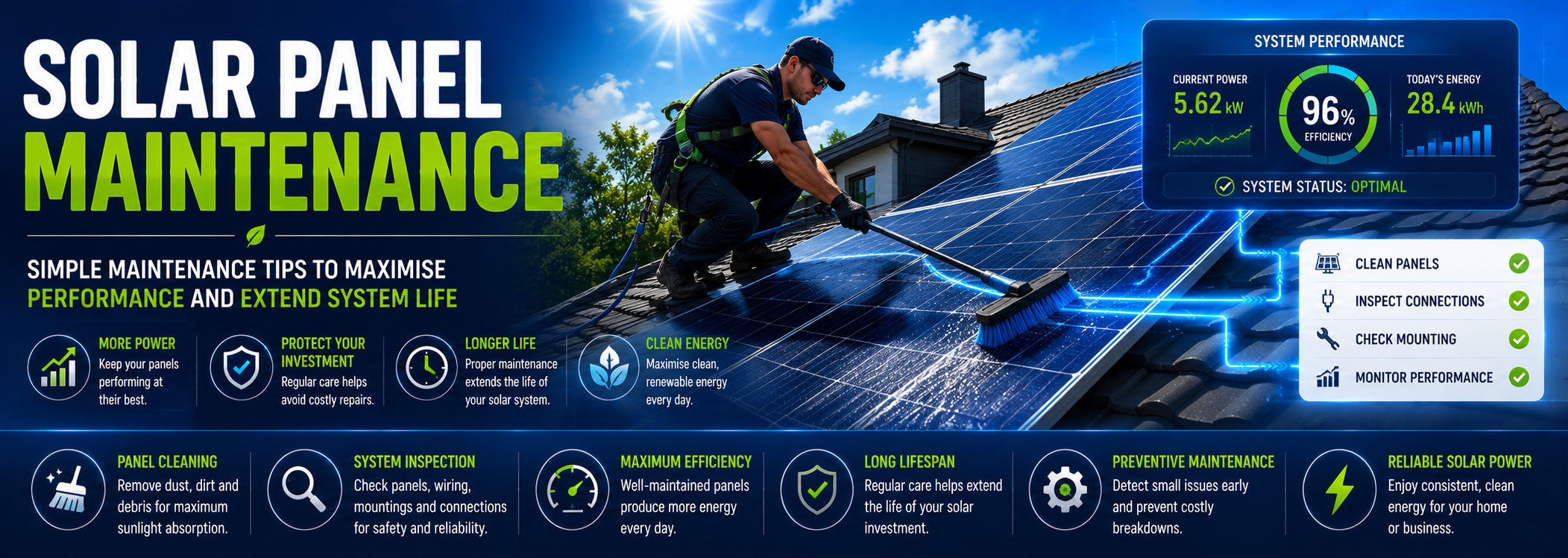
One of the biggest advantages of solar energy is that it requires very little maintenance compared to many other power systems. However, solar panel maintenance still plays an important role in keeping your system operating efficiently and extending the life of your equipment.
By following a few simple maintenance practices, homeowners and businesses can maximise energy production, reduce unexpected repairs and protect their investment for many years.
Why Solar Panel Maintenance Is Important
Although solar panels have no moving parts, they remain exposed to changing weather conditions every day.
Over time, several factors can affect performance, including:
- Dust accumulation
- Bird droppings
- Leaves and debris
- Pollen
- Air pollution
- Storm damage
Regular inspections help identify problems before they reduce energy production.
How Often Should Solar Panels Be Cleaned?
Cleaning frequency depends on your location and environmental conditions.
As a general guideline:
| Environment | Suggested Cleaning |
|---|---|
| Urban areas | Every 6–12 months |
| Rural areas | Every 6 months |
| Coastal areas | Every 3–6 months |
| Dusty environments | Every 2–4 months |
Rain helps remove loose dirt, but it usually does not eliminate stubborn debris.
What Should You Inspect?
In addition to cleaning, inspect your system regularly.
Check for:
- Cracked panels
- Loose mounting brackets
- Damaged wiring
- Corrosion
- Dirt buildup
- Shading from growing trees
Early maintenance prevents larger problems later.
Can Dirty Solar Panels Reduce Performance?
Yes.
Heavy dirt, dust, and bird droppings block sunlight from reaching the photovoltaic cells.
As a result, your system may produce less electricity than expected.
Fortunately, regular cleaning usually restores normal performance.
Safe Solar Panel Maintenance Tips
Follow these recommendations to protect your system.
Use Soft Cleaning Equipment
Use clean water, a soft brush, or a microfibre cloth.
Avoid abrasive materials that could scratch the glass surface.
Avoid Harsh Chemicals
Mild water is usually sufficient.
Strong cleaning chemicals may damage protective coatings.
Clean During Cooler Hours
Clean the panels early in the morning or late in the afternoon.
This reduces thermal stress and makes cleaning safer.
Monitor System Performance
Many modern inverters include monitoring apps.
If electricity production suddenly decreases, inspect the system or contact a qualified installer.
Should You Hire a Professional?
Many homeowners can safely clean accessible rooftop systems.
However, professional maintenance is recommended for:
- Commercial installations
- Large residential systems
- High roofs
- Electrical inspections
- Annual servicing
Professionals can also identify issues that are not immediately visible.
Common Maintenance Mistakes
Avoid these common errors:
- Walking directly on solar panels
- Using high-pressure washers
- Cleaning panels during extreme heat
- Ignoring damaged cables
- Delaying inspections after storms
Proper care helps maintain long-term reliability.
Frequently Asked Questions
Does rain clean solar panels?
Rain removes some dirt but usually cannot remove bird droppings, pollen or stubborn debris.
Do solar panels require annual servicing?
An annual inspection is recommended to verify electrical connections, mounting hardware and system performance.
Can dirty panels reduce electricity production?
Yes. Dirt blocks sunlight and reduces energy generation.
Will regular maintenance extend panel life?
Yes. Proper cleaning and inspections help maximise performance and protect your investment.
Conclusion
Routine solar panel maintenance is simple, affordable and highly effective. By keeping your panels clean, inspecting your system regularly and addressing minor issues early, you can maximise energy production and extend the life of your solar investment.
Whether your system powers a home or a business, a proactive maintenance routine will help ensure reliable performance for decades.