Currently Empty: R0.00

Do Solar Panels Work on Cloudy Days?
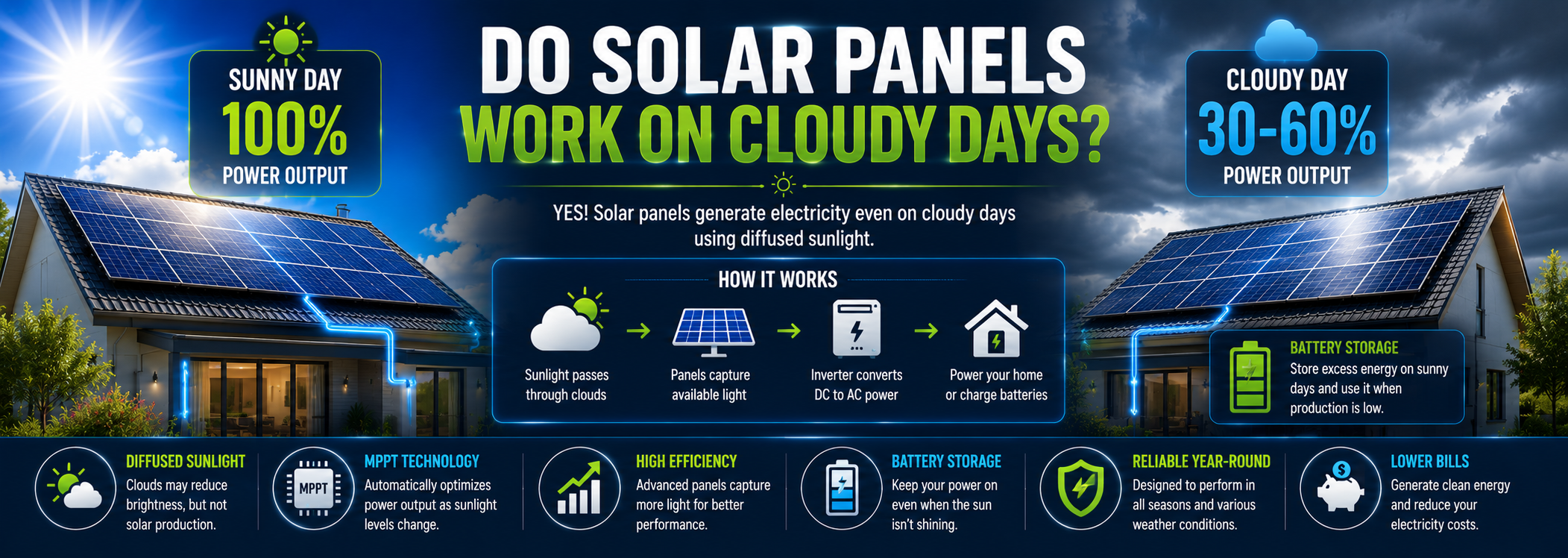
One of the most common questions people ask before installing solar is, “Do solar panels work on cloudy days?” The simple answer is yes. Although cloudy weather reduces the amount of sunlight reaching the panels, modern solar technology can still generate electricity using diffused sunlight.
For homeowners and businesses in South Africa, this means solar remains a practical and reliable investment throughout the year, even when the weather changes.
Why Solar Panels Still Produce Electricity
Solar panels do not require direct sunlight to generate electricity. Instead, they use light energy reaching the photovoltaic cells.
On bright, sunny days, the panels produce their highest output. However, on cloudy days, enough sunlight usually passes through the clouds to continue generating electricity.
As a result, your solar system keeps producing power, although at a lower level.
How Much Electricity Can Solar Panels Produce on Cloudy Days?
Production depends on several factors, including:
- Cloud thickness
- Time of day
- Panel efficiency
- Panel orientation
- Seasonal weather
- Local climate
On lightly overcast days, many systems can still produce between 60% and 80% of their normal output.
During heavy cloud cover, production may decrease to around 10% to 40%, depending on the conditions and the type of panels installed.
What Helps Improve Performance?
Several technologies help maintain better energy production during changing weather.
High-Efficiency Solar Panels
Premium panels capture more available sunlight and generally perform better in low-light conditions.
MPPT Technology
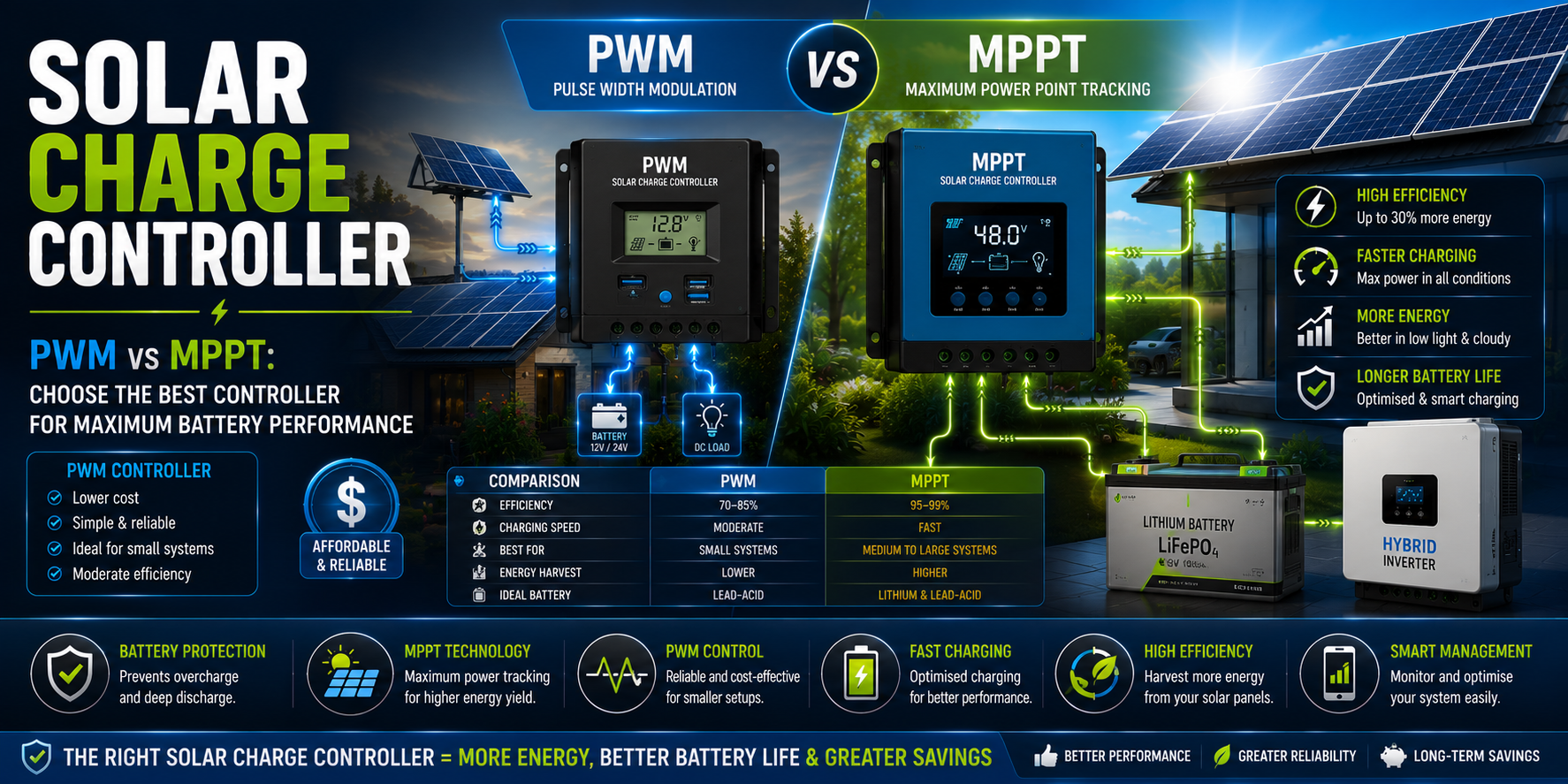
Maximum Power Point Tracking (MPPT) continuously adjusts the operating point of the solar array to maximise energy production as sunlight changes.
Quality Inverters
Modern inverters efficiently convert the available DC electricity into usable AC power, even when generation fluctuates.
Proper Installation
Correct roof orientation and installation angle help improve daily energy production throughout the year.
Does South Africa Get Enough Sunlight?
Yes. South Africa enjoys some of the highest solar irradiation levels in the world.
Even during winter or cloudy periods, many regions receive enough sunlight to make solar systems highly effective.
This is one of the reasons why solar power continues to grow across residential, commercial and agricultural sectors.
Can Batteries Help on Cloudy Days?
Absolutely.
Battery storage allows you to use electricity generated during sunny periods when solar production decreases later in the day.
Benefits include:
- Backup power during load shedding
- Greater energy independence
- Better use of stored solar energy
- Reduced reliance on the electricity grid
A properly sized battery system helps maintain reliable power, even when weather conditions reduce solar generation.
Tips to Maximise Solar Output
To improve year-round performance:
- Keep panels clean.
- Remove leaves and debris.
- Trim nearby trees.
- Install high-quality equipment.
- Use an inverter with MPPT.
- Monitor your system regularly.
These simple practices help maintain efficient operation throughout the year.
Common Myths About Cloudy Weather
Myth: Solar panels stop working when it’s cloudy.
- Fact: Solar panels continue producing electricity using diffused sunlight.
Myth: Solar only works in hot climates.
- Fact: Solar panels generate electricity from light, not heat. Cooler temperatures can even improve panel efficiency.
Myth: Rain damages solar panels.
- Fact: Quality panels are designed to withstand rain, hail, and changing weather conditions.
Frequently Asked Questions
Do solar panels charge batteries on cloudy days?
Yes. If enough electricity is generated, your system can continue charging batteries, although charging may occur more slowly.
Will my electricity bill increase during winter?
It depends on your energy usage and system size. A properly designed solar system continues producing valuable electricity throughout winter.
Should I install more panels for cloudy weather?
In some situations, adding extra panel capacity can improve energy production during periods of reduced sunlight. A professional assessment can determine the best solution.
Are low-light solar panels worth it?
If your property experiences frequent cloud cover or partial shading, low-light solar panels may improve overall energy production.
Conclusion
If you’ve ever wondered, “Do solar panels work on cloudy days?”, the answer is yes. While energy production decreases when cloud cover increases, modern solar panels continue generating electricity from available daylight.
When paired with high-efficiency panels, MPPT technology, quality inverters and battery storage, a well-designed solar system can provide dependable performance throughout the year. For South African homes and businesses, solar remains one of the most effective ways to reduce electricity costs and improve energy security.