Currently Empty: R0.00

What Is a Battery Management System (BMS) and Why Is It Important?
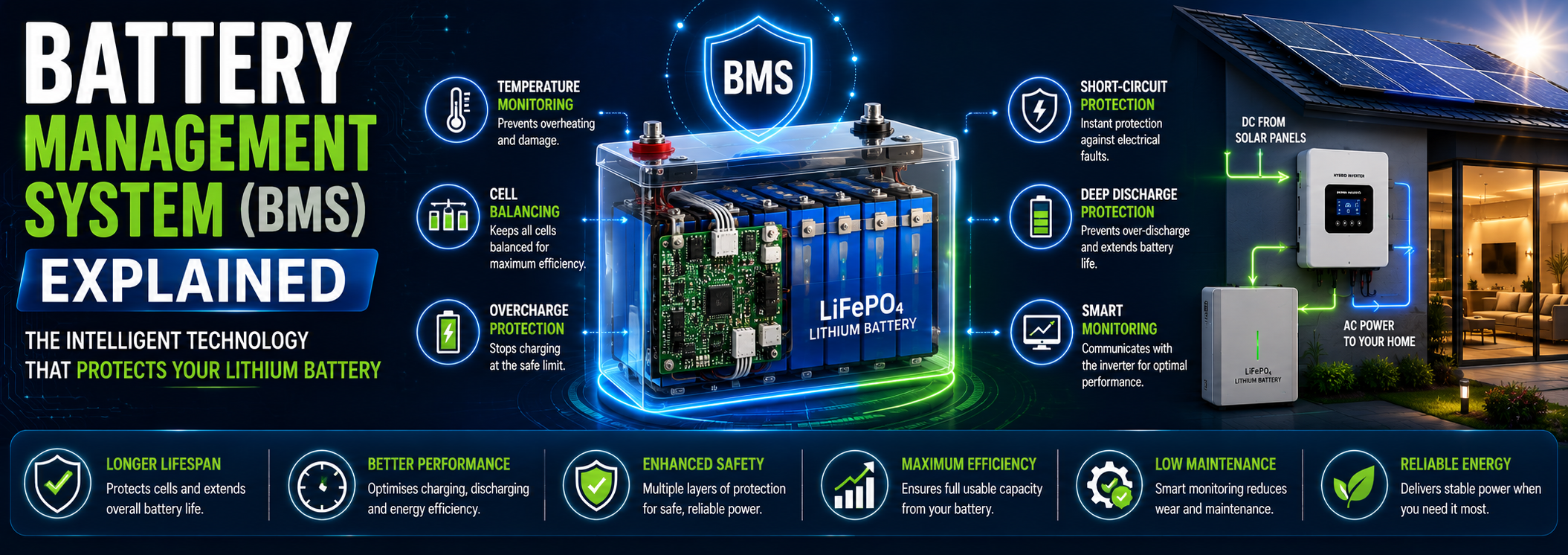
A battery management system (BMS) is an intelligent electronic control unit that monitors, protects and optimises the performance of lithium batteries. Although it operates in the background, it plays a critical role in keeping a battery safe, efficient and reliable throughout its lifespan.
Without a BMS, lithium batteries would be vulnerable to overcharging, deep discharging, overheating and cell imbalance, all of which can reduce performance and shorten battery life.
What Does a Battery Management System Do?
A battery management system constantly monitors the condition of every battery cell.
Its primary functions include:
- Monitoring battery voltage
- Measuring charging and discharging current
- Tracking battery temperature
- Balancing individual battery cells
- Preventing overcharging
- Preventing excessive discharge
- Protecting against short circuits
- Communicating with the inverter
Together, these functions ensure the battery operates safely and efficiently.
How Does a Battery Management System Work?
A BMS performs several tasks continuously while the battery is in operation.
1. Cell Voltage Monitoring
Each lithium battery contains multiple cells connected.
The BMS measures the voltage of every cell to ensure they remain within safe operating limits.
2. Temperature Monitoring
Temperature sensors detect excessive heat or extremely cold conditions.
If temperatures move outside the safe range, the BMS reduces charging or disconnects the battery to prevent damage.
3. Cell Balancing
Over time, battery cells naturally develop small voltage differences.
The BMS balances these cells to ensure they charge and discharge evenly, improving efficiency and extending battery life.
4. Overcharge Protection
Charging beyond the recommended voltage can permanently damage lithium cells.
The BMS automatically stops charging when the battery reaches its safe limit.
5. Deep Discharge Protection
Allowing the battery to discharge too deeply can significantly reduce its lifespan.
The BMS disconnects the load before harmful discharge levels are reached.
6. Short-Circuit Protection
If an electrical fault occurs, the BMS immediately isolates the battery to reduce the risk of equipment damage.
Why Is Cell Balancing Important?
Every lithium battery contains multiple individual cells.
Without balancing, some cells would become fully charged before others. Over time, this imbalance reduces capacity, shortens battery life and lowers overall performance.
By continuously balancing the cells, the BMS helps maintain maximum efficiency throughout the battery’s lifespan.
Benefits of a Battery Management System
A high-quality BMS offers many advantages.
These include:
- Longer battery lifespan
- Improved charging efficiency
- Better safety
- Stable performance
- Higher usable battery capacity
- Protection against electrical faults
- Reduced maintenance
- Reliable communication with compatible inverters
These benefits help maximise the return on your investment.
Does Every Lithium Battery Have a BMS?
Most modern lithium batteries designed for solar applications include an integrated battery management system.
However, not all lithium batteries are built to the same standard. Some low-cost products use basic protection circuits, while premium batteries include advanced BMS technology with communication features, detailed monitoring, and enhanced safety functions.
Always check the manufacturer’s specifications before purchasing a battery.
Signs of a High-Quality BMS
When selecting a battery, look for a system that offers the following:
- Intelligent cell balancing
- Temperature protection
- Over-voltage protection
- Under-voltage protection
- Short-circuit protection
- Over-current protection
- CAN Bus or RS485 communication
- Remote monitoring compatibility
These features improve both performance and reliability.
Frequently Asked Questions
Can a lithium battery operate without a BMS?
Some batteries can operate without one, but doing so significantly increases the risk of damage, reduced lifespan and safety issues.
Does a BMS improve battery life?
Yes. By protecting individual cells and maintaining proper balance, the BMS helps extend battery life.
Can the BMS communicate with my inverter?
Many modern systems support communication protocols such as CAN Bus or RS485, allowing the inverter and battery to exchange important operating information.
Can a faulty BMS stop a battery from working?
Yes. If the BMS detects unsafe operating conditions, it may disconnect the battery to protect both the battery and connected equipment.
Conclusion
A battery management system is one of the most important safety and performance components inside a lithium battery. It continuously monitors voltage, current, temperature and cell balance while protecting the battery from unsafe operating conditions.
Whether you’re installing a residential backup system or a large commercial solar solution, choosing a battery with a high-quality BMS helps improve reliability, extend battery life and maximise the performance of your entire solar installation.