Currently Empty: R0.00

What Is MPPT? How It Improves Solar Performance
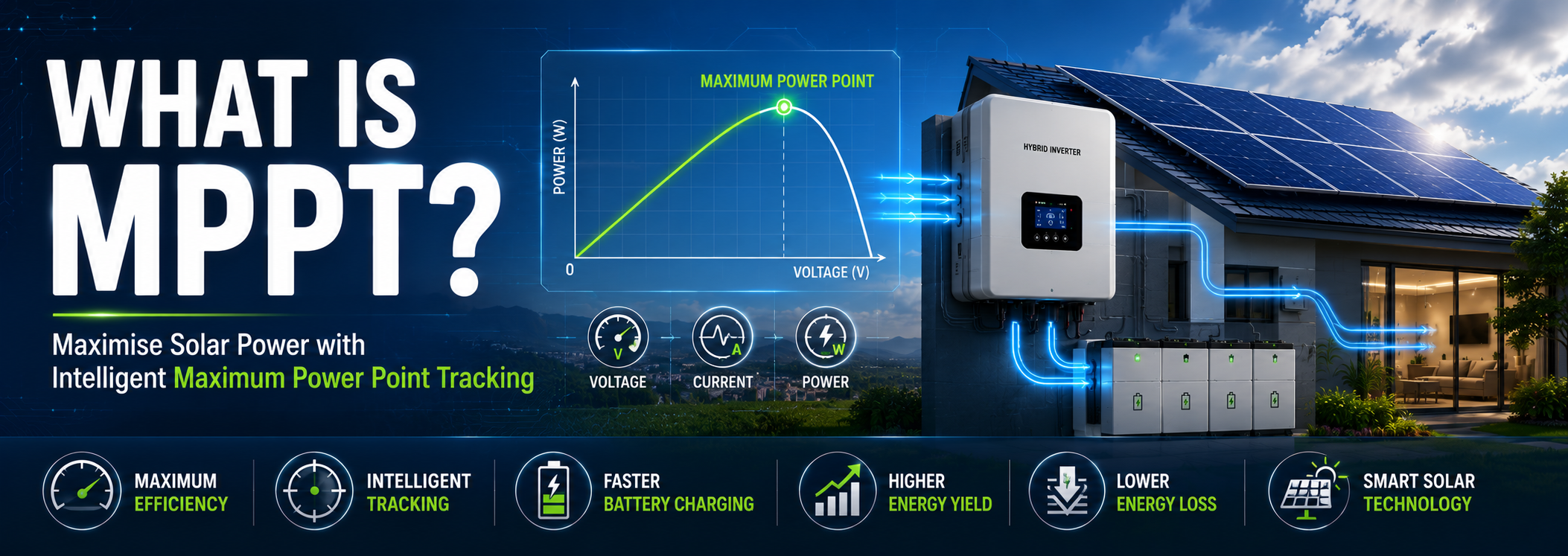
MPPT (Maximum Power Point Tracking) is one of the most important technologies in modern solar energy systems. As solar conditions change throughout the day, it continuously adjusts the electrical operating point to capture the highest possible power from your solar panels. As a result, your system generates more electricity and operates more efficiently. Whether you own a residential, commercial or industrial installation, this intelligent technology helps maximise energy production.
Understanding Maximum Power Point Tracking
Maximum Power Point Tracking is an electronic process that identifies the optimum operating point of a solar panel.
As sunlight intensity, cloud cover and panel temperature change, the voltage and current produced by photovoltaic modules also change. Intelligent tracking technology continuously adjusts the operating conditions to achieve the highest possible power output.
How the Technology Works
The controller constantly monitors the electrical output from the solar array. Next, it analyses both voltage and current. It then adjusts the operating point to maximise power production. Consequently, the system delivers the highest practical amount of electricity throughout the day.
Step 1: Solar Panels Produce DC Electricity
First, the solar panels convert sunlight into direct current (DC) electricity.
Step 2: The Controller Measures Output
Next, the controller measures voltage and current in real time.
Step 3: The System Finds the Best Operating Point
Then, the controller identifies the operating point that produces the highest power output.
Step 4: Electricity Powers the System
Finally, the inverter delivers the available energy to your batteries or electrical loads.
Benefits of Maximum Power Point Tracking
This technology provides several important advantages.
These include:
- Higher energy production
- Improved system efficiency
- Faster battery charging
- Better performance during changing weather
- Reduced energy losses
- Greater return on investment
MPPT vs PWM Charge Controllers
Pulse Width Modulation (PWM) controllers are commonly used in smaller systems, while maximum power point tracking is generally preferred for higher-performance installations.
| Feature | Maximum Power Point Tracking | PWM |
|---|---|---|
| Energy efficiency | High | Moderate |
| Energy harvest | Excellent | Lower |
| Battery charging | Faster | Slower |
| Suitable for large systems | ✔ | Limited |
| Cold-weather performance | Excellent | Moderate |
| Purchase cost | Higher | Lower |
Factors That Affect Solar Optimisation
Several environmental factors influence system performance.
Sunlight Intensity
Higher solar radiation provides more available energy.
Panel Temperature
Cooler panels generally operate more efficiently.
Partial Shading
Advanced tracking technology helps recover additional energy during partial shading.
Panel Orientation
Correct installation improves overall energy production.
Where Is This Technology Used?
Maximum power point tracking is commonly integrated into the following:
- Hybrid inverters
- String inverters
- Solar charge controllers
- Residential solar systems
- Commercial solar installations
- Agricultural pumping systems
- Battery charging systems
Frequently Asked Questions
Do all inverters include this technology?
No. Many modern hybrid and premium string inverters include it, but entry-level models may have limited optimisation capability.
Can it increase solar production?
Yes. By keeping solar panels operating close to their maximum power point, it improves overall energy generation.
Is it worth the additional cost?
For most installations, the improved efficiency and additional electricity production justify the investment.
How many tracking inputs are required?
The number depends on your solar array layout, roof orientation and shading conditions.
Conclusion
MPPT has become a standard feature in high-quality solar equipment because it allows photovoltaic panels to operate more efficiently under changing weather conditions. By continuously identifying the ideal operating point, it improves energy production, enhances battery charging and reduces electrical losses.
When selecting an inverter or charge controller, choosing equipment with Maximum Power Point Tracking technology can improve long-term system performance and help maximise your return on investment.