Currently Empty: R0.00
What Is a Solar Inverter? Everything You Need to Know
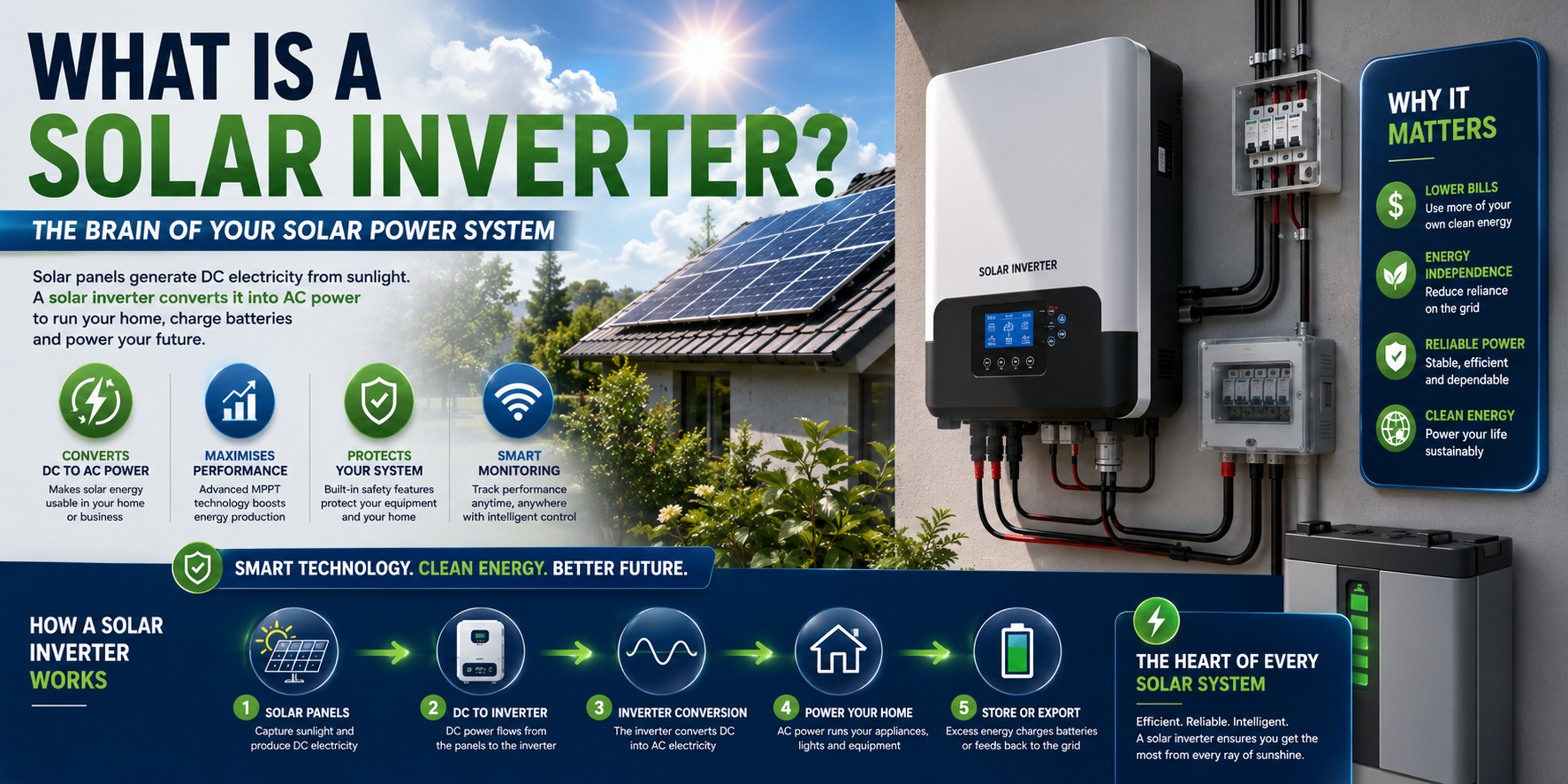
A solar inverter is often called the brain of a solar power system. While solar panels generate direct current (DC) electricity from sunlight, most homes and businesses use alternating current (AC) electricity. The inverter bridges this gap by converting DC electricity into usable AC power.
Without a solar inverter, electricity produced by photovoltaic panels could not operate most household appliances or commercial equipment.
What Does a Solar Inverter Do?
The primary function of a solar inverter is to convert direct current (DC) into alternating current (AC). However, modern inverters perform many additional tasks that improve the efficiency, safety, and reliability of a solar installation.
These functions include:
- Converting DC to AC electricity
- Monitoring solar energy production
- Optimising system performance
- Protecting the system from electrical faults
- Communicating with battery storage systems
- Managing power flow between the solar array, batteries and the electricity grid
As technology advances, inverters continue to become smarter and more efficient.
How Does a Solar Inverter Work?
The conversion process happens in several stages.
Step 1: Solar Panels Generate DC Electricity
Photovoltaic panels capture sunlight and produce direct current electricity.
Step 2: DC Power Flows to the Inverter
The generated electricity travels through DC cables to the inverter.
Step 3: The Inverter Converts the Power
The inverter converts the direct current into alternating current that matches the voltage and frequency required by your home or business.
Step 4: Electricity Powers Your Property
The AC electricity flows through the distribution board and powers lighting, appliances, machinery and electronic equipment.
If the solar system generates more electricity than the property needs, the surplus can either charge batteries or, where regulations allow, feed back into the utility grid.
Types of Solar Inverters
Several inverter technologies are available, each designed for specific applications.
String Inverters
String inverters connect multiple solar panels in a single series, known as a string.
Advantages
- Lower purchase cost
- Reliable technology
- Easy maintenance
- Suitable for unshaded roofs
Disadvantages
- Shading on one panel can reduce the performance of the entire string.
- Less flexible for complex roof layouts.
Hybrid Inverters
Hybrid inverters combine solar generation, battery storage and grid interaction in one unit.
Advantages
- Supports battery storage
- Automatically manages charging and discharging
- Can provide backup power during outages
- Allows future battery expansion
- Can export excess electricity to the grid where permitted
Disadvantages
- Higher initial investment
- More advanced programming may be required
Off-Grid Inverters
Off-grid inverters operate independently from the utility grid.
Advantages
- Complete energy independence
- Ideal for remote locations
- Works with battery storage
Disadvantages
- Requires carefully sized batteries
- Cannot rely on grid electricity during extended periods of low solar production
Microinverters
A microinverter is installed beneath each solar panel.
Advantages
- Every panel operates independently
- Better performance when some panels experience shade
- Easier system monitoring
Disadvantages
- Higher installation cost
- More individual components to install
Features to Look for in a Solar Inverter
When selecting a solar inverter, consider features such as the following:
- High conversion efficiency
- Built-in MPPT technology
- Wi-Fi or remote monitoring
- Battery compatibility
- Multiple MPPT inputs
- Surge protection
- Reliable warranty
- Expandability
Choosing the right features can improve long-term system performance.
Common Applications
Solar inverters are used in many environments, including:
- Residential homes
- Commercial buildings
- Factories
- Farms
- Schools
- Hospitals
- Warehouses
- Water pumping systems
Each application may require a different inverter size and configuration.
Frequently Asked Questions
Can a solar inverter work without batteries?
Yes. Grid-tied systems often operate without batteries and supply electricity directly to the property while the sun is shining.
How long does a solar inverter last?
Most quality inverters have a lifespan of 10 to 15 years, although some premium models can operate even longer with proper maintenance.
What happens if the inverter stops working?
The solar panels may continue producing DC electricity, but the system cannot supply usable AC power until the inverter is repaired or replaced.
How do I choose the right inverter?
The correct inverter depends on your energy consumption, solar array size, battery requirements, and whether the system is grid-tied, hybrid, or off-grid.
Conclusion
A solar inverter is one of the most important components of any solar power system. It converts electricity generated by photovoltaic panels into usable power while also monitoring performance, protecting equipment and managing energy flow. Whether you install a residential rooftop system or a large commercial array, selecting the right inverter will improve efficiency, reliability, and long-term energy savings.