
Currently Empty: R0.00

Cloudy Drinking Water: Causes and Solutions
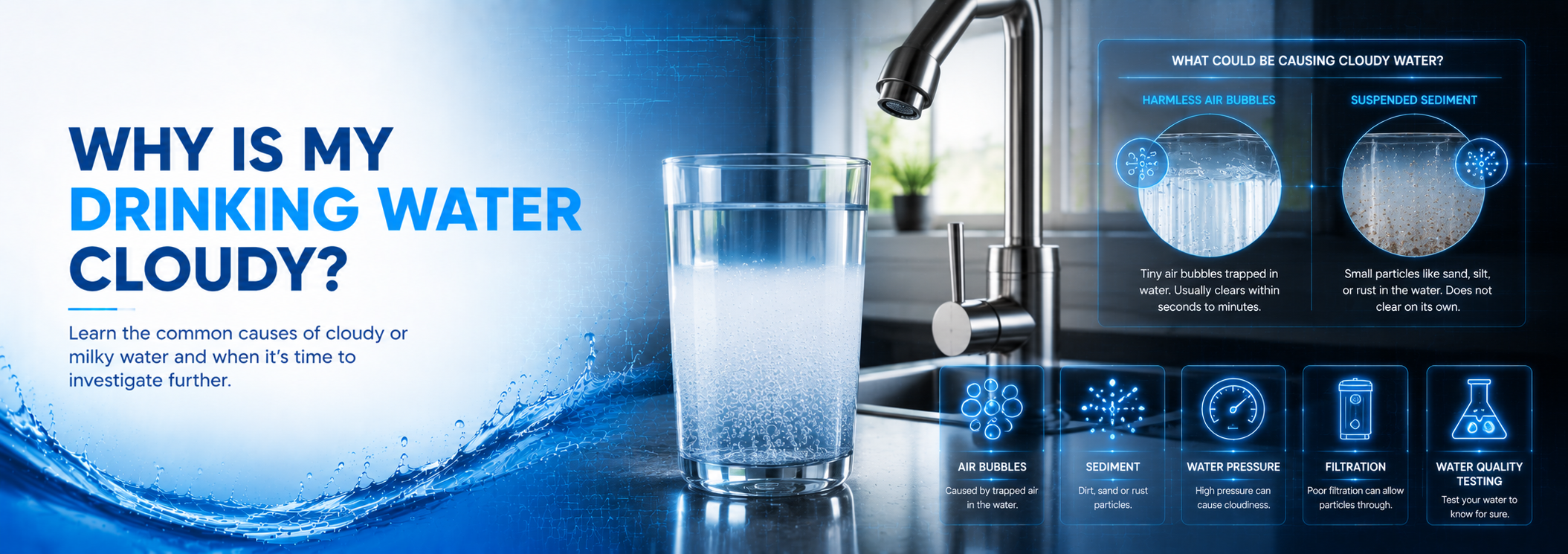
Cloudy drinking water can be alarming, especially when it suddenly appears in your tap. Fortunately, cloudy water is not always a sign of contamination. In many cases, it is caused by harmless air bubbles or temporary changes in the water supply.
However, cloudy water can also indicate sediment, mineral build-up or other issues that require attention. Understanding the possible causes can help you determine whether the problem is temporary or if your water needs professional testing or filtration.
What Causes Cloudy Drinking Water?
Several factors can affect the appearance of your water.
Common causes include:
- Tiny air bubbles
- Sediment
- Hard water minerals
- Pipe corrosion
- Municipal maintenance
- Water pressure changes
Identifying the cause is the first step towards finding the correct solution.
Air Bubbles
One of the most common reasons for cloudy water is trapped air.
When water is under pressure, tiny air bubbles can become suspended in the supply. If you fill a glass and the cloudiness disappears from the bottom upwards within a few minutes, air bubbles are usually the cause.
This type of cloudiness is harmless.
Sediment in the Water Supply
Sand, silt and rust particles may enter the water supply after pipe repairs or maintenance work.
Sediment can make the water appear cloudy and may also affect its taste.
Installing a sediment filter helps remove these particles before they reach your taps.
Hard Water Minerals
High concentrations of calcium and magnesium can affect the appearance of water.
Although these minerals are generally not harmful, they can contribute to scale build-up inside plumbing and household appliances.
A water softener can help reduce hardness where required.
Pipe Corrosion
Older plumbing systems may release rust or other particles into the water.
If cloudiness is accompanied by brown or reddish discolouration, the plumbing system should be inspected.
Replacing corroded pipes may be necessary.
Municipal Water Maintenance
Water utilities occasionally carry out maintenance on pipelines.
During this work, temporary changes in water pressure can disturb sediment inside the pipes, causing cloudy water for a short period.
If the problem continues for an extended period, contact your local water provider.
When Should You Be Concerned?
Cloudy water may require further investigation if it:
- Has an unusual smell
- Has an unusual taste
- Remains cloudy after standing
- Changes colour
- Contains visible particles
- Appears regularly
In these situations, professional water testing is recommended.
How to Improve Water Clarity
Depending on the cause, solutions may include:
Install a Sediment Filter
Sediment filters remove sand, rust, and suspended particles before they enter your plumbing.
Use activated carbon filtration
Carbon filters help improve taste, odour and overall water quality.
Test Your Water
Professional testing identifies contaminants that cannot be seen with the naked eye.
Flush Your Plumbing
Running the taps for several minutes after maintenance work may help clear loose sediment.
Preventing Future Problems
Regular maintenance helps maintain clear, clean drinking water.
Good practices include:
- Replacing filter cartridges on schedule
- Inspecting plumbing regularly
- Testing water periodically
- Servicing water treatment equipment
- Monitoring changes in water quality
Preventative maintenance often reduces long-term costs and improves system performance.
Frequently Asked Questions
Is cloudy drinking water safe?
If cloudiness is caused by air bubbles, it is usually harmless. If the water has an unusual smell, colour or taste, further investigation is recommended.
How can I tell if air bubbles are causing the cloudiness?
Fill a clear glass and leave it for a few minutes. If the cloudiness clears from the bottom upward, trapped air is the most likely cause.
Can a filter remove cloudy water?
Yes. If sediment or suspended particles are responsible, the correct filtration system can improve water clarity.
Should I test cloudy water?
Testing is recommended if the problem persists or if the water develops an unusual taste, odour or colour.
Conclusion
Cloudy drinking water is not always a cause for concern, but it should never be ignored if it persists or is accompanied by changes in taste, smell or colour. Understanding the cause allows you to choose the most effective solution, whether that involves flushing the system, installing filtration or arranging professional water testing.
Puritech offers water testing, sediment filtration and complete water treatment solutions to help homes and businesses enjoy cleaner, clearer and safer drinking water.