Currently Empty: R0.00

Reduce Water Costs in Commercial Buildings
Every business depends on water, but rising utility costs are making water efficiency more important than ever. Whether you operate a hotel, office building, shopping centre, factory or restaurant, finding ways to reduce water costs can improve profitability without affecting daily operations.
Many businesses assume the only solution is to use less water. In reality, improving system efficiency, repairing leaks and maintaining water treatment equipment can significantly lower monthly water bills.
Why Water Costs Continue to Increase
Commercial water expenses are influenced by more than consumption alone.
Factors include:
- Municipal tariff increases
- Hidden plumbing leaks
- Inefficient equipment
- Poor maintenance
- Water wastage
- Ageing infrastructure
Understanding where water is being lost is the first step towards reducing operating costs.
Carry Out a Water Usage Audit
Before investing in new equipment, conduct a water audit.
Measure:
- Daily water consumption
- Peak usage periods
- High-consumption equipment
- Water losses
- Irrigation usage
A water audit identifies where improvements will have the greatest impact.
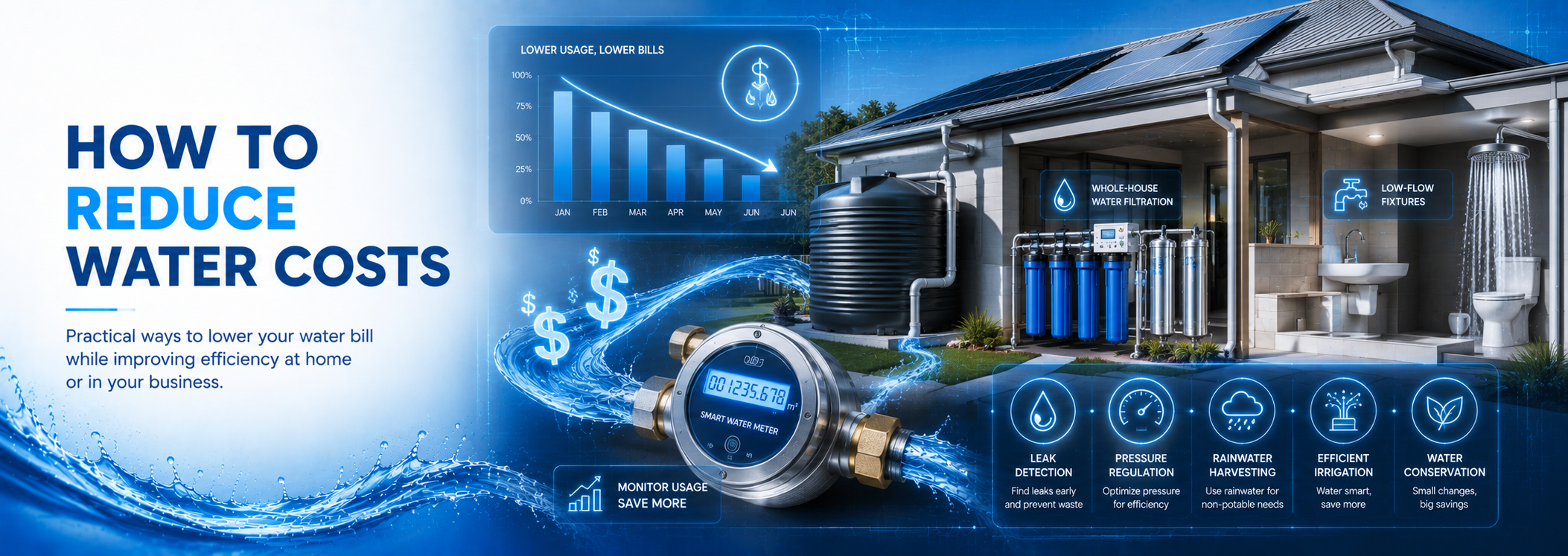
Repair Leaks Immediately
A small leak can waste thousands of litres of water over time.
Inspect regularly:
- Toilets
- Taps
- Underground pipes
- Storage tanks
- Valves
- Flexible hoses
Early repairs prevent unnecessary water loss.
Install Efficient Water Filtration
Clean filtration systems improve operational efficiency.
Blocked filters increase pressure losses and force pumps to work harder, increasing both water and electricity costs.
Replacing filter cartridges on schedule helps maintain efficient water flow.
Optimise Water Pressure
Water pressure that is too high often leads to unnecessary consumption.
Installing a pressure regulator helps:
- Reduce water waste
- Protect plumbing
- Lower maintenance costs
- Improve equipment lifespan
Stable pressure also improves the performance of water treatment systems.
Maintain Pumps and Water Treatment Equipment
Regular servicing keeps equipment operating efficiently.
Maintenance should include:
- Pump inspections
- Filter replacement
- Pressure testing
- Valve inspections
- Leak detection
- Water quality monitoring
Preventative maintenance reduces unexpected breakdowns and operating costs.
Reuse Water Where Appropriate
Some businesses can safely reuse water for non-potable applications such as:
- Toilet flushing
- Landscape irrigation
- Equipment washing
- Cooling systems
Always ensure reused water complies with applicable regulations and is not used where drinking-water quality is required.
Educate Employees
Staff awareness plays an important role in reducing consumption.
Encourage employees to:
- Report leaks immediately
- Avoid unnecessary water use
- Follow maintenance procedures
- Use equipment correctly
Small behavioural changes can produce significant savings over time.
Monitor Water Consumption
Installing water meters in different areas of a building helps identify unusual usage patterns.
Regular monitoring allows businesses to detect problems before they become expensive.
Frequently Asked Questions
Can filtration reduce water costs?
Yes. Efficient filtration systems improve equipment performance, reduce maintenance and help prevent unnecessary water losses caused by blocked components.
How often should businesses check for leaks?
A visual inspection should be carried out regularly, while a comprehensive plumbing inspection should form part of a preventative maintenance programme.
Do pressure regulators save water?
Yes. Maintaining the correct operating pressure reduces excessive water flow and helps prevent leaks.
Should businesses monitor water usage?
Absolutely. Tracking consumption helps identify trends, detect leaks and measure the effectiveness of water-saving initiatives.
Conclusion
Learning how to reduce water costs is about more than using less water. It requires efficient equipment, regular maintenance, leak prevention and effective water management.
Puritech helps businesses improve water efficiency with professionally designed filtration systems, pressure management solutions, reverse osmosis systems and ongoing maintenance support. Whether you manage a small commercial property or a large industrial facility, the right water treatment strategy can reduce operating costs while ensuring a reliable supply of clean water.