Currently Empty: R0.00

How to Protect Reverse Osmosis Membranes from Chlorine Damage
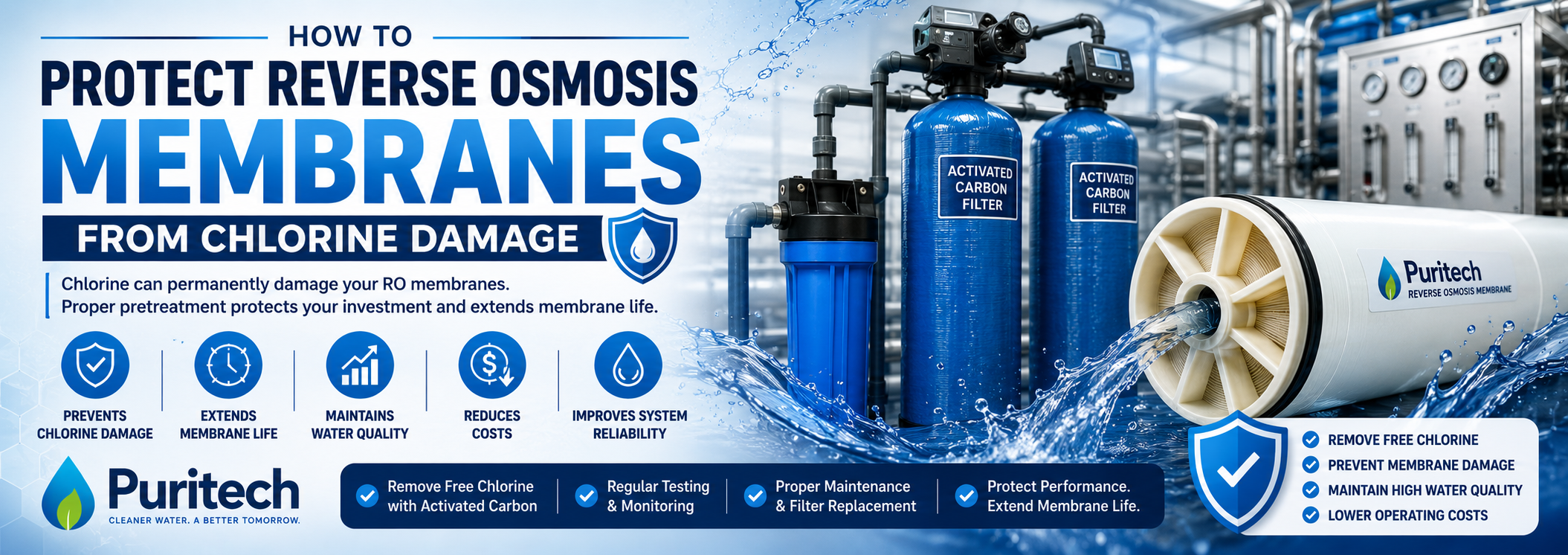
Protecting reverse osmosis membranes from chlorine damage is essential for maintaining high water quality, extending membrane life, and avoiding expensive repairs. While chlorine is widely used to disinfect municipal water supplies, it can permanently damage many reverse osmosis (RO) membranes if it is not removed before the water reaches the membrane stage.
Many RO system failures are caused by chlorine exposure rather than normal wear and tear. Fortunately, this type of damage is almost entirely preventable. With the right pretreatment, routine maintenance, and regular water quality monitoring, you can keep your RO system operating efficiently for years.
In this guide, you’ll learn how chlorine affects RO membranes, how to recognize the warning signs of chlorine damage, and the best ways to protect your investment.
Why Does Chlorine Damage Reverse Osmosis Membranes?
Most modern reverse osmosis systems use thin-film composite (TFC) membranes because they provide excellent contaminant rejection and high water production.
However, TFC membranes are highly sensitive to free chlorine.
When chlorine comes into contact with the membrane surface, it begins to oxidize the thin polyamide layer responsible for filtration. This oxidation permanently changes the membrane structure, reducing its ability to reject dissolved salts and other contaminants.
Unlike scale or organic fouling, chlorine damage cannot be cleaned or repaired. Once the membrane has been chemically attacked, replacement is usually the only solution.
Which RO Membranes Are Most Vulnerable?
Not all membranes respond to chlorine in the same way.
Thin-film composite membranes offer excellent filtration performance but have very little chlorine tolerance. By contrast, cellulose acetate membranes are more resistant to chlorine, although they are less common in modern water treatment systems and generally provide lower contaminant rejection.
Because most residential, commercial, and industrial RO systems now use TFC membranes, protecting them from chlorine is a critical part of system design and maintenance.
Signs of Chlorine Damage
Chlorine damage often develops gradually, making routine monitoring essential.
Common warning signs include:
- Rising permeate TDS
- Reduced salt rejection
- Declining water quality
- Unexpected changes in conductivity
- Increased operating costs
- More frequent membrane replacement
Unlike fouling, chlorine damage usually does not cause a significant increase in operating pressure. Instead, the membrane loses its ability to remove dissolved contaminants effectively.
Common Sources of Chlorine Exposure
Even well-designed RO systems can experience chlorine exposure if pretreatment is neglected.
Common causes include:
- Exhausted activated carbon filters
- Incorrect carbon filter sizing
- Poor maintenance
- Chlorine dosing changes by the municipality
- Bypass valves left open during servicing
- Failure to test chlorine levels regularly
Many operators assume that because a carbon filter is installed, chlorine removal is guaranteed. In reality, activated carbon has a finite capacity and must be replaced or reactivated at the correct intervals.
How to Protect Reverse Osmosis Membranes from Chlorine
The most effective protection strategy combines good system design with ongoing maintenance.
Key practices include the following:
Install Activated Carbon Pretreatment
Activated carbon removes free chlorine before it reaches the membrane. Properly sized carbon filters are one of the most effective ways to protect TFC membranes.
Replace Carbon Media on schedule.
Carbon filters gradually lose their chlorine removal capacity. Replacing media according to manufacturer recommendations prevents breakthrough.
Monitor Free Chlorine
Regular chlorine testing helps detect problems before membrane damage occurs. Testing should form part of every routine maintenance programme.
Maintain Proper Flow Rates
Adequate contact time between water and activated carbon improves chlorine removal efficiency.
Service the RO System Regularly
Routine inspections allow technicians to identify worn filters, faulty valves, and other issues that may expose membranes to chlorine.
Choosing the Right Activated Carbon Filter
Activated carbon filters are one of the most effective pretreatment solutions for removing free chlorine before water reaches the reverse osmosis membrane. However, not all carbon filters perform the same. Selecting the correct filter depends on your water quality, chlorine concentration, flow rate, and system capacity.
When choosing an activated carbon filter, consider the following:
- Type of carbon media: Granular Activated Carbon (GAC) and Carbon Block filters are commonly used. GAC is suitable for many applications, while carbon block filters often provide more consistent chlorine removal.
- Flow rate: Water must remain in contact with the carbon long enough for chlorine to be removed effectively.
- Chlorine concentration: Higher chlorine levels require larger filters or more frequent media replacement.
- Maintenance requirements: Follow the manufacturer’s recommendations for replacing cartridges or media.
Installing the correct carbon filter is one of the simplest ways to protect reverse osmosis membranes from chlorine damage.
How to Monitor Chlorine Levels
Routine chlorine testing should never be overlooked.
Even if your RO system includes activated carbon filtration, chlorine breakthrough can occur when the carbon becomes exhausted or when municipal chlorine levels suddenly increase.
Common chlorine testing methods include:
DPD Test Kits
DPD color comparison kits are affordable and widely used for routine testing.
Advantages include:
- Easy to use
- Quick results
- Suitable for routine maintenance
Digital Chlorine Meters
Digital meters provide more accurate readings and are ideal for commercial and industrial water treatment systems.
Benefits include:
- Greater accuracy
- Digital record keeping
- Consistent monitoring
- Reduced operator error
Online Chlorine Analysers
Large water treatment plants often use continuous chlorine monitoring systems.
These instruments provide real-time chlorine measurements and can trigger alarms if chlorine levels exceed safe limits.
Continuous monitoring helps prevent costly membrane damage.
Best Practices for Preventing Chlorine Damage
Preventing chlorine damage is much easier and less expensive than replacing RO membranes.
The following best practices should form part of every maintenance program:
Test chlorine regularly.
Do not assume activated carbon is still working.
Replace activated carbon on schedule.
Waiting until chlorine breakthrough occurs usually means membrane damage has already started.
Replace sediment filters regularly.
Blocked sediment filters reduce flow and may affect the performance of the carbon filter.
Inspect the pretreatment system.
Leaks, bypass valves, or incorrect plumbing can allow untreated water to reach the membranes.
Record maintenance activities.
Keeping detailed maintenance records makes it easier to identify trends and prevent recurring problems.
Train operators.
Anyone responsible for operating an RO system should understand the importance of chlorine removal and routine monitoring.
Common Mistakes That Lead to Chlorine Damage
Many membrane failures result from simple mistakes that could have been avoided.
These include:
Ignoring Carbon Filter Replacement
Activated carbon does not last forever.
Once its adsorption capacity has been exhausted, chlorine passes directly through to the membrane.
Assuming Municipal Water Is Always the Same
Municipal water quality changes throughout the year.
Water suppliers may increase chlorine dosing after heavy rainfall, maintenance work, or contamination events.
Regular testing helps detect these changes.
Using the Wrong Carbon Filter
An undersized filter may not provide enough contact time to remove chlorine effectively.
Always size the filter according to your system’s flow rate and water quality.
Poor System Maintenance
Skipping scheduled maintenance often results in preventable failures.
Routine inspections help identify worn components before they cause serious damage.
Ignoring Early Warning Signs
Many operators continue running their systems even after noticing declining water quality or increasing TDS.
Early intervention often prevents complete membrane failure.
How Chlorine Damage Affects Operating Costs
Chlorine damage impacts more than just membrane performance.
It can also lead to:
- Increased membrane replacement costs
- Higher maintenance expenses
- Reduced water production
- Increased downtime
- Higher energy consumption
- Poor product water quality
- Customer complaints
- Lost productivity
Protecting membranes is therefore both a maintenance priority and a cost-saving strategy.
Frequently Asked Questions
Can activated carbon remove all chlorine?
When properly sized and maintained, activated carbon removes free chlorine very effectively. However, exhausted carbon media can allow chlorine breakthrough, making regular maintenance essential.
How often should activated carbon be replaced?
Replacement intervals depend on chlorine concentration, water usage, and filter size.
Always follow the manufacturer’s maintenance recommendations and confirm performance with routine chlorine testing.
Can chlorine-damaged membranes be repaired?
Unfortunately not.
Once chlorine has oxidized the membrane surface, the damage is permanent.
Replacing the membrane is usually the only solution.
Is chlorine the only chemical that damages RO membranes?
No.
Strong oxidizing agents such as ozone, bromine, and certain cleaning chemicals can also damage some membrane materials if used incorrectly.
Should chlorine be completely removed before reverse osmosis?
Yes.
Most thin-film composite membranes require complete chlorine removal before water enters the membrane housing.
Activated carbon filtration is the most common solution.
Final Thoughts
Learning how to protect reverse osmosis membranes from chlorine damage is essential for anyone operating an RO system. Although chlorine plays a vital role in disinfecting municipal water supplies, it can quickly destroy thin-film composite membranes if it is not removed during pretreatment.
Fortunately, preventing chlorine damage is straightforward. By installing the correct activated carbon filters, monitoring chlorine levels regularly, replacing filter media on schedule, and following a structured maintenance program, you can significantly extend membrane life and maintain consistent water quality.
Whether you operate a residential, commercial, or industrial reverse osmosis system, investing in proper pretreatment today can prevent costly membrane replacements tomorrow.
If you’re unsure whether your RO system is adequately protected from chlorine, Puritech’s team can help assess your water quality, recommend the correct pretreatment equipment, and provide ongoing maintenance support to keep your system operating at peak performance.