
Polypropylene Filters in Water Treatment: Everything You Need to Know
Polypropylene Filters in Water Treatment
Clean water starts with effective filtration. One of the most important components in any water purification system is the polypropylene filter. These filters remove sediment and suspended particles before water reaches more advanced filtration stages.
Whether you’re using municipal water, borehole water, or rainwater harvesting systems, polypropylene filters provide an affordable and reliable first line of defence. They help protect equipment, improve water quality, and extend the lifespan of expensive filtration components. Polypropylene sediment filters are widely used as pre-filters because they effectively capture rust, sand, silt, and other suspended solids before water moves through carbon filters, reverse osmosis membranes, or UV systems.
What Is a Polypropylene Filter?
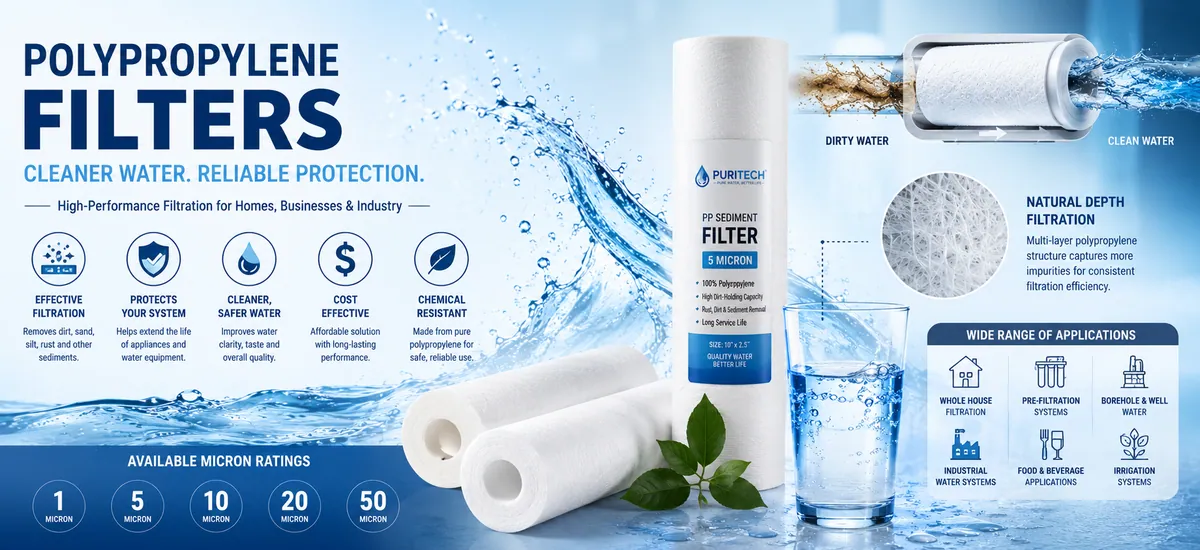
A polypropylene filter is a sediment filter manufactured from high-quality polypropylene fibres. These fibres are either melt-blown or string-wound to create a depth filtration structure.
Unlike surface filters, polypropylene filters trap contaminants throughout the entire thickness of the filter. This design increases dirt-holding capacity while maintaining excellent water flow.
Because polypropylene is chemically resistant and does not easily degrade in water, it has become one of the most widely used filtration materials in residential, commercial, and industrial water treatment systems.
How Do Polypropylene Water Filters Work?
Polypropylene filters use depth filtration.
As water flows through multiple layers of polypropylene fibres, larger particles become trapped in the outer layers. Smaller contaminants then move deeper into the filter where they are captured by finer fibres.
This gradual filtration process allows the cartridge to:
- Remove sand
- Capture rust particles
- Eliminate silt
- Filter mud
- Remove suspended solids
- Improve water clarity
Because contaminants are trapped throughout the filter instead of only on the surface, polypropylene filters last longer than many conventional sediment filters.
Benefits of Polypropylene Filters
Excellent Sediment Removal
Polypropylene filters efficiently remove visible particles that affect water quality and damage plumbing systems.
Protects Expensive Equipment
Sediment can quickly clog reverse osmosis membranes, carbon filters, UV systems, pumps, and valves.
Installing a polypropylene pre-filter significantly extends the lifespan of these expensive components.
High Dirt Holding Capacity
Depth filtration allows the filter to capture more contaminants before replacement becomes necessary.
Chemical Resistance
Polypropylene resists most chemicals commonly found in water treatment applications, making it suitable for domestic, commercial, and industrial installations.
Affordable Replacement
Compared with many specialised filtration cartridges, polypropylene filters offer outstanding performance at a very low replacement cost.
Common Applications
Polypropylene filters are used in many water treatment systems, including:
Residential Water Filtration
- Whole-house filtration
- Municipal water treatment
- Borehole water filtration
- Rainwater systems
Commercial Systems
- Restaurants
- Hotels
- Office buildings
- Apartment complexes
Industrial Applications
- Food processing
- Manufacturing
- Pharmaceutical production
- Cooling water systems
Their versatility makes them one of the most widely installed sediment filters worldwide.
Micron Ratings Explained
Choosing the correct micron rating is essential.
Typical polypropylene filters include:
| Micron Rating | Removes |
|---|---|
| 50 Micron | Large sand particles |
| 20 Micron | Coarse sediment |
| 10 Micron | Rust and dirt |
| 5 Micron | Fine sediment |
| 1 Micron | Very fine suspended particles |
Smaller micron ratings remove finer contaminants but may require more frequent replacement if the incoming water contains heavy sediment.
Why Polypropylene Filters Are Used as Pre-Filters
Most water treatment systems begin with sediment removal.
Without a polypropylene filter:
- Carbon filters clog faster
- RO membranes become blocked
- UV systems become less effective
- Pumps experience increased wear
- Maintenance costs rise
Installing a polypropylene filter first protects every filtration stage that follows.
Maintenance and Replacement
Although polypropylene filters require little maintenance, regular replacement is essential for optimum performance.
Replace your filter when you notice:
- Reduced water pressure
- Slower water flow
- Visible discoloration
- Increased sediment in filtered water
Replacement frequency depends on water quality, but most domestic systems require new cartridges every 3 to 6 months. Heavily contaminated water sources may require more frequent replacement.
Choosing the Right Polypropylene Filter
Before purchasing a filter, consider:
- Water source
- Sediment levels
- Required flow rate
- Micron rating
- Housing size
- System compatibility
Selecting the correct filter ensures maximum performance while reducing operating costs.
Frequently Asked Questions
Do polypropylene filters remove bacteria?
No. Polypropylene filters remove physical particles such as sand, rust, dirt, and sediment. They do not remove bacteria or viruses. A UV steriliser or reverse osmosis system is required for microbiological treatment.
Can polypropylene filters improve water taste?
Indirectly, yes. Removing sediment helps downstream carbon filters perform more effectively, leading to cleaner, better-tasting water.
Are polypropylene filters safe for drinking water?
Yes. High-quality polypropylene cartridges are commonly manufactured from food-grade materials suitable for potable water applications.
How long do polypropylene filters last?
Most residential cartridges last between three and six months, although heavily contaminated water may shorten their lifespan.
Conclusion
Polypropylene filters remain one of the most effective and economical solutions for sediment removal in modern water treatment systems. Their depth filtration design, high dirt-holding capacity, chemical resistance, and affordability make them ideal for homes, businesses, and industrial facilities.
By removing sediment before it reaches sensitive filtration equipment, polypropylene filters improve water quality, protect expensive systems, and reduce long-term maintenance costs. Whether you’re treating municipal water, borehole water, or harvested rainwater, installing a quality polypropylene filter is a smart investment in cleaner, safer, and more reliable water.