Currently Empty: R0.00

Water Equipment: How to Protect Your Investment for Years
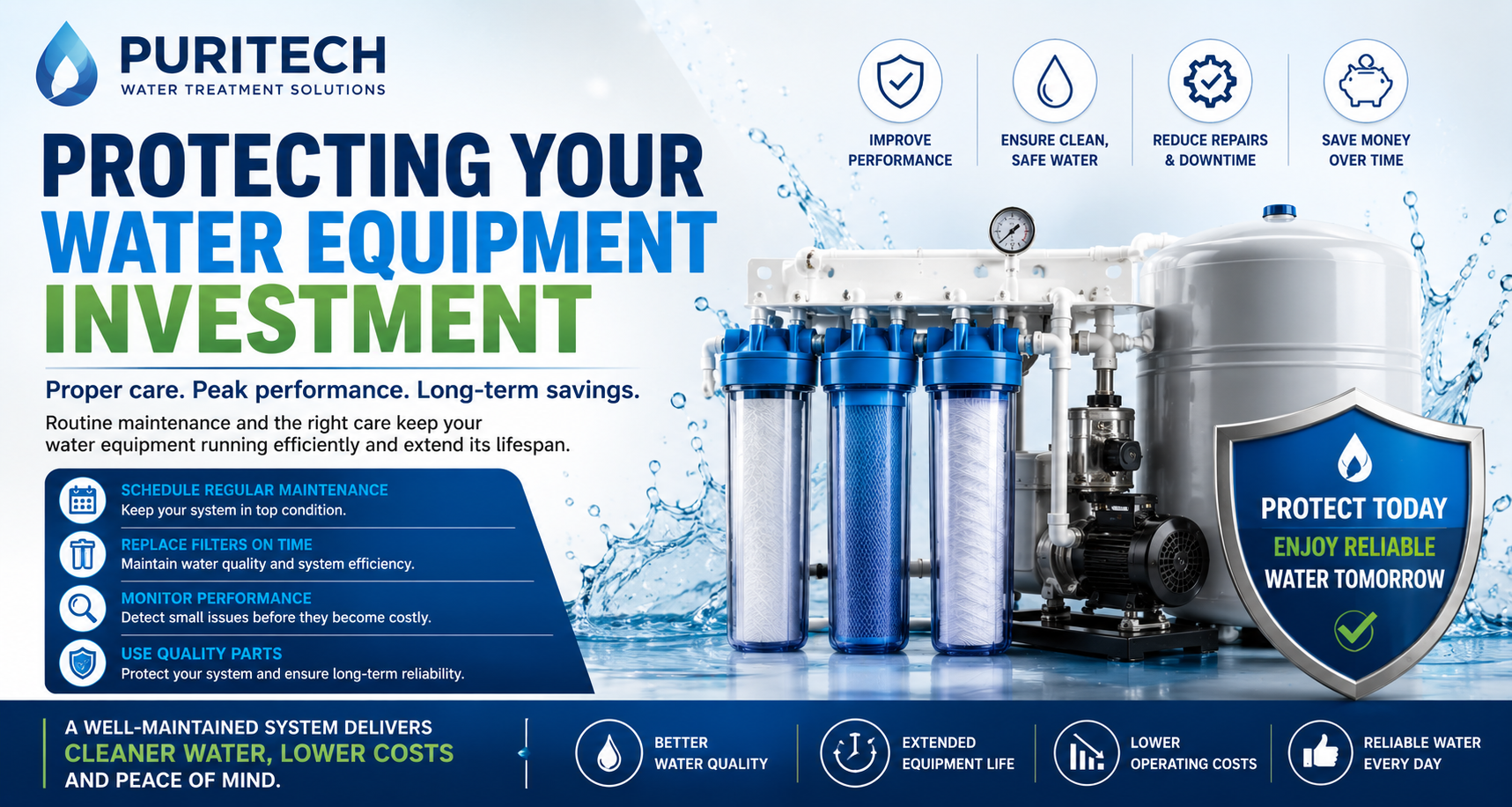
Purchasing water equipment is an investment in clean water, healthier living, and long-term savings. Whether you’ve installed a reverse osmosis system, whole-house filtration unit, UV steriliser or commercial water treatment plant, protecting that investment should be a priority.
Like any valuable equipment, water treatment systems perform best when they are correctly installed, properly maintained and operated within their intended design limits. Ignoring routine care can reduce efficiency, shorten equipment lifespan, and lead to costly repairs.
Fortunately, a few simple practices can help keep your water equipment operating reliably for many years.
Why Water Equipment Needs Ongoing Care
Water treatment systems work every day to remove contaminants and supply clean, reliable water. Over time, filters become clogged, moving parts wear naturally and water quality can change.
Without routine attention, these factors can reduce performance and increase operating costs.
Looking after your water equipment helps maintain consistent water quality while reducing the likelihood of unexpected breakdowns.
Start With Professional Installation
The lifespan of your water equipment often depends on how well it is installed.
A professional installation ensures:
- Correct pipe sizing
- Proper operating pressure
- Secure electrical connections
- Correct system configuration
- Safe and reliable operation
An incorrectly installed system may experience poor performance from the very beginning.
Replace Filters on Time
Every filter has a service life.
As filters trap contaminants, they gradually become less effective. Delaying replacement places additional strain on pumps, membranes and other components.
Replacing filters at the recommended intervals helps:
- Maintain water quality
- Improve system efficiency
- Protect expensive components
- Extend equipment lifespan
Following the maintenance schedule provided by your supplier is one of the simplest ways to protect your investment.
Monitor System Performance
Pay attention to how your system operates.
Changes such as reduced water pressure, lower flow rates, or unusual noises may indicate that maintenance is required.
Regularly monitoring your water equipment allows small issues to be identified before they become costly repairs.
Protect Your Equipment From Poor Water Quality
Not all water sources are the same.
High sediment levels, hard water, or excessive chlorine can affect the performance of water treatment equipment if they are not addressed correctly.
A professional water analysis helps determine whether pre-treatment is required to protect your system and improve long-term reliability.
Keep Accurate Service Records
Keeping a record of filter replacements, servicing, and repairs makes maintenance much easier.
Service records help you:
- Track maintenance intervals
- Identify recurring issues
- Plan future servicing
- Protect warranty requirements
- Improve long-term reliability
Good documentation also makes troubleshooting faster if a problem develops.
Avoid Cheap Replacement Parts
Although low-cost replacement components may seem attractive, they often fail to meet the specifications of the original equipment.
Using quality replacement parts helps maintain:
- System performance
- Water quality
- Reliability
- Equipment lifespan
Choosing compatible components protects both your system and your investment.
Common Mistakes That Damage Water Equipment
Even the highest-quality water equipment can suffer unnecessary wear if it is not used or maintained correctly. Fortunately, many of the most common problems are easy to avoid.
Here are some mistakes that can shorten the lifespan of your system.
Ignoring Routine Maintenance
Routine maintenance keeps every component operating efficiently.
Skipping scheduled servicing can result in:
- Reduced water quality
- Lower water flow
- Increased operating costs
- Premature equipment failure
Regular maintenance is far less expensive than replacing major components.
Delaying Filter Replacements
Filters protect the rest of your water equipment by capturing contaminants before they reach sensitive components.
When filters become clogged, the system must work harder to maintain performance. As a result, pumps, membranes and other parts experience unnecessary strain.
Replacing filters on time helps maintain consistent performance and reduces long-term repair costs.
Ignoring Warning Signs
Your water treatment system will often show signs that something needs attention.
Watch for:
- Reduced water pressure
- Lower flow rates
- Unusual noises
- Water leaks
- Changes in water taste or odour
- Warning lights or alarms
Addressing these issues early can prevent more serious damage.
Using the Wrong Replacement Parts
Not all replacement components are manufactured to the same standard.
Choosing incorrect or poor-quality filters, membranes or fittings may:
- Reduce system efficiency
- Affect water quality
- Increase maintenance costs
- Shorten equipment lifespan
Always use replacement parts that meet the manufacturer’s specifications.
When Should Water Equipment Be Serviced?
The servicing schedule depends on several factors, including:
- Water quality
- Daily water usage
- System size
- Filter type
- Operating environment
Some systems require only periodic filter replacements, while larger commercial installations benefit from scheduled inspections by qualified technicians.
Following the recommended service intervals helps your water equipment perform reliably throughout its lifespan.
The Value of Preventative Maintenance
Preventative maintenance focuses on identifying small problems before they become major failures.
Regular inspections can help:
- Improve water quality.
- Reduce operating costs.
- Extend equipment lifespan.
- Minimise unexpected downtime.
- Protect valuable system components.
In addition, preventative maintenance provides peace of mind, knowing that your system is operating as intended.
Frequently Asked Questions
How long should water equipment last?
The lifespan of water equipment depends on the type of system, water quality and maintenance schedule. With proper care and routine servicing, many systems provide reliable performance for many years.
Can poor water quality damage water equipment?
Yes. High sediment levels, hard water, excessive chlorine and other contaminants can reduce efficiency and increase wear if the system is not correctly designed or maintained.
Why is professional servicing important?
Professional servicing helps identify developing problems before they become expensive repairs. It also ensures that filters, membranes and other components continue operating correctly.
Can I perform maintenance myself?
Basic tasks, such as replacing certain filter cartridges, may be suitable for homeowners. However, more complex servicing should be carried out by trained professionals to ensure the system continues operating safely and efficiently.
Conclusion
Investing in quality water equipment is only the first step. Protecting that investment through professional installation, routine maintenance and timely servicing helps ensure reliable performance for years to come.
Simple actions such as replacing filters on schedule, monitoring system performance and using quality replacement parts can significantly reduce operating costs while extending equipment lifespan. Just as importantly, preventative maintenance helps maintain the high water quality your family or business depends on every day.
At Puritech, we believe that after-sales support is just as important as supplying quality products. From professional water analysis and expert system design to scheduled servicing and genuine replacement parts, our team is committed to helping you get the maximum value from your water equipment.