Currently Empty: R0.00

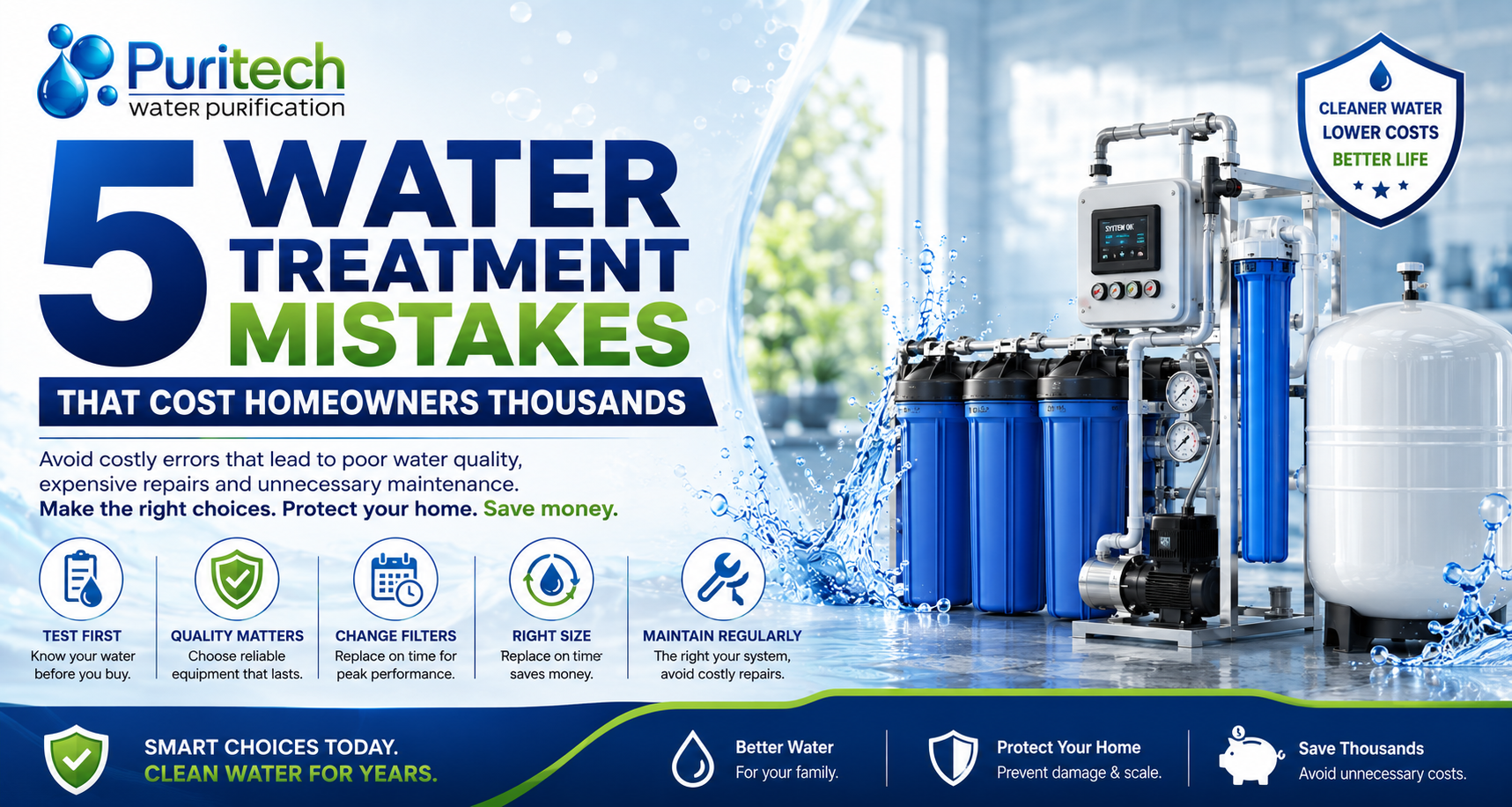
5 Water Treatment Mistakes That Cost Homeowners Thousands
Investing in a water treatment system is one of the best ways to improve your home’s water quality, protect your plumbing and enjoy cleaner, safer water. However, even the best equipment can fail to deliver the expected results if it is selected, installed or maintained incorrectly.
Many homeowners unknowingly make costly water treatment mistakes that lead to poor system performance, damaged appliances, higher utility bills and expensive repairs. Fortunately, these mistakes are easy to avoid with the right knowledge and professional guidance.
Here are five of the most common water treatment mistakes—and how you can avoid them.
Mistake 1: Buying a System Without Testing Your Water
One of the biggest mistakes homeowners make is purchasing a water treatment system before knowing what’s actually in their water.
Many people assume they need a reverse osmosis system, water softener or sediment filter simply because a neighbour has one. However, every water source is different.
A professional water analysis identifies important factors such as:
- Water hardness
- pH
- Iron
- Manganese
- Total Dissolved Solids (TDS)
- Turbidity
- Conductivity
- Other contaminants
Without this information, you may end up buying equipment that doesn’t solve your water quality problem—or paying for features you don’t need.
How to avoid it: Always start with a professional water analysis before choosing any treatment system.
Mistake 2: Choosing the Cheapest System
It’s natural to compare prices when shopping for water treatment equipment. However, choosing the cheapest option can become the most expensive decision in the long run.
Lower-priced systems may use:
- Lower-quality filter media
- Inferior membranes
- Poor-quality pumps
- Less durable components
- Limited technical support
Although the initial saving may seem attractive, frequent repairs and replacement parts can quickly outweigh the purchase price.
How to avoid it: Compare systems based on quality, performance, operating costs and after-sales support—not price alone.
Mistake 3: Ignoring Filter Replacement
Every water filter has a limited service life.
When filters become clogged or exhausted, they can reduce water flow, lower filtration efficiency and place unnecessary strain on the rest of the system.
Ignoring replacement schedules may result in:
- Reduced water quality
- Poor water pressure
- Higher energy consumption
- Damage to pumps and membranes
- More expensive repairs
How to avoid it: Replace filters according to the manufacturer’s recommendations or your supplier’s maintenance schedule.
Mistake 4: Installing the Wrong Size System
Bigger isn’t always better—and smaller certainly isn’t cheaper if it cannot meet your needs.
A system that is too small may:
- Struggle during peak demand
- Deliver insufficient flow
- Wear out faster
A system that is too large may:
- Increase installation costs
- Consume more energy than necessary
- Occupy unnecessary space
How to avoid it: Choose a system based on your daily water consumption, water quality, and future requirements.
Mistake 5: Skipping Routine Maintenance
Some homeowners assume that once a water treatment system is installed, it will continue operating indefinitely without attention.
Like any mechanical equipment, water treatment systems require routine servicing.
Regular maintenance helps:
- Maintain water quality
- Improve efficiency
- Extend equipment lifespan
- Detect small problems before they become major repairs
- Protect your investment
Neglecting maintenance often results in higher repair costs and reduced system performance.
How to avoid it: Schedule preventative maintenance with a qualified water treatment specialist and keep records of all servicing.
Why Professional Advice Makes All the Difference
The best water treatment system isn’t necessarily the most expensive one—it’s the one that’s correctly matched to your water quality and household requirements.
Working with an experienced supplier ensures that your system is:
- Correctly sized
- Professionally installed
- Properly maintained
- Designed for your specific water conditions
This approach reduces long-term costs and provides reliable performance for years to come.
Bonus Mistakes Homeowners Often Overlook
The five mistakes above are the most common, but several other oversights can reduce the performance of a water treatment system.
Ignoring Changes in Water Quality
Municipal water quality can change throughout the year due to maintenance, seasonal rainfall or changes in the water source.
Similarly, borehole water quality may vary over time.
If you notice changes in:
- Water taste
- Odour
- Colour
- Water pressure
- Scale build-up
It may be time to have your water tested again.
Forgetting About Water Pressure
Many homeowners assume poor water quality is the problem when the real issue is inadequate water pressure.
Low pressure can affect:
- Reverse osmosis production
- Shower performance
- Water flow
- Overall system efficiency
A professional assessment can determine whether a booster pump or pressure adjustment is required.
Using Non-Compatible Replacement Filters
Not all filter cartridges are manufactured to the same specifications.
Installing incompatible or poor-quality replacement filters can:
- Reduce filtration efficiency
- Affect water quality
- Damage equipment
- Shorten system lifespan
Always use replacement cartridges that match your system’s specifications.
Delaying Small Repairs
A small leak, unusual pump noise or gradual pressure loss may seem insignificant.
However, minor issues often develop into major repairs if ignored.
Addressing problems early helps prevent:
- Water damage
- Pump failure
- Higher electricity consumption
- Costly emergency repairs
Routine inspections help identify these issues before they become expensive.
The True Cost of Poor Decisions
Many homeowners focus only on the purchase price of a water treatment system.
However, the real cost often includes:
- Higher electricity consumption
- Frequent filter replacements caused by incorrect sizing
- Plumbing repairs
- Appliance damage
- Emergency call-outs
- Reduced equipment lifespan
- Poor water quality
Choosing the right system from the beginning is usually the most cost-effective solution.
How to Avoid These Mistakes
You can protect your investment by following a few simple steps:
- Start with a professional water analysis.
- Buy from a reputable water treatment specialist.
- Choose a system that matches your water quality.
- Replace filters on schedule.
- Service your equipment regularly.
- Use genuine replacement parts.
- Ask questions before making a purchase.
Taking these steps helps ensure reliable performance for years to come.
Frequently Asked Questions
Can the wrong water treatment system damage my plumbing?
An incorrectly selected system may not address your specific water quality issues, allowing problems such as scale build-up, corrosion or sediment accumulation to continue affecting your plumbing and appliances.
How often should I test my water?
If you use municipal water, periodic testing is recommended, particularly if you notice changes in taste, colour or odour. Borehole water should also be tested regularly, especially if seasonal conditions change.
Is regular servicing really necessary?
Yes. Routine servicing helps maintain water quality, improves efficiency, extends equipment life and reduces the likelihood of unexpected breakdowns.
Should I install a water treatment system myself?
Some basic filtration systems may be suitable for DIY installation. However, larger residential, commercial and industrial systems should be installed by qualified professionals to ensure correct operation and compliance with the manufacturer’s recommendations.
Conclusion
Avoiding common water treatment mistakes can save homeowners thousands of rand in repair costs, maintenance expenses and premature equipment replacement. While it may be tempting to focus only on the purchase price, the long-term value of a water treatment system depends on selecting the right solution, installing it correctly and maintaining it properly.
A professional water analysis, expert advice and routine servicing all play a vital role in ensuring your system continues to deliver clean, reliable water for years to come.
At Puritech, we help homeowners make informed decisions by recommending water treatment solutions based on their specific water quality and usage requirements. From water testing and system selection to installation and ongoing maintenance, our team is committed to helping you protect your home, your appliances and your investment.