Currently Empty: R0.00

Replace Your Water Filter: What Happens If You Don’t?
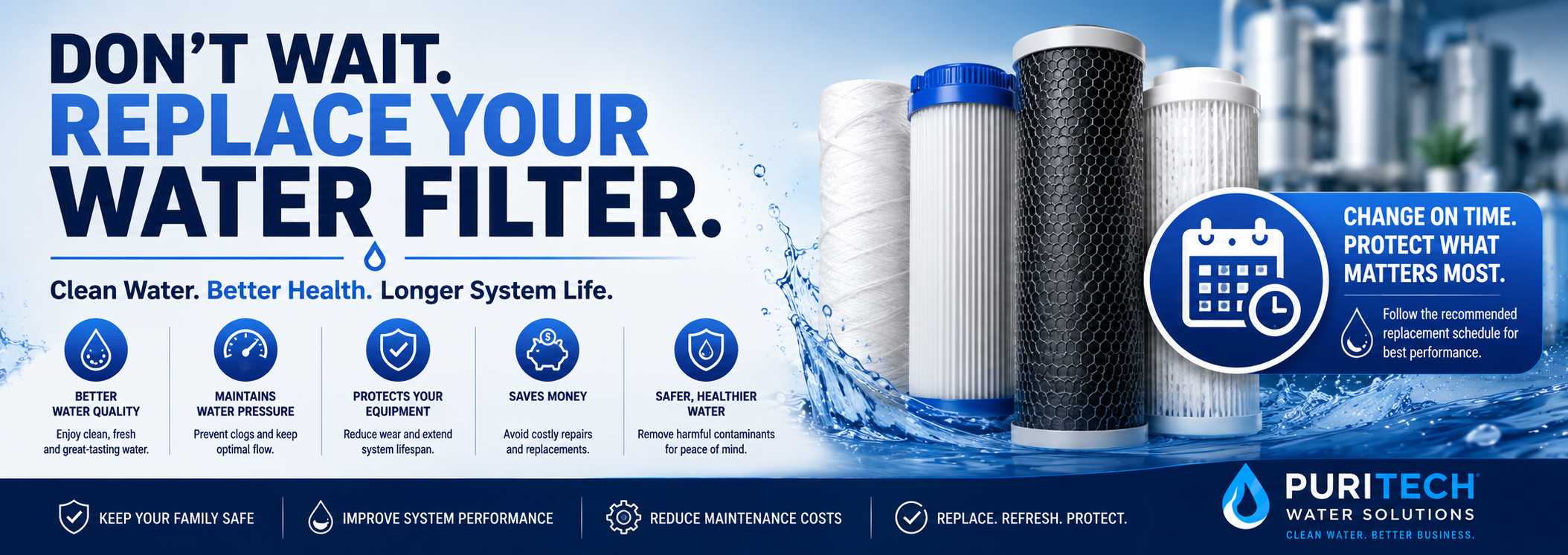
Water filters work hard every day to remove sediment, chlorine, unpleasant tastes, odours and other contaminants from your water supply. However, no filter lasts forever. Over time, every cartridge reaches the end of its service life. If you fail to replace your water filter, its performance gradually declines, affecting both water quality and the efficiency of your treatment system.
Many homeowners and businesses continue using old filter cartridges because the water still appears clear. Unfortunately, appearance alone does not indicate whether a filter is still working effectively.
Understanding why you should replace your water filter on schedule helps protect your equipment, maintain water quality and reduce long-term maintenance costs.
Why Water Filters Need Replacing
Every filter cartridge has a limited capacity.
As water flows through the filter, contaminants become trapped inside the filtration media. Eventually, the cartridge reaches a point where it can no longer perform efficiently.
The lifespan of a filter depends on several factors, including:
- Water quality
- Daily water consumption
- Filter type
- Contaminant levels
- Manufacturer’s specifications
Replacing cartridges at the recommended intervals keeps your system operating as intended.
What Happens When a Water Filter Is Not Replaced?
Ignoring routine filter replacement can lead to several problems.
Reduced Water Flow
As sediment and other particles accumulate inside the filter, water finds it more difficult to pass through.
This restriction often results in:
- Lower tap pressure
- Reduced flow rates
- Slower system performance
If left unchanged, the blockage becomes progressively worse.
Poor Water Quality
Once a filter reaches its capacity, it becomes less effective at removing contaminants.
Depending on the filter type, you may notice:
- Changes in taste
- Unpleasant odours
- Cloudy water
- Increased sediment
- Reduced chlorine removal
These changes indicate that the filter can no longer provide the level of treatment it was designed to deliver.
Increased Stress on Your Water Treatment System
Blocked cartridges force pumps and other equipment to work harder to maintain water flow.
Over time, this additional strain may reduce the lifespan of:
- Pumps
- Pressure vessels
- Reverse osmosis systems
- Ultrafiltration systems
- Valves
- Pipework
Replacing filters regularly helps protect these valuable components.
Higher Operating Costs
A clogged filter reduces system efficiency.
Consequently, equipment may consume more electricity while delivering lower performance.
Routine maintenance is generally far less expensive than repairing or replacing damaged equipment.
Increased Risk of Biological Growth
In some situations, old filter media may provide favourable conditions for biological growth if maintenance is neglected.
Following the manufacturer’s replacement schedule helps minimise this risk and supports better water hygiene.
Signs It’s Time to Replace Your Water Filter
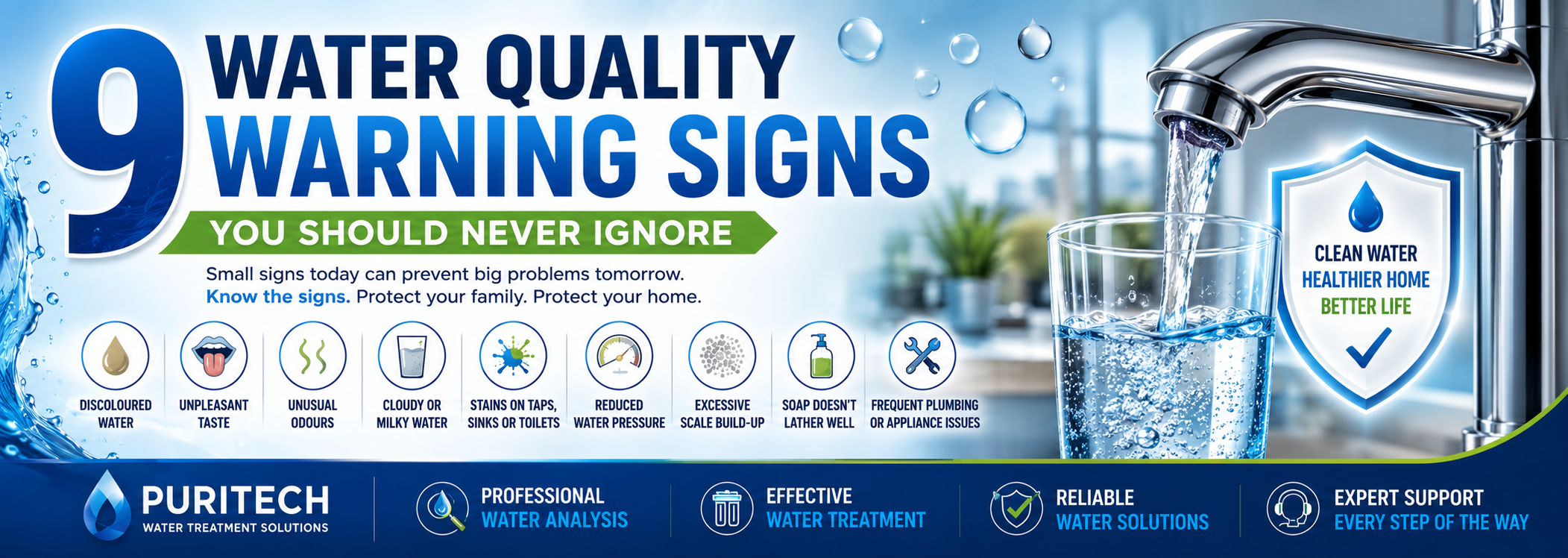
Watch for these common warning signs:
- Reduced water pressure
- Slower water flow
- Unpleasant taste
- Unusual odours
- Cloudy water
- Visible sediment
- Filter reaching its recommended service interval
- Warning indicator on the filtration system (where fitted)
Replacing the cartridge promptly helps restore system performance.
Which Filters Need Regular Replacement?
Different filtration technologies have different maintenance requirements.
Common replaceable filters include:
- Sediment cartridges
- Activated carbon filters
- Carbon block filters
- Granular activated carbon (GAC) filters
- Reverse osmosis pre-filters
- Inline drinking water filters
- Refrigerator water filters
- Shower filters
- Ultraviolet lamps (at recommended service intervals)
- Reverse osmosis membranes (based on performance and water quality)
Each component should be serviced according to the manufacturer’s recommendations.
How Often Should You Replace Your Water Filter?
There is no single replacement schedule that applies to every filtration system. The ideal replacement interval depends on the type of filter, the quality of your incoming water and the amount of water you use each day.
Below are general guidelines. However, always follow the manufacturer’s recommendations for your specific system.
| Filter Type | Typical Replacement Interval |
|---|---|
| Sediment Filter | Every 3–6 months |
| Activated Carbon Filter | Every 6–12 months |
| Carbon Block Filter | Every 6–12 months |
| Granular Activated Carbon (GAC) Filter | Every 6–12 months |
| Reverse Osmosis Pre-Filters | Every 6–12 months |
| Reverse Osmosis Membrane | Every 2–5 years (depending on water quality) |
| UV Lamp | Approximately every 12 months |
| Inline Drinking Water Filter | Every 6–12 months |
If your water contains high levels of sediment, iron or other contaminants, you may need to replace certain filters more frequently.
Tips to Extend the Life of Your Water Filter
Although filters eventually need replacing, proper maintenance can help maximise their lifespan.
Start With a Water Analysis
A professional water analysis identifies contaminants that may reduce filter life.
Knowing your water quality helps you choose the correct filtration system and replacement schedule.
Replace Filters Before They Become Completely Blocked
Waiting until water flow drops significantly places unnecessary strain on your filtration system.
Replacing cartridges on time keeps the entire system operating efficiently.
Protect Downstream Equipment
In multi-stage systems, each filter protects the next stage.
For example, replacing a sediment filter on schedule helps protect activated carbon filters, ultrafiltration membranes and reverse osmosis membranes from excessive fouling.
Use Genuine Replacement Cartridges
Using replacement cartridges that match your system’s specifications helps maintain filtration performance and protects your equipment.
Always choose filters that are compatible with your specific water treatment system.
Schedule Routine Maintenance
Regular servicing allows worn components to be identified before they cause larger problems.
Professional maintenance also ensures that pressure, flow rates and overall system performance remain within the recommended operating range.
Why Regular Filter Replacement Saves Money
Some people postpone replacing filter cartridges to save money. In reality, delayed maintenance often leads to higher costs.
Replacing filters on schedule can help:
- Protect expensive water treatment equipment
- Reduce emergency repair costs
- Improve water quality
- Maintain good water pressure
- Extend the lifespan of pumps and membranes
- Improve overall system efficiency
- Reduce long-term operating costs
Routine maintenance is almost always less expensive than replacing damaged equipment.
Frequently Asked Questions
Can I clean and reuse my water filter?
It depends on the filter type. Most disposable sediment and carbon cartridges are designed to be replaced rather than cleaned. Some specialised filters can be cleaned according to the manufacturer’s instructions.
Will my water still look clean if the filter needs replacing?
Yes. Water may remain clear even after a filter has reached the end of its useful life. Appearance alone is not a reliable indicator of filter performance.
Can an old filter damage my reverse osmosis system?
Yes. A blocked or exhausted pre-filter can allow contaminants to reach the reverse osmosis membrane, reducing efficiency and shortening membrane life.
How do I know which replacement filter I need?
The correct replacement depends on your filtration system, water quality and the manufacturer’s specifications. If you are unsure, Puritech can help you identify the correct replacement cartridge.
Conclusion
Replacing your water filter is one of the simplest and most effective ways to maintain clean, great-tasting water and protect your water treatment system. Although an old filter may continue to pass water, it gradually loses its ability to remove contaminants and can reduce the overall performance of your equipment.
By replacing cartridges according to the recommended schedule, monitoring system performance and carrying out routine maintenance, you can improve water quality, extend equipment lifespan and avoid unnecessary repair costs.
If you’re unsure whether your filter needs replacing, Puritech can help you identify the correct replacement cartridge and recommend a maintenance schedule based on your water quality and system requirements.