Currently Empty: R0.00

Ultrafiltration for Borehole Water: Is It the Right Solution?
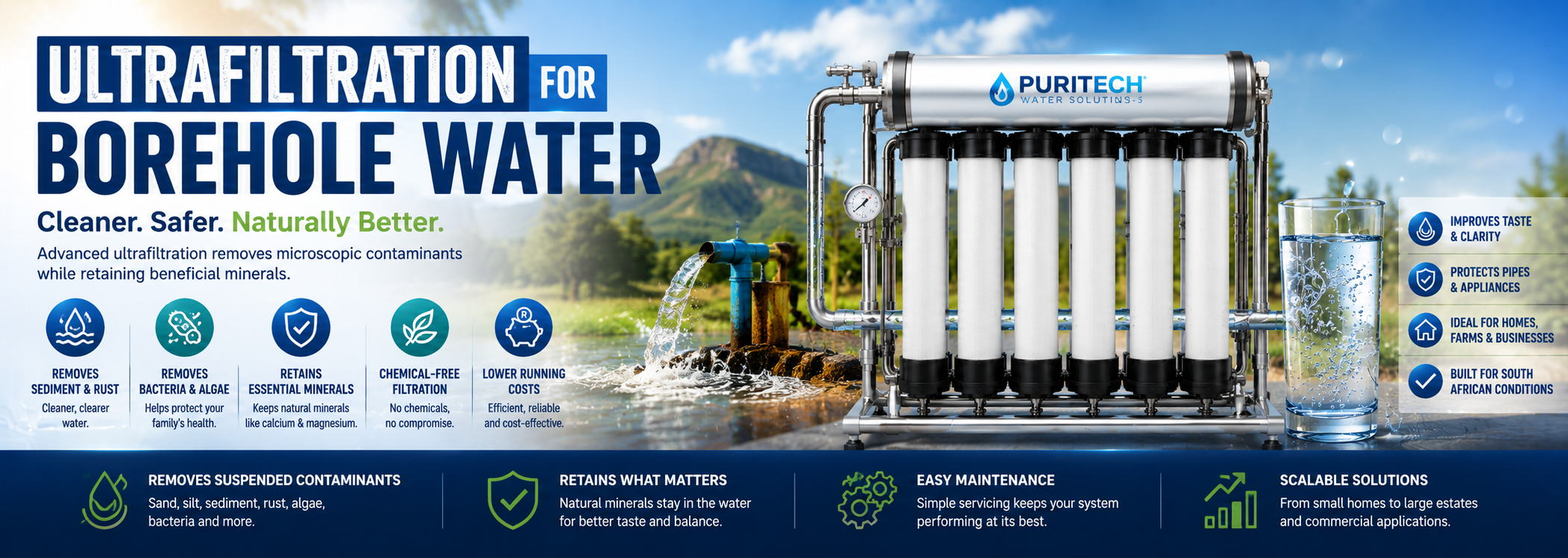
Ultrafiltration for borehole water is an effective way to improve water quality by removing suspended solids, bacteria, algae, and other microscopic contaminants. However, because every borehole is unique, ultrafiltration should never be selected without first understanding the quality of the water being treated.
Unlike municipal water, borehole water is not treated before reaching your property. Its quality depends on local geology, groundwater conditions, nearby agricultural activities and environmental factors. As a result, some boreholes produce exceptionally clean water, while others may contain elevated levels of dissolved minerals, iron, manganese or other contaminants.
For this reason, a professional water analysis should always be the first step before investing in any borehole water treatment system.
Why Borehole Water Requires Special Attention
Borehole water comes directly from underground aquifers.
Although groundwater is naturally filtered as it moves through layers of soil and rock, it can still contain contaminants that affect water quality.
Common borehole water issues include:
- Sand
- Fine sediment
- Silt
- Rust particles
- Bacteria
- Algae
- High turbidity
- Iron
- Manganese
- Hardness minerals
- Elevated Total Dissolved Solids (TDS)
The type and concentration of these contaminants vary from one borehole to another. Therefore, selecting the correct treatment solution depends entirely on the water analysis results.
How Ultrafiltration for Borehole Water Works
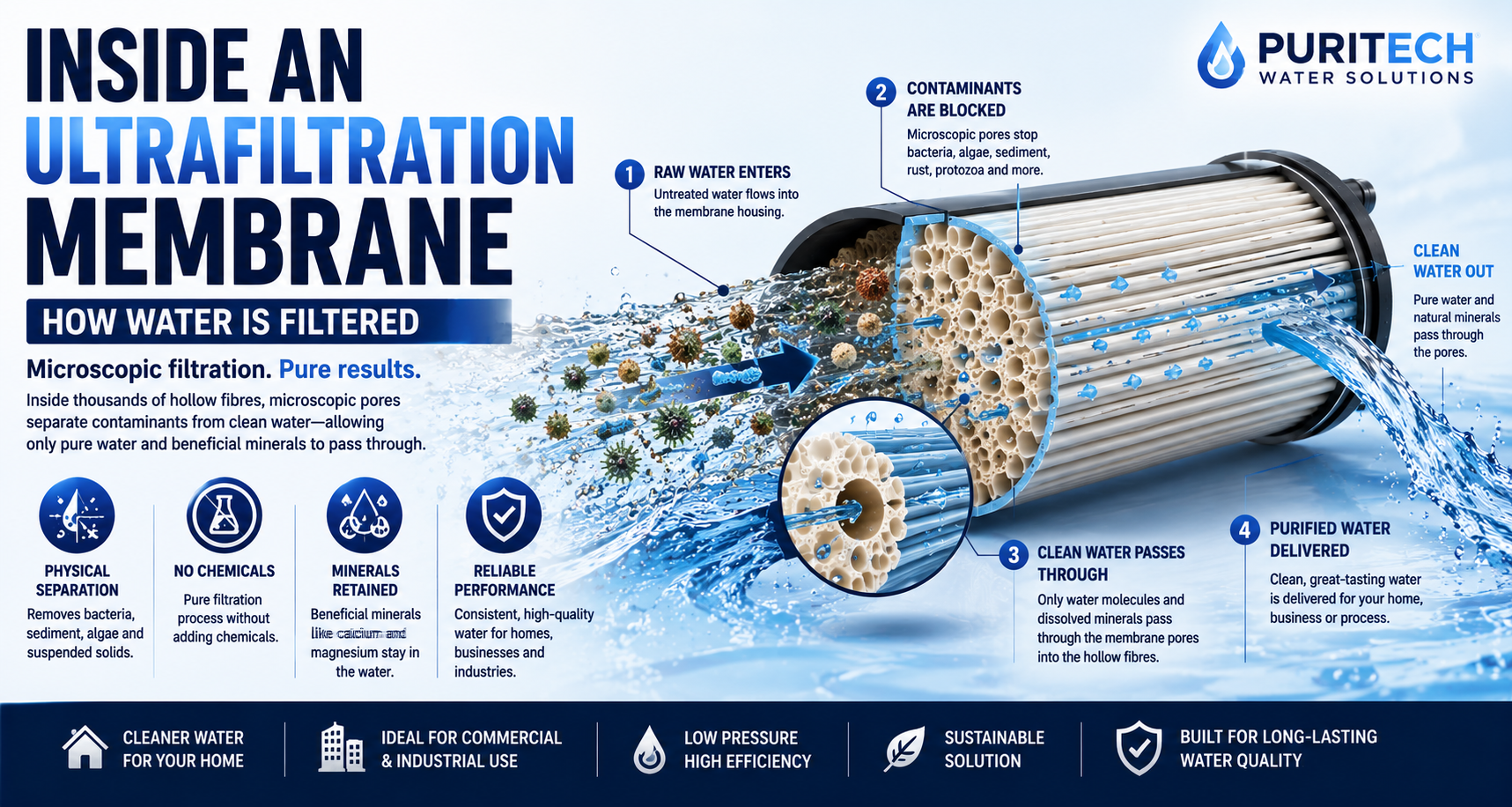
Ultrafiltration for borehole water uses a hollow-fibre membrane with microscopic pores, typically measuring between 0.01 and 0.1 microns.
As water flows through the membrane under pressure:
- Suspended contaminants remain outside the membrane.
- Clean water passes through the membrane fibres.
- Beneficial dissolved minerals continue through the system.
Because ultrafiltration uses physical separation rather than chemicals, it provides reliable filtration while preserving the natural mineral composition of the water.
What Ultrafiltration for Borehole Water Removes
One of the biggest advantages of ultrafiltration for borehole water is its ability to remove a wide range of suspended contaminants.
These include:
Suspended Solids
Ultrafiltration effectively removes:
- Sand
- Fine sediment
- Mud
- Silt
- Rust particles
Consequently, water becomes noticeably clearer.
Bacteria
Many harmful bacteria are larger than the membrane pores.
Therefore, ultrafiltration provides an excellent barrier against bacterial contamination.
Algae
Where algae are present, ultrafiltration captures these microscopic organisms before the water reaches storage tanks or taps.
Protozoa
Many protozoa commonly found in untreated water sources are effectively removed through ultrafiltration.
Microplastics
Ultrafiltration also removes many microscopic plastic particles that may be present in groundwater supplies.
Benefits of Ultrafiltration for Borehole Water
Installing ultrafiltration for borehole water provides several important benefits.
Cleaner Water
Removing suspended contaminants improves the appearance and clarity of borehole water.
Better Protection for Equipment
Cleaner water helps protect:
- Pumps
- Storage tanks
- Pressure systems
- Water dispensers
- Household appliances
As a result, equipment often requires less maintenance.
Retains Beneficial Minerals
Unlike reverse osmosis, ultrafiltration allows naturally dissolved minerals such as calcium and magnesium to remain in the treated water.
Many homeowners prefer this because the water maintains its natural taste.
Chemical-Free Filtration
Ultrafiltration uses membrane technology rather than chemical treatment.
Therefore, the filtration process remains environmentally friendly and efficient.
Lower Operating Costs
Compared with many advanced purification technologies, ultrafiltration systems generally have lower operating costs while delivering excellent filtration performance.
Why Water Analysis Is Essential
Not every borehole requires the same treatment solution.
Some boreholes contain mainly suspended solids and bacteria, making ultrafiltration an excellent option.
However, others may contain:
- High iron levels
- High manganese concentrations
- Elevated hardness
- High TDS
- Dissolved salts
- Nitrates
Because ultrafiltration does not remove these dissolved contaminants, a professional water analysis is essential before selecting a treatment system.
What Ultrafiltration for Borehole Water Does Not Remove
Although ultrafiltration for borehole water removes many suspended contaminants, it is not designed to remove every impurity found in groundwater.
Several dissolved substances are much smaller than the membrane pores and therefore pass through the system.
These include:
- Dissolved salts
- Total Dissolved Solids (TDS)
- Calcium
- Magnesium
- Dissolved iron
- Dissolved manganese
- Nitrates
- Most dissolved heavy metals
- Many dissolved chemicals
If a water analysis identifies elevated levels of these contaminants, additional treatment technologies may be required.
When Should Ultrafiltration Be Combined with Other Water Treatment Systems?
In many applications, ultrafiltration for borehole water forms part of a complete water treatment solution rather than operating as a standalone system.
Combining ultrafiltration with other technologies allows the system to address a broader range of water quality challenges.
Activated Carbon Filtration
Activated carbon is often used alongside ultrafiltration to improve taste, reduce odours and remove chlorine if the water has been disinfected.
It may also reduce certain organic compounds, depending on the water quality.
Iron and Manganese Removal
Some boreholes contain elevated levels of dissolved iron or manganese.
These minerals can cause:
- Brown or black staining
- Metallic taste
- Discoloured laundry
- Blocked plumbing fixtures
Where these contaminants are present, specialised iron and manganese removal systems are generally recommended before or alongside ultrafiltration.
Water Softeners
If the borehole water is hard, a water softener may be installed to reduce calcium and magnesium levels.
This helps protect plumbing systems, geysers and appliances from scale build-up.
Reverse Osmosis
Where borehole water contains high Total Dissolved Solids (TDS), elevated salinity or dissolved contaminants, reverse osmosis may be required.
In these applications, ultrafiltration serves as an excellent pre-treatment stage by removing suspended particles before the water reaches the reverse osmosis membranes.
Consequently, membrane fouling is reduced, and the overall system operates more efficiently.
Applications of Ultrafiltration for Borehole Water
Because of its flexibility, ultrafiltration for borehole water is used in a wide range of applications.
Residential Homes
Homeowners use ultrafiltration to improve drinking water quality while retaining naturally occurring minerals.
Farms and Agricultural Properties
Reliable water quality is essential for farming operations, irrigation support and staff facilities.
Ultrafiltration helps remove suspended contaminants from borehole water before use.
Estates and Residential Developments
Many residential estates rely on centralised borehole systems.
Ultrafiltration improves water quality for multiple homes while protecting distribution infrastructure.
Commercial Buildings
Businesses, guest houses, offices and retail facilities often use borehole water to reduce reliance on municipal supplies.
Ultrafiltration helps improve water quality for daily operations.
Industrial Facilities
Industries frequently use ultrafiltration as part of larger treatment systems to protect downstream equipment and improve process water quality.
Maintaining an Ultrafiltration System
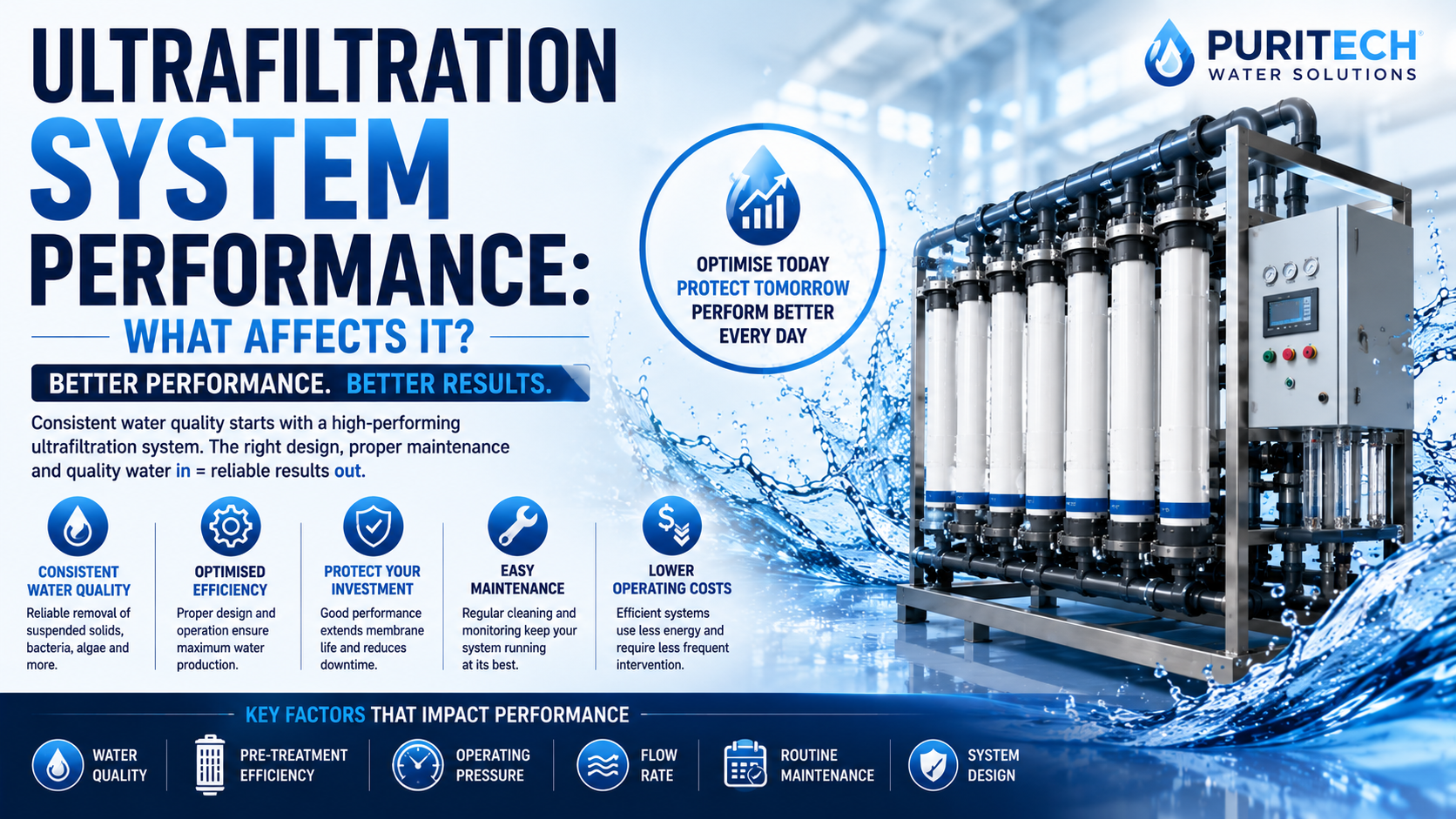
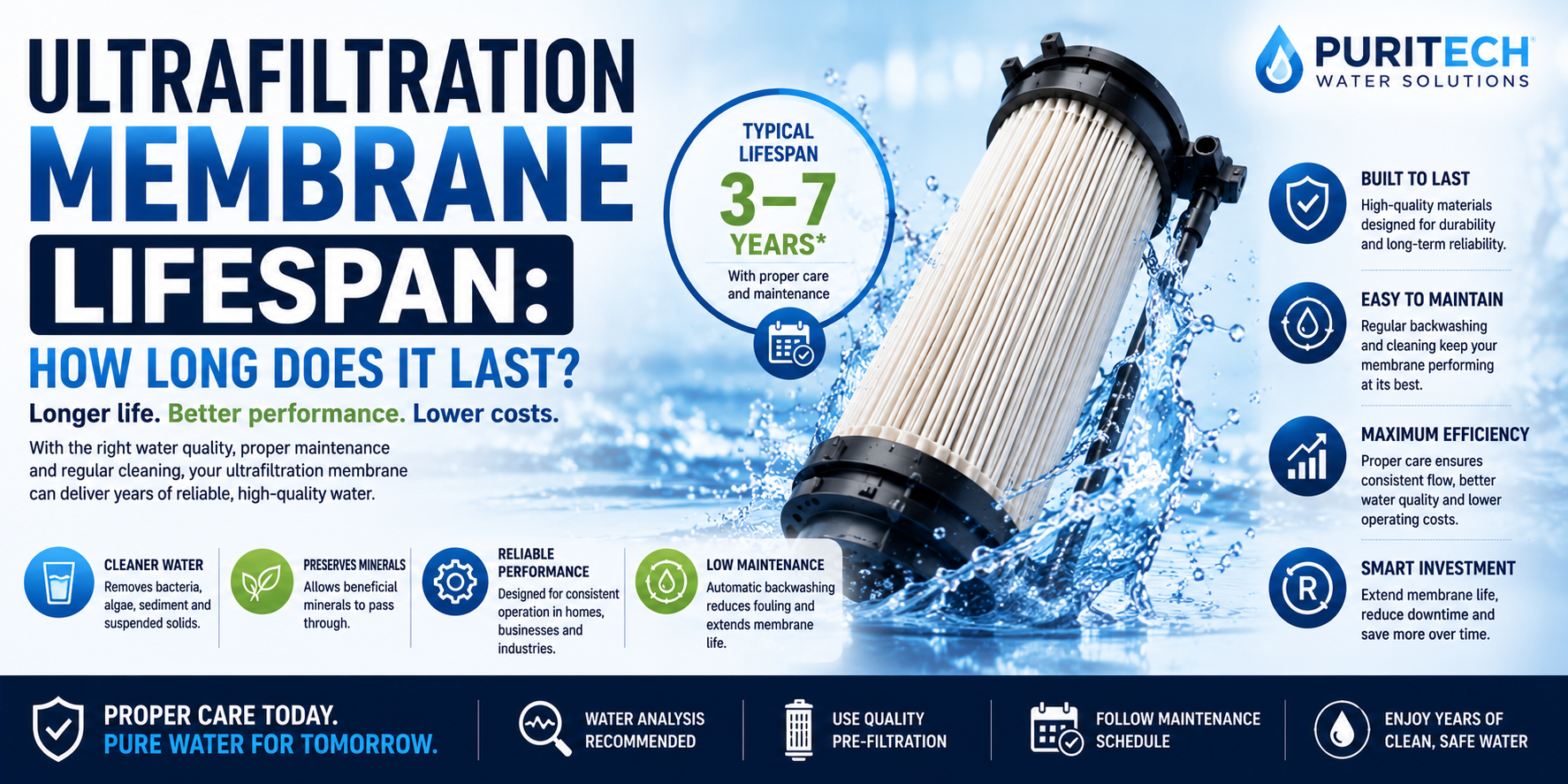
Routine maintenance plays an important role in ensuring that ultrafiltration for borehole water continues to perform efficiently.
Maintenance typically includes:
- Replacing sediment pre-filters
- Monitoring operating pressure
- Inspecting flow rates
- Flushing or backwashing the membrane where applicable
- Scheduling routine servicing
Regular maintenance helps extend membrane life and maintain consistent filtration performance.
Choosing the Right Ultrafiltration System
Selecting the correct ultrafiltration system depends on more than simply choosing the largest unit.
Several factors should be considered, including:
- Water analysis results
- Daily water demand
- Peak flow requirements
- Available installation space
- Future expansion
- Maintenance requirements
Working with an experienced water treatment specialist ensures that the system is correctly designed for your specific borehole water conditions.
Frequently Asked Questions
Is ultrafiltration for borehole water safe for drinking water?
Yes, provided the system is correctly designed and matched to the water quality. A professional water analysis should always be completed before selecting any treatment system.
Can ultrafiltration remove iron from borehole water?
Ultrafiltration removes iron that is present as suspended particles. However, dissolved iron generally requires specialised iron removal treatment before or alongside ultrafiltration.
Does ultrafiltration soften borehole water?
No. Calcium and magnesium remain dissolved in the water, so additional softening treatment is required if hardness is a concern.
Can ultrafiltration remove bacteria from borehole water?
Yes. Most bacteria are larger than the membrane pores and are effectively removed during the ultrafiltration process.
Conclusion
Ultrafiltration for borehole water is an effective solution for removing suspended solids, bacteria, algae and many other microscopic contaminants while preserving naturally occurring minerals. It provides cleaner, clearer water for residential, agricultural, commercial and industrial applications without relying on chemical treatment.
However, because every borehole has unique water quality characteristics, no single treatment solution suits every installation. A recent professional water analysis remains the most important step in selecting the correct treatment system. Where dissolved contaminants such as iron, manganese, high TDS or hardness are present, ultrafiltration can easily be combined with complementary technologies to create a complete and reliable water treatment solution.