
Currently Empty: R0.00

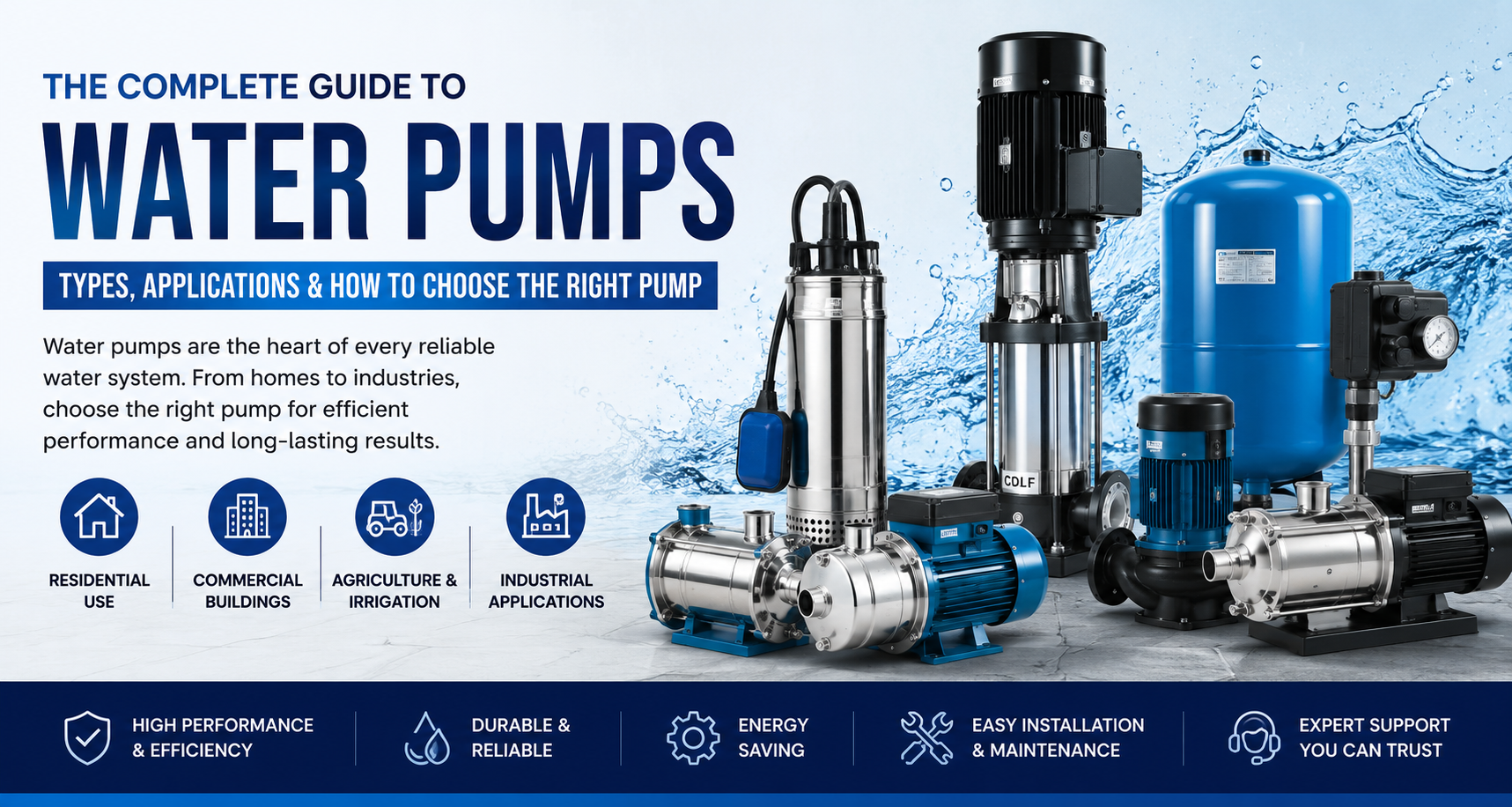
Water Pumps: Complete Guide to Types and Applications
Water pumps are essential components in residential, commercial, agricultural, and industrial water systems. They move water from one location to another, maintain water pressure, and ensure a reliable supply for homes, businesses, irrigation systems, and water treatment plants.
Whether you are supplying water from a borehole, increasing pressure in a building, transferring water between tanks, or supporting a reverse osmosis system, choosing the right pump is critical for efficiency and long-term performance.
Understanding how different water pumps work will help you select the best solution for your specific application.
What Are Water Pumps?
Water pumps are mechanical devices that use energy to move water through pipes, hoses, or treatment systems.
Depending on the application, pumps may be used to:
- Supply water to homes
- Increase water pressure
- Transfer water between storage tanks
- Feed water into filtration systems
- Irrigate crops
- Support industrial processes
- Deliver water to commercial buildings
Modern water pumps are available in various sizes and designs to meet different flow rates and pressure requirements.
How Do Water Pumps Work?
Although pump designs differ, most operate using the same basic principle.
A pump creates pressure that moves water from an area of lower pressure to an area of higher pressure.
The performance of a pump is measured by:
- Flow rate (litres per minute or litres per hour)
- Pressure (bar or kPa)
- Head height
- Power consumption
- Pump efficiency
Selecting the correct pump depends on balancing these factors with the intended application.
Types of Water Pumps
There are many types of water pumps, each designed for specific purposes.
Centrifugal Water Pumps
Centrifugal pumps are among the most commonly used pumps.
They use a rotating impeller to move water.
Applications include:
- Domestic water supply
- Irrigation
- Commercial buildings
- Industrial water transfer
Advantages:
- Reliable operation
- Simple maintenance
- Good flow rates
- Cost-effective
Booster Water Pumps
Booster pumps increase water pressure when the existing supply is insufficient.
Common applications include:
- Homes with low municipal pressure
- Multi-storey buildings
- Hotels
- Office blocks
Benefits include:
- Improved shower pressure
- Better appliance performance
- Consistent water delivery
Borehole Water Pumps
Borehole pumps are installed below ground inside boreholes.
They are designed to pump groundwater to the surface.
Common uses include:
- Residential boreholes
- Farms
- Estates
- Commercial properties
Factors to consider:
- Borehole depth
- Water level
- Flow rate
- Pump size
Multistage Water Pumps
Multistage pumps contain multiple impellers that generate higher pressure.
Applications include:
- Reverse osmosis systems
- Commercial buildings
- High-pressure water supply
- Industrial processes
Advantages:
- High efficiency
- Stable pressure
- Reliable performance
Transfer Water Pumps
Transfer pumps move water between two locations.
Common uses:
- Tank-to-tank transfer
- Rainwater harvesting
- Water storage systems
- Temporary water supply
Pressure Pumps
Pressure pumps maintain constant pressure throughout a plumbing system.
Applications include:
- Residential homes
- Commercial facilities
- Irrigation systems
These pumps are often fitted with pressure controllers that automatically switch the pump on and off as water demand changes.
Choosing the Right Water Pumps
Selecting the correct water pumps depends on several important factors.
Water Source
Examples include:
- Municipal supply
- Borehole
- Dam
- River
- Storage tank
Each source has different pumping requirements.
Required Flow Rate
Consider:
- Number of users
- Daily water demand
- Peak usage periods
A pump that is too small may not provide enough water, while an oversized pump can waste energy.
Required Pressure
Pressure requirements depend on:
- Building height
- Distance to the point of use
- Irrigation system design
- Water treatment equipment
Power Supply
Water pumps are available in:
- Single-phase
- Three-phase
- Solar-powered configurations
Choose a system that matches the available power source and operational needs.
Water Pumps for Different Applications
Homes
Residential pumps are commonly used for:
- Water pressure boosting
- Borehole supply
- Rainwater harvesting
Agriculture
Farms use water pumps for:
- Irrigation
- Livestock watering
- Borehole systems
- Water storage
Commercial Buildings
Businesses require pumps for:
- Water supply
- Pressure boosting
- Cooling systems
- Fire protection systems
Industrial Water Treatment
Industrial facilities use pumps to support:
- Reverse osmosis systems
- Filtration equipment
- Chemical dosing
- Process water
Water Pump Maintenance
Regular maintenance improves reliability and extends equipment lifespan.
Important maintenance tasks include:
- Inspecting seals
- Checking bearings
- Monitoring pressure
- Cleaning strainers
- Inspecting electrical connections
- Looking for leaks
Preventative maintenance helps reduce unexpected downtime and repair costs.
Common Water Pump Problems
Low Water Pressure
- Possible causes:
- Worn impeller
- Blocked pipes
- Air entering the system
- Incorrect pump size
Pump Running Continuously
Possible causes:
- Pressure switch problems
- Leaks
- Incorrect pressure settings
Excessive Noise
Possible causes:
- Cavitation
- Bearing wear
- Loose fittings
Reduced Water Flow
Possible causes:
- Blocked filters
- Damaged impeller
- Pipe restrictions
Frequently Asked Questions
Which water pump is best for a borehole?
Submersible borehole pumps are commonly used because they are designed to operate below the water level and provide efficient water delivery.
What is the difference between a booster pump and a pressure pump?
A booster pump increases water pressure from an existing supply, while a pressure pump helps maintain consistent pressure throughout a plumbing system.
How long do water pumps last?
Pump lifespan depends on water quality, usage, installation, and maintenance. Regular servicing can significantly extend operational life.
Can one water pump be used for every application?
No. Different pumps are designed for different flow rates, pressures, water sources, and operating conditions.
Conclusion
Choosing the right water pumps is essential for ensuring reliable water supply, efficient system performance, and long-term operational savings. Whether you need a borehole pump, booster pump, multistage pump, or transfer pump, selecting equipment that matches your water source and application is key.
Puritech supplies high-quality water pumps and water treatment solutions for residential, commercial, agricultural, and industrial applications, helping customers achieve dependable water delivery and system performance.