Currently Empty: R0.00

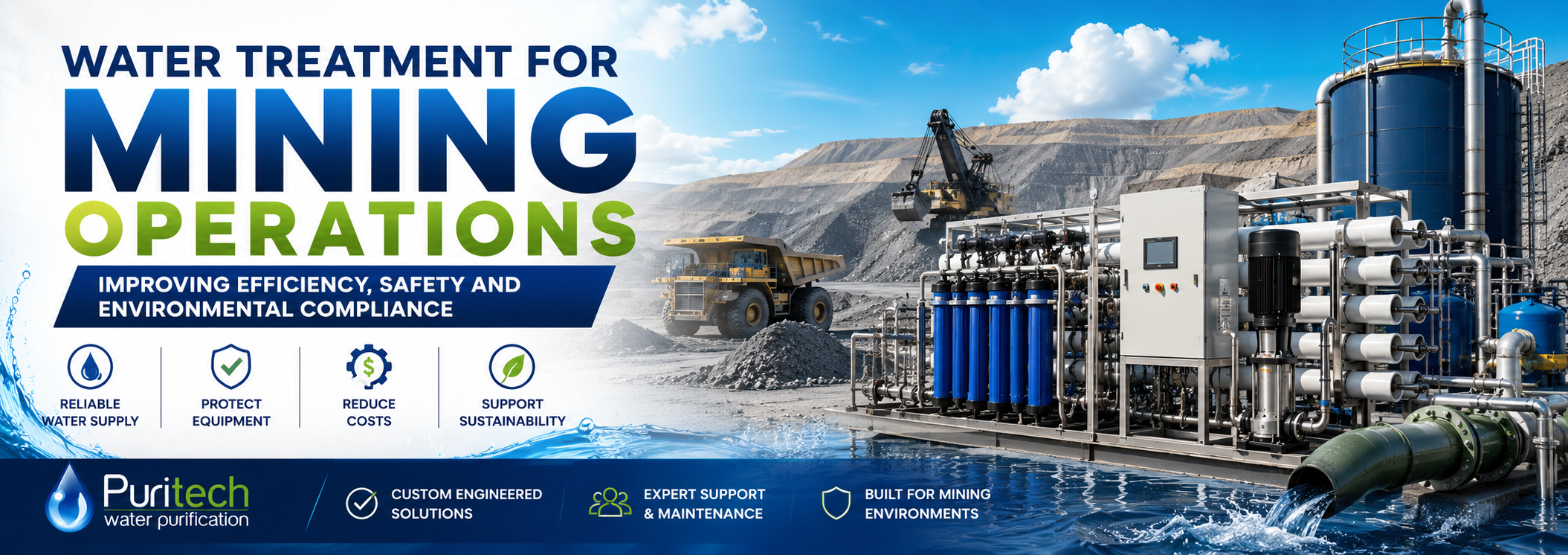
Water Treatment for Mining Operations: Improving Efficiency, Safety and Environmental Compliance
Water is one of the mining industry’s most valuable resources. It supports mineral processing, dust suppression, drilling, equipment cooling, worker facilities, and environmental management. Without a reliable supply of properly treated water, production efficiency can decline, equipment may suffer unnecessary wear, and regulatory compliance becomes more challenging.
Mining operations often use water from a variety of sources, including municipal supplies, boreholes, rivers, dams, and recycled process water. Each source presents unique water quality characteristics, meaning there is no single treatment solution suitable for every mine.
Poor water quality can contribute to scale formation, corrosion, sediment build-up, reduced equipment performance, and higher maintenance costs. It may also affect employee welfare where drinking water is required and increase the complexity of environmental management.
For these reasons, every mining-water treatment system should begin with a professional laboratory water analysis. A detailed understanding of the source water enables engineers to design a treatment system that supports operational efficiency, protects critical equipment, and aligns with environmental obligations.
In this guide, we explore how water is used across mining operations, the challenges associated with different water sources, and the technologies that help mines operate more efficiently and sustainably.
Why Water Quality Matters in Mining
Water influences almost every stage of a mining operation.
Reliable water quality helps to:
- Improve mineral processing efficiency.
- Protect pumps and pipelines.
- Reduce scale and corrosion.
- Support worker health with safe drinking water.
- Improve dust suppression.
- Protect boilers and cooling systems.
- Reduce maintenance costs.
- Support environmental management.
- Improve operational reliability.
Because mining operations often run around the clock, even minor water quality problems can become costly if left unresolved.
Where Water Is Used in Mining Operations
Mining sites use water across many different processes, each with its own quality requirements.
Mineral Processing
Water is essential during crushing, grinding, flotation, washing, and mineral separation.
Consistent water quality helps maintain process stability while protecting processing equipment.
Dust Suppression
Dust control is critical for worker safety and environmental management.
Water is sprayed onto:
- Haul roads.
- Stockpiles.
- Crushers.
- Conveyors.
- Loading areas.
Although dust suppression water does not usually require drinking-water quality, excessive suspended solids can block spray systems and reduce effectiveness.
Equipment Cooling
Heavy mining equipment often relies on water for cooling.
Poor-quality water may lead to:
- Scale formation.
- Corrosion.
- Reduced heat transfer.
- Increased maintenance.
Proper treatment helps maintain efficient cooling performance.
Boiler Feed Water
Many mining operations use steam for heating or industrial processes.
Untreated water can cause:
- Scale.
- Corrosion.
- Reduced efficiency.
- Higher fuel consumption.
- Equipment damage.
Water softening, reverse osmosis, and chemical dosing are commonly used to protect boiler systems.
Potable Water for Staff
Mine employees require access to safe, pleasant-tasting drinking water throughout the site.
Treatment systems may include:
- Sediment filtration.
- Activated carbon filtration.
- Reverse osmosis.
- UV sterilisation.
These technologies help produce high-quality drinking water for offices, accommodation facilities, and remote camps.
Borehole Water
Many mines operate in remote areas where boreholes provide the primary water source.
Depending on local geology, borehole water may contain the following:
- High iron.
- Manganese.
- Hardness.
- Elevated Total Dissolved Solids (TDS).
- High salinity.
- Low pH.
- Microbiological contamination.
Because groundwater quality varies significantly between locations, treatment should always be based on a recent professional laboratory water analysis.
Common Water Quality Challenges in Mining
Mining operations commonly encounter:
- High hardness.
- Iron.
- Manganese.
- Sediment.
- High TDS.
- Salinity.
- Low pH.
- Suspended solids.
- Corrosive water.
- Variable borehole water quality.
Each of these conditions can influence equipment performance, operating costs, and water treatment requirements.
Why Every Mining Project Should Begin with a Professional Laboratory Water Analysis
Before selecting treatment equipment, engineers need to understand the quality of the available water.
A professional laboratory water analysis typically measures:
- pH.
- Total Dissolved Solids (TDS).
- Conductivity.
- Hardness.
- Turbidity.
- Iron.
- Manganese.
- Chlorides.
- Sulphates.
- Nitrates.
- Fluoride.
- Silica.
- Microbiological quality where appropriate.
These results form the basis for selecting the correct treatment technologies and sizing the system appropriately.
Without accurate laboratory data, treatment equipment may be undersized, oversized, or unsuitable for the water conditions on site.
Case Study 1: Remote Platinum Mine Using Borehole Water
A platinum mine in Limpopo relies on boreholes to supply water for staff accommodation, workshops, and operational processes.
The site experiences:
- Heavy scale build-up.
- Iron staining.
- Frequent maintenance on pumps.
- Complaints about drinking water taste.
A professional laboratory water analysis identifies:
- High hardness.
- Elevated iron.
- Moderate manganese.
- Elevated Total Dissolved Solids.
Recommended Treatment
- Multimedia filtration.
- Iron and manganese removal.
- Water softener.
- Activated carbon filtration.
- Reverse osmosis for drinking water.
- UV sterilisation.
Results
After installation, the mine reports the following:
- Improved drinking water quality.
- Reduced equipment maintenance.
- Lower-scale formation.
- Longer pump lifespan.
- Better staff satisfaction.
- Lower operating costs.
Water Treatment Technologies for Mining Operations
Every mining operation has different water treatment requirements. An open-pit coal mine has different challenges from an underground platinum mine, while a gold processing plant requires different water quality from a remote exploration camp.
Some mines require high-quality potable water for employees, while others focus on treating process water, protecting equipment, or managing environmental discharge.
For this reason, mining water treatment systems should always be designed around a professional laboratory water analysis together with a detailed understanding of the mine’s operational requirements.
Most mining operations benefit from a multi-stage treatment system rather than relying on a single filtration technology.
Multimedia Filtration
Multimedia filtration is often the first stage in mining water treatment.
Unlike basic sediment filters, multimedia filters use multiple layers of filtration media to remove suspended solids of varying sizes.
They effectively reduce:
- Sand.
- Silt.
- Clay.
- Rust.
- Organic material.
- Suspended solids.
Mining environments are particularly demanding because raw water often contains large quantities of suspended particles.
Installing multimedia filtration helps protect:
- Pumps.
- Valves.
- Reverse osmosis membranes.
- Activated carbon filters.
- UV sterilisers.
- Chemical dosing equipment.
Removing suspended solids early improves the performance of the entire treatment system.
Activated Carbon Filtration
Activated carbon filtration improves water quality by reducing:
- Chlorine.
- Taste.
- Odours.
- Organic compounds.
Mining sites that receive municipal water often install activated carbon before reverse osmosis systems to protect the membranes from chlorine damage.
Activated carbon also improves drinking water quality for:
- Offices.
- Mine accommodation.
- Kitchens.
- Cafeterias.
- Medical facilities.
Providing pleasant-tasting drinking water contributes to employee wellbeing and satisfaction.
Water Softeners
Hard water creates major operational challenges throughout mining facilities.
High concentrations of calcium and magnesium contribute to scale inside:
- Boilers.
- Heat exchangers.
- Cooling systems.
- Pipework.
- Water heaters.
- Production equipment.
Scale reduces heat transfer efficiency, increases energy consumption, and shortens equipment life.
Installing an appropriately sized water softener helps:
- Reduce scale formation.
- Improve energy efficiency.
- Extend equipment lifespan.
- Lower maintenance costs.
- Improve boiler performance.
Many mines recover their investment through lower operating costs and fewer equipment failures.
Reverse Osmosis Systems
Reverse osmosis (RO) is widely used throughout the mining industry where high-quality water is required.
RO systems remove many dissolved contaminants, including:
- Excess salts.
- High Total Dissolved Solids (TDS).
- Hardness.
- Nitrates.
- Sulphates.
- Fluoride.
- Heavy metals.
- Many dissolved minerals.
Depending on operational requirements, reverse osmosis may supply:
- Drinking water.
- Laboratory water.
- Boiler feed water.
- Process water.
- Accommodation facilities.
- Administrative buildings.
Reverse osmosis provides a consistent source of high-quality water, even when raw water quality changes throughout the year.
UV Water Sterilisation
Ultraviolet (UV) sterilisation provides an additional level of microbiological protection without introducing chemicals into the water.
UV systems are commonly installed:
- After reverse osmosis.
- Before potable water storage tanks.
- Before staff accommodation.
- Before kitchens.
- At medical facilities.
This helps ensure microbiologically safe drinking water for employees working in remote locations.
Chemical Dosing Systems
Mining operations often use chemical dosing systems to protect industrial equipment and improve water quality.
Depending on the application, dosing systems assist with:
- pH correction.
- Corrosion inhibition.
- Scale control.
- Boiler water treatment.
- Cooling water treatment.
When properly managed, chemical dosing improves system reliability and helps extend the lifespan of critical infrastructure.
Clarification and Thickening Systems
Many mining processes generate water containing fine suspended solids.
Clarification systems allow these particles to settle or be separated before the water is reused or treated further.
These systems can help:
- Reduce suspended solids.
- Improve downstream filtration.
- Recover reusable process water.
- Lower freshwater demand.
- Improve treatment efficiency.
The appropriate clarification technology depends on the mineral being processed and the characteristics of the water.
Process Water vs Potable Water
Mining operations often require multiple water qualities across the site.
Understanding the difference helps engineers design efficient treatment systems.
Process Water
Process water supports mining activities such as:
- Mineral processing.
- Dust suppression.
- Equipment washing.
- Cooling systems.
- Ore handling.
The required treatment depends on the specific process and equipment involved.
Potable Water
Potable water is intended for human consumption.
It supplies:
- Kitchens.
- Offices.
- Staff accommodation.
- Medical facilities.
- Drinking water stations.
Treatment typically includes:
- Multimedia filtration.
- Activated carbon filtration.
- Reverse osmosis.
- UV sterilisation.
Separating potable water treatment from industrial process water often improves efficiency while reducing unnecessary treatment costs.
Case Study 2: Gold Mine Processing Plant
A gold processing facility experiences increasing maintenance costs due to heavy scale inside heat exchangers and process equipment.
A professional laboratory water analysis identifies:
- High hardness.
- Elevated silica.
- Moderate Total Dissolved Solids.
- Slightly alkaline water.
Recommended Treatment
- Multimedia filtration.
- Water softener.
- Reverse osmosis for boiler feed water.
- Chemical dosing.
Results
The operation reports:
- Lower maintenance costs.
- Improved heat transfer.
- Reduced scale formation.
- Better equipment reliability.
- Improved production efficiency.
Case Study 3: Coal Mine
A coal mine relies on dam water for dust suppression and equipment washing.
Heavy rainfall frequently increases suspended solids, causing spray nozzles to block and pumps to wear prematurely.
Recommended Treatment
- Clarification.
- Multimedia filtration.
- Storage balancing tanks.
Results
The mine benefits from the following:
- Cleaner process water.
- Reduced nozzle blockages.
- Lower pump maintenance.
- More effective dust suppression.
- Improved operational reliability.
Case Study 4: Diamond Mine
A diamond mining operation requires high-quality potable water for staff living in a remote camp.
Testing reveals:
- Elevated salinity.
- High Total Dissolved Solids.
- Moderate hardness.
Recommended Treatment
- Multimedia filtration.
- Activated carbon filtration.
- Reverse osmosis.
- UV sterilisation.
- Food-grade storage tanks.
Results
The mine achieves:
- Reliable drinking water.
- Improved employee satisfaction.
- Lower bottled water costs.
- Reduced logistical challenges.
- Consistent potable water quality.
Case Study 5: Chrome Mine
A chrome mine experiences corrosion within cooling systems due to acidic borehole water.
The professional laboratory water analysis identifies:
- Low pH.
- Elevated iron.
- Moderate manganese.
Recommended Treatment
- Iron removal.
- Manganese removal.
- pH correction.
- Multimedia filtration.
- Chemical dosing.
Results
The operation records:
- Reduced corrosion.
- Longer equipment lifespan.
- Lower maintenance costs.
- Improved cooling efficiency.
- Greater operational reliability.
Why Every Mining Operation Needs a Custom Water Treatment System
No two mines operate under identical conditions.
The correct treatment solution depends on factors such as the following:
- Type of mineral.
- Source water quality.
- Daily water demand.
- Peak production requirements.
- Climate.
- Processing methods.
- Environmental obligations.
- Worker accommodation.
- Future mine expansion.
For this reason, Puritech begins every mining project with the following:
- A recent professional laboratory water analysis.
- A detailed assessment of operational requirements.
- Identification of potable and process water needs.
- Evaluation of future expansion plans.
- Selection of suitable treatment technologies.
- Engineering a scalable system that supports long-term mine performance.
This customised approach helps mining companies improve operational efficiency, protect valuable infrastructure, reduce maintenance costs, and manage water resources more effectively.
Preventative Maintenance: Maximising Reliability in Mining Water Treatment Systems
A professionally engineered water treatment system is a major investment that supports the productivity and sustainability of a mining operation. However, even the best-designed system requires regular maintenance to continue delivering reliable performance.
Mining environments are among the harshest operating conditions for water treatment equipment. Dust, vibration, extreme temperatures, fluctuating water quality, and continuous operation all place additional demands on treatment systems.
Implementing a preventative maintenance programme helps mines:
- Maintain consistent water quality.
- Protect expensive equipment.
- Reduce unplanned downtime.
- Lower long-term operating costs.
- Improve energy efficiency.
- Extend equipment lifespan.
- Improve operational reliability.
Routine servicing allows maintenance teams to identify small issues before they become costly failures.
Recommended Maintenance Schedule
Maintenance intervals depend on the water source, production demands, environmental conditions, and treatment technologies installed.
The following schedule serves as a practical guideline.
Daily
- Inspect the system for alarms and fault indications.
- Record operating pressures and flow rates.
- Check pumps and motors for unusual noise or vibration.
- Verify UV system operation where installed.
- Inspect storage tank levels.
- Review water quality monitoring data.
Weekly
- Inspect multimedia filters.
- Check activated carbon vessels.
- Verify water softener regeneration cycles.
- Inspect reverse osmosis operating pressures.
- Check pipework, valves, and fittings for leaks.
- Review system performance logs.
Monthly
- Test treated water quality.
- Inspect reverse osmosis membranes.
- Check UV lamp performance.
- Inspect chemical dosing systems.
- Clean instrumentation where required.
- Review overall water consumption trends.
Annually
- Replace consumables according to the manufacturer’s recommendations.
- Service pumps and motors.
- Calibrate monitoring equipment.
- Conduct a new professional laboratory water analysis.
- Evaluate opportunities for system optimisation or expansion.
A preventative maintenance programme helps ensure dependable operation while reducing the risk of costly production interruptions.
Environmental Compliance and Responsible Water Management
Environmental responsibility has become an essential part of modern mining.
Mining companies must manage water carefully to minimise environmental impact while supporting efficient operations.
Although compliance requirements vary depending on the operation and applicable regulations, good water management generally focuses on:
- Responsible abstraction of water.
- Efficient water use.
- Protection of surrounding water resources.
- Appropriate treatment before reuse or discharge.
- Ongoing monitoring of water quality.
- Reducing unnecessary water losses.
An effective water treatment system supports these objectives by improving water quality and helping operations manage water resources more responsibly.
Water Recycling and Reuse
Many mining operations now incorporate water recycling into their overall water management strategy.
Recycling water can reduce dependence on freshwater sources while lowering operational costs.
Depending on the application, treated water may be reused for:
- Dust suppression.
- Mineral processing.
- Equipment washing.
- Cooling systems.
- Irrigation of approved landscaped areas.
- General utility services.
The suitability of recycled water depends on the specific application and should always be assessed by qualified professionals.
By increasing water recovery, mines can improve operational resilience while reducing overall water consumption.
Return on Investment (ROI)
Some organisations view water treatment as a necessary operational expense.
In reality, a properly designed Mining Water Treatment System often delivers measurable financial benefits throughout its service life.
Potential savings include:
- Lower maintenance costs.
- Reduced equipment failures.
- Improved energy efficiency.
- Longer pump lifespan.
- Reduced boiler maintenance.
- Lower chemical consumption.
- Less production downtime.
- Improved employee welfare.
- Lower bottled water costs.
- Improved operational efficiency.
For example, preventing scale formation inside heat exchangers and boilers improves heat transfer, reducing energy consumption while extending equipment life. Similarly, supplying reliable potable water to remote mine camps can significantly reduce the ongoing cost and logistical challenges of transporting bottled water.
When these benefits are considered over the life of the system, many mining operations achieve an excellent return on investment.
Common Mistakes Mining Operations Make
Selecting the correct water treatment solution begins with understanding the available water.
The following mistakes are among the most common.
Installing Equipment Without a Water Analysis
Every mine has unique water conditions.
Selecting treatment equipment without a recent professional laboratory water analysis often leads to systems that are unsuitable for the site’s actual water quality.
A laboratory analysis should always be the starting point.
Choosing Equipment Based Only on Price
The lowest purchase price rarely delivers the lowest lifetime cost.
Lower-quality systems may require:
- More frequent maintenance.
- Earlier replacement.
- Higher energy consumption.
- Increased downtime.
- Greater operating costs.
Evaluating total ownership costs provides a better basis for investment decisions.
Treating All Water the Same
Mining operations use water for many different purposes.
Drinking water, boiler feed water, cooling water, process water, and dust suppression water each require different treatment objectives.
Designing separate treatment strategies improves efficiency while avoiding unnecessary costs.
Ignoring Preventative Maintenance
Postponing maintenance often leads to:
- Reduced treatment performance.
- Scale formation.
- Membrane fouling.
- Equipment failures.
- Production interruptions.
- Higher repair costs.
Routine maintenance protects both equipment and productivity.
Why Partner with Puritech?
At Puritech, we understand the demanding conditions under which mining operations operate.
Our approach begins with a professional laboratory water analysis, followed by a detailed evaluation of the mine’s operational requirements and long-term objectives.
Our mining water treatment services include:
- Professional consultation.
- Review of laboratory water analysis reports.
- Custom water treatment system design.
- Equipment supply.
- Installation and commissioning.
- Preventative maintenance.
- Technical support.
- Replacement consumables.
- System upgrades.
- Long-term optimisation.
Whether your operation requires potable water for staff, process water for production, boiler feed water, or specialised treatment for borehole water, Puritech designs systems that improve reliability, protect equipment, and support efficient mining operations.
Frequently Asked Questions
Why do mining operations require water treatment?
Water treatment improves equipment reliability, supports production efficiency, provides safe drinking water, reduces maintenance costs, and helps manage water resources responsibly.
Can borehole water be used on a mine?
Yes.
However, borehole water quality varies significantly between locations. A professional laboratory water analysis should always be completed before selecting treatment equipment.
Is reverse osmosis suitable for mining?
Yes.
Reverse osmosis is commonly used where high-quality water is required for drinking water, boiler feed water, laboratories, and certain industrial processes.
How often should mining water treatment systems be serviced?
Service frequency depends on the water quality, operating conditions, treatment technologies, and manufacturer’s recommendations. Routine preventative maintenance helps maximise reliability.
Can mines recycle water?
In many applications, yes.
Treated water can often be reused for suitable non-potable purposes, reducing freshwater consumption and improving operational efficiency where technically appropriate.
Can an existing treatment system be upgraded?
Yes.
Many systems can be expanded or modernised as production increases or operational requirements change.
Final Thoughts
Water is fundamental to safe, productive, and sustainable mining operations. From mineral processing and equipment cooling to potable water for employees and responsible environmental management, every stage of a mining project depends on reliable water quality.
Because no two mining operations have identical water sources or operational requirements, every project should begin with a professional laboratory water analysis. Understanding the water chemistry enables engineers to design a treatment solution that protects equipment, supports production, and delivers long-term value.
At Puritech, we work with mining companies throughout South Africa to design, install, and maintain customised water treatment systems for municipal supplies, boreholes, recycled process water, and other water sources. Our engineered solutions help improve operational efficiency, reduce maintenance costs, and support responsible water management in some of the country’s most demanding industrial environments.