Product information
Details & specifications
What Is the Cation Resin Media?
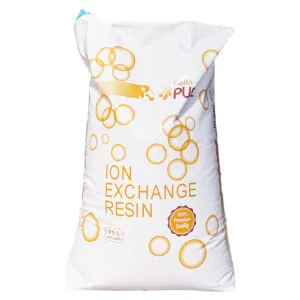
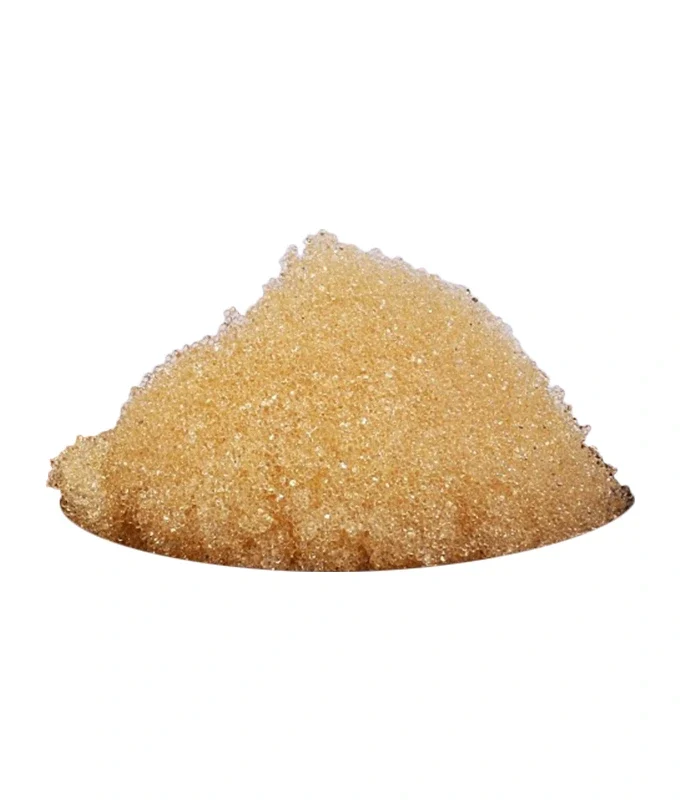
This cation resin 25 L bag from Puritech is a strong-acid cation exchange resin designed for water softening. It removes hardness minerals — like calcium and magnesium — from water by exchanging them for sodium ions, thereby reducing scaling and improving water quality.
When water flows through the resin beads, the positively charged hardness ions (Ca²⁺, Mg²⁺) swap places with sodium ions (Na⁺) that the resin originally holds. After the resin becomes “loaded” with hardness ions, it regenerates using a salt (brine) solution, restoring its sodium form.
Technical Specifications & Operating Conditions
- Resin Type: Strong-acid cation resin (styrene–divinylbenzene)
- Ionic Form (As Supplied): Sodium (Na⁺)
- Total Exchange Capacity: ≈ 2.0 meq/mL (typical for softening resins)
- Water Retention (Moisture Content): ~43–48%
- Bead Size / Mesh: ~16‑40 mesh (US standard) per typical cation resins
- Polymer Structure: Polystyrene crosslinked with divinylbenzene
- pH Operating Range: ~0 – 14 (resin is chemically stable over broad pH)
- Recommended Regeneration: Use 5–7% NaCl (salt) solution for regeneration.
- Regeneration Flow Rate Suggestion: 2–8 BV/h (based on spec sheet)
- Regeneration Time: About 30 min with recommended concentration
- Rinse After Regeneration: 4–8 BV (bed volumes) of rinse recommended
- Resin Density: ~800–850 g/L (bulk) per Puritech’s spec.
How It Works
- Service Mode: Water containing calcium and magnesium ions passes through the resin bed. These hardness ions displace sodium ions from the resin beads.
- Ion Exchange: The resin traps the hardness ions while releasing sodium ions into the water, reducing hardness in the process.
- Regeneration: After usage, a brine solution (salt water) flushes through the resin. The high salt concentration forces the hardness ions off the resin and replaces them with sodium ions again.
- Rinse: After the brine, a rinse flush removes excess salt and waste, preparing the resin for another softening cycle.
Benefits
- Effective Softening: Reduces calcium and magnesium to prevent scale buildup.
- Regenerable: Resin can be reused multiple times with brine solution, making it cost-effective.
- Long Life: High-capacity resin means fewer bed replacements over time.
- Improves Appliance Longevity: Helps protect water-using appliances (geyser, kettle, dishwasher) from scale damage.
- Flexible Use: Compatible with a range of softener tanks and systems.
Ideal Applications
- Home water softeners for residential hard water
- Commercial softening systems (restaurants, laundromats)
- Industrial water treatment where scaling is a problem
- RO pre-treatment to protect membranes from hardness
- High-flow softening systems using large resin beds
Usage & Maintenance Tips
- Initial Rinse: When first installed, rinse the resin to remove any fines before use.
- Brine Regeneration: Use the correct salt concentration (5–7% NaCl) and ensure full contact time (approx. 30 min).
- Rinse After Regeneration: Perform a slow and fast rinse to clear excess salt.
- Monitor Hardness: Check water hardness periodically to confirm the softener is working properly.
- Replace When Needed: Over time, the resin’s capacity declines. Replace the resin when it no longer softens effectively after regeneration.