Currently Empty: R0.00

Water Age: Why Water Sitting Too Long Becomes a Problem
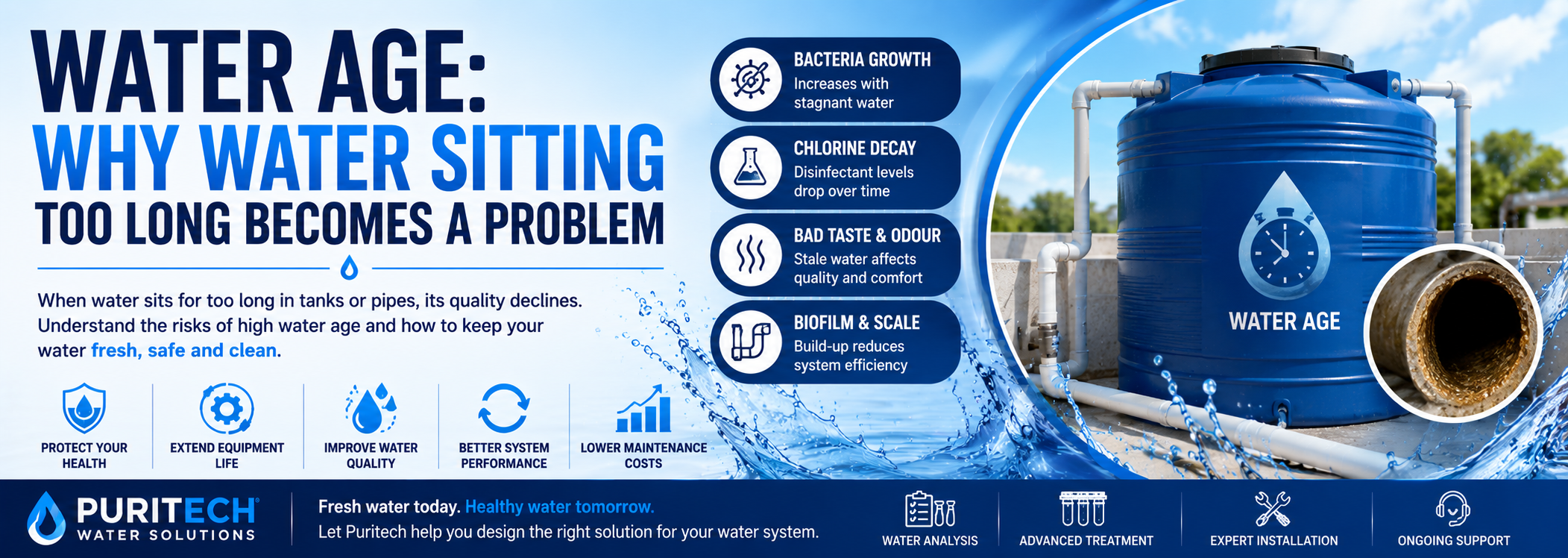
Water age refers to the length of time water remains in a storage tank, pipe or distribution system before it is used. Although water may appear clean and safe, its quality can gradually decline when it remains stationary for long periods.
Many people assume that water only becomes unsafe when it is visibly dirty. However, even clear water can experience changes in taste, odour and microbiological quality as its water age increases. This is why water age is an important consideration in homes, businesses, hospitals, hotels, factories and municipal water systems.
Understanding water age helps property owners maintain better water quality, protect plumbing systems and reduce health risks associated with stagnant water.
What Is Water Age?
Water age is simply the amount of time that water spends inside a distribution system before reaching the point of use.
For example, water may remain in the following:
- Storage tanks
- Underground reservoirs
- Building pipework
- Dead-end pipelines
- Fire suppression systems
- Backup water storage tanks
The longer water remains unused, the older its water age becomes.
Why Does Water Age Matter?
Fresh water contains disinfectants, such as chlorine, that help control bacterial growth. Over time, these disinfectants gradually lose their effectiveness.
As water remains in pipes or tanks, several changes can occur:
- Chlorine levels decrease.
- Bacteria may begin to multiply.
- Biofilms can develop inside pipework.
- Water may develop unpleasant tastes or odours.
- Sediment may settle at the bottom of storage tanks.
- Water quality can deteriorate.
Consequently, even treated municipal water can become less desirable if it remains stagnant for extended periods.
What Causes High Water Age?
Several factors increase water age within a plumbing or water distribution system.
Oversized Storage Tanks
Large tanks that store more water than a building regularly uses can allow water to remain stagnant for long periods.
Selecting the correct tank size helps maintain better water turnover.
Low Water Usage
Buildings with low occupancy often experience higher water age because less water moves through the plumbing system.
Examples include:
- Holiday homes
- Seasonal lodges
- Schools during holidays
- Offices with remote workers
- Vacant commercial buildings
Dead-End Pipework
Pipe sections with little or no regular flow are known as dead ends.
Because water rarely moves through these sections, disinfectant levels decline and bacteria have more opportunity to grow.
Poor Plumbing Design
Complex plumbing systems with oversized pipework or unnecessary branches increase the amount of stagnant water.
Efficient plumbing design helps maintain lower water age throughout the building.
Water Storage During Supply Interruptions
Many South African homes and businesses store water to prepare for municipal outages.
While storage is essential, water should not remain unused for extended periods without proper maintenance.
How Water Age Affects Water Quality
As water age increases, the quality of stored water may gradually decline.
Possible effects include:
- Flat or stale-tasting water
- Musty or unpleasant odours
- Increased bacterial growth
- Biofilm formation inside pipes
- Reduced chlorine residual
- Sediment accumulation
- Greater risk of microbial contamination
Although these changes may develop slowly, they can significantly affect both water quality and system hygiene over time.
Where Water Age Is Most Common
High water age is frequently found in:
- Hotels
- Hospitals
- Schools
- Apartment complexes
- Office buildings
- Factories
- Shopping centres
- Retirement villages
- Farms
- Municipal storage reservoirs
These facilities often have extensive plumbing systems or periods of reduced water demand, making proper water management especially important.
Health Risks Associated with High Water Age
Although ageing water does not automatically become unsafe, extended stagnation can create conditions that allow microorganisms to multiply and water quality to deteriorate. Therefore, managing water age is an important part of maintaining a safe and reliable water supply.
Potential risks include the following:
- Reduced chlorine residual
- Increased bacterial growth
- Biofilm formation inside pipework
- Unpleasant taste and odour
- Sediment accumulation
- Reduced confidence in drinking water quality
In sensitive environments such as hospitals, healthcare facilities and food processing plants, controlling water age is particularly important because water hygiene standards are much higher.
How to Reduce Water Age
Fortunately, several practical measures can help reduce water age and improve overall water quality.
Size Storage Tanks Correctly
Installing a storage tank that matches your daily water demand encourages regular water turnover.
Oversized tanks often allow water to remain stagnant for much longer than necessary.
Flush Low-Use Pipework
Pipe sections that receive little use should be flushed regularly.
This process replaces older water with fresh water and helps maintain disinfectant levels throughout the system.
Eliminate Dead Legs
Dead legs are sections of pipe where water rarely moves.
Removing unnecessary pipework or redesigning the plumbing system improves circulation and reduces areas where stagnant water can develop.
Clean Water Storage Tanks
Over time, sediment and organic matter can accumulate inside storage tanks.
Regular cleaning helps maintain water quality and reduces the risk of bacterial growth.
Monitor Water Quality
Routine water testing helps identify changes before they become serious problems.
A professional water analysis can monitor important parameters such as the following:
- pH
- Turbidity
- Chlorine residual
- Bacterial contamination
- Conductivity
- Total Dissolved Solids (TDS)
Regular monitoring allows corrective action to be taken before water quality declines.
Water Treatment Solutions That Help Manage Water Age
Although good plumbing design remains the first line of defence, several water treatment technologies can help maintain water quality.
Depending on your application, Puritech may recommend:
Sediment Filtration
Removes suspended particles that contribute to sediment build-up.
Activated Carbon Filtration
Improves taste and odour by reducing chlorine and certain organic compounds. Because activated carbon also removes chlorine, it should be used as part of a properly designed treatment system rather than as a standalone solution for stored water.
Ultrafiltration (UF)
Removes suspended solids, bacteria, and many other microorganisms while maintaining high flow rates.
UV Disinfection
Ultraviolet treatment inactivates bacteria, viruses and other microorganisms without adding chemicals, making it ideal as a final disinfection stage.
Chlorination Systems
Controlled chlorination helps maintain a disinfectant residual in storage and distribution systems where appropriate.
The most suitable solution depends on your water source, storage arrangement and operational requirements.
Frequently Asked Questions
What is water age?
Water age is the amount of time water remains in a storage tank, pipe or distribution system before it reaches the point of use.
Is old water always unsafe?
Not necessarily. However, as water remains stagnant, disinfectant levels can decrease and conditions may become more favourable for bacterial growth and declining water quality.
How can I reduce water age?
You can reduce water age by using correctly sized storage tanks, flushing low-use pipework, removing dead legs, cleaning storage tanks regularly and monitoring water quality.
Does municipal water also experience water age?
Yes. Municipal water can develop a higher water age within large distribution networks, storage reservoirs and building plumbing systems if it remains unused for extended periods.
Conclusion
Managing water age is essential for maintaining clean, safe and reliable water. Although water may appear clear, extended storage and low water movement can reduce disinfectant levels, encourage biofilm formation and allow water quality to decline over time.
Fortunately, practical measures such as proper tank sizing, regular flushing, good plumbing design and routine maintenance significantly reduce these risks. In addition, appropriate water treatment technologies—including sediment filtration, ultrafiltration, UV disinfection and controlled chlorination—help maintain water quality throughout the entire system.
The best way to manage water usage begins with understanding your water system. A professional water analysis, combined with expert system design, enables Puritech to recommend the most effective solution for your home, business or industrial facility.