Currently Empty: R0.00

Solar Panels Explained: How They Work
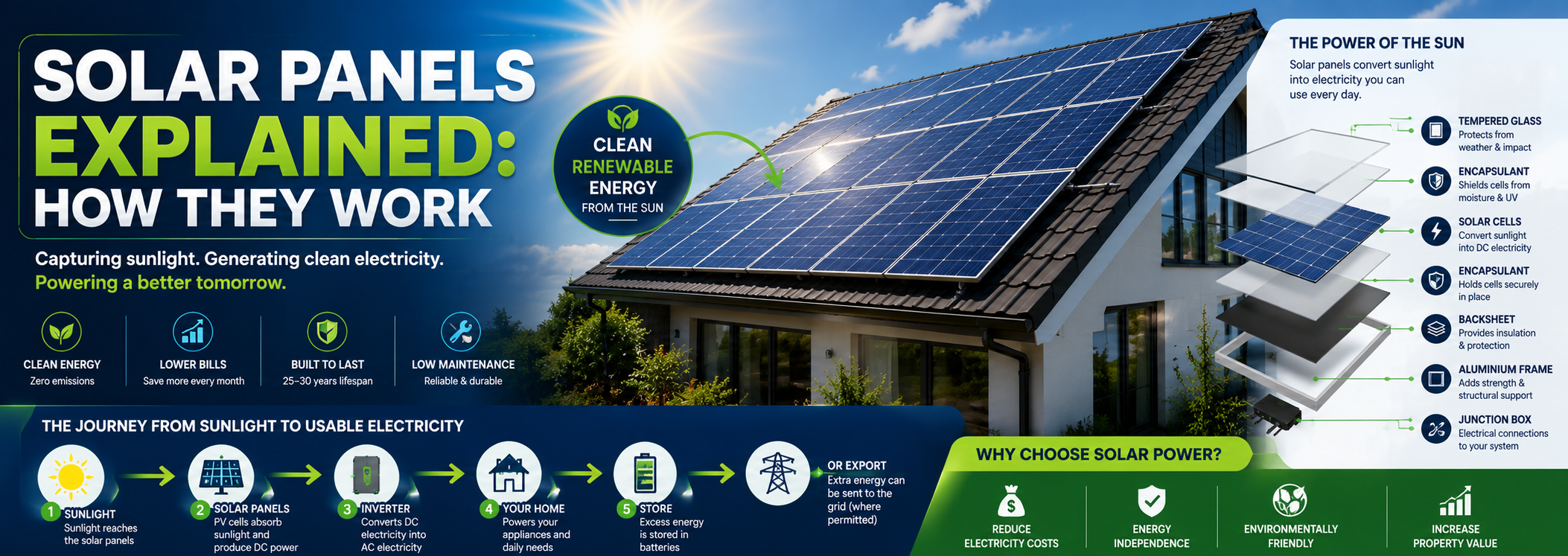
Solar panels are the foundation of every solar power system. They capture sunlight and convert it into direct current (DC) electricity, providing a clean and renewable energy source for homes, businesses, and industrial facilities. When paired with an inverter and, in some cases, battery storage, solar panels can significantly reduce electricity costs and improve energy independence.
Understanding how solar panels work will help you choose the right system for your energy needs.
What Are Solar Panels?
A solar panel is a device made up of multiple photovoltaic (PV) cells that convert sunlight into electricity. Manufacturers connect these cells together and protect them with tempered glass, a durable aluminium frame and weather-resistant materials.
Because they contain no moving parts, solar panels operate quietly and require very little maintenance.
The Main Components of a PV Module
Each solar panel contains several important components that work together to generate electricity.
Photovoltaic Cells
PV cells are the heart of the panel. They absorb sunlight and produce direct current (DC) electricity.
Tempered Glass
A layer of high-strength tempered glass protects the solar cells from hail, rain, wind and debris while allowing sunlight to pass through.
Encapsulant Layers
These protective layers hold the solar cells securely in place and shield them from moisture and environmental damage.
Aluminium Frame
The frame provides structural strength and allows installers to mount the panel securely on roofs or ground-mounted structures.
Junction Box
The junction box contains electrical connections that transfer the electricity generated by the panel to the rest of the solar system.
How Solar Panels Generate Electricity
The process begins when sunlight reaches the photovoltaic cells.
Step 1: Sunlight Strikes the Cells
Photons from sunlight hit the silicon cells inside the panel.
Step 2: Electrons Begin to Move
The absorbed energy excites electrons within the silicon, creating an electrical current.
Step 3: DC Electricity Is Produced
The moving electrons generate direct current (DC), which flows through the panel’s electrical circuits.
Step 4: The Electricity Flows to the Inverter
The generated DC electricity travels to the inverter, where it is converted into alternating current (AC) for everyday use.
Factors That Affect Panel Performance?
Several factors affect how much electricity a panel can generate.
Sunlight Intensity
More direct sunlight produces more electricity.
Panel Orientation
Correct positioning helps maximise energy production throughout the day.
Tilt Angle
The correct tilt allows panels to capture more sunlight across different seasons.
Shade
Even partial shading from trees, buildings or chimneys can reduce power output.
Temperature
Although panels need sunlight, excessive heat can slightly reduce their efficiency.
Panel Quality
High-quality solar panels generally offer higher efficiency, better durability and longer warranties.
Benefits of Installing Solar Panels
Installing solar panels offers many long-term benefits.
These include:
- Lower monthly electricity bills
- Clean renewable energy
- Reduced dependence on the utility grid
- Quiet operation
- Minimal maintenance
- Long operational lifespan
- Increased property value
- Lower carbon emissions
As electricity prices continue to rise, many homeowners and businesses choose solar panels as a long-term investment.
Expected Lifespan of PV Modules
Modern solar panels are designed for long-term performance.
Most quality panels continue producing electricity for 25 to 30 years or longer. Although their efficiency gradually declines over time, they continue generating usable electricity for decades.
Regular inspections and occasional cleaning help maintain optimal performance.
Where PV Systems Are Used
Solar panels are suitable for many different applications.
These include:
- Residential homes
- Office buildings
- Factories
- Farms
- Schools
- Hospitals
- Shopping centres
- Water pumping systems
- Remote off-grid locations
Frequently Asked Questions
Do solar panels work on cloudy days?
Yes. Solar panels still generate electricity during cloudy weather, although production is lower than on bright sunny days.
Do solar panels need direct sunlight?
Direct sunlight produces the highest output. However, panels can still generate electricity from indirect and diffused sunlight.
Can hail damage solar panels?
Most quality solar panels use tempered glass designed to withstand normal hail and harsh weather conditions.
Do solar panels require regular maintenance?
Very little. Cleaning the panels when necessary and performing periodic inspections are usually enough to keep them operating efficiently.
Conclusion
Solar panels are the foundation of every photovoltaic system, converting sunlight into clean electricity for homes and businesses. By selecting high-quality PV modules and installing them correctly, property owners can reduce electricity costs, improve energy independence, and benefit from reliable renewable energy for decades.