Currently Empty: R0.00

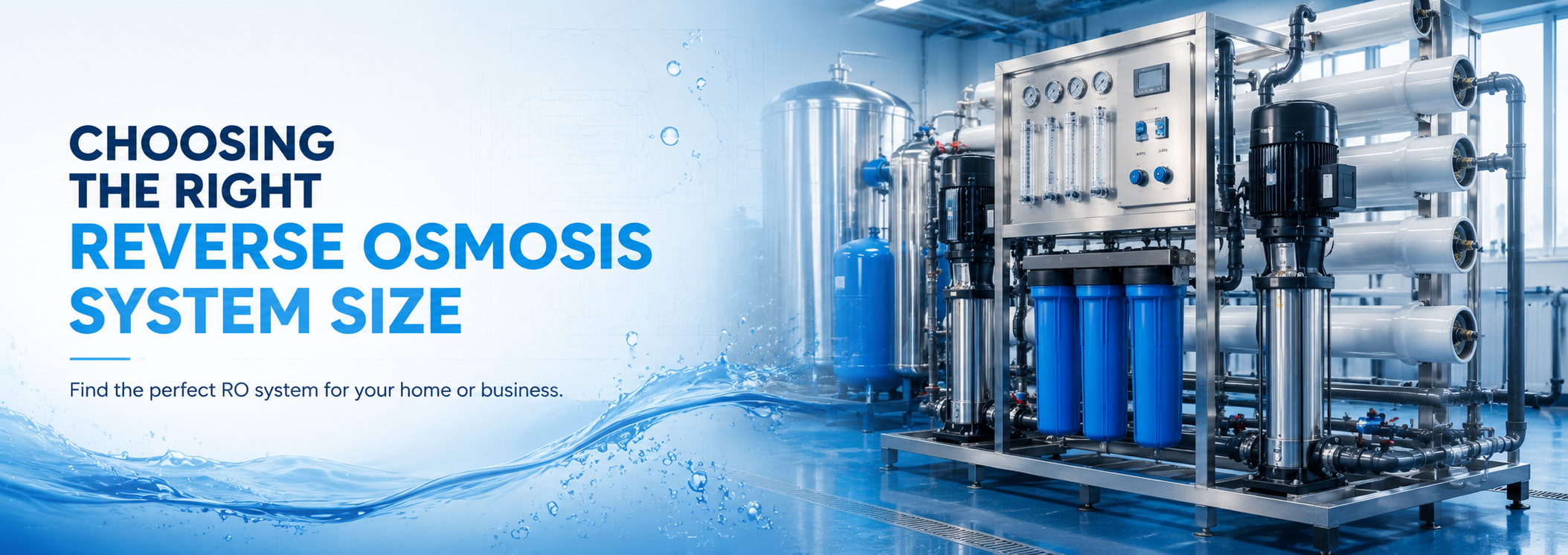
Reverse Osmosis System Size: How to Choose the Right Capacity
Choosing the correct reverse osmosis system size is one of the most important decisions when investing in a commercial or industrial water treatment solution. A system that is too small may struggle to meet demand, while an oversized system can increase installation, operating and maintenance costs unnecessarily.
Whether you operate a water shop, restaurant, factory, school, hotel or healthcare facility, understanding how to determine the correct reverse osmosis system size will help ensure reliable performance and long-term efficiency.
Why Reverse Osmosis System Size Matters
The reverse osmosis system size directly affects how much purified water your business can produce each day.
Selecting the correct capacity helps to:
- Meet daily water demand
- Reduce downtime
- Improve operational efficiency
- Protect equipment
- Lower operating costs
- Allow for future business growth
A properly sized system delivers consistent water quality while reducing unnecessary energy and maintenance expenses.
Step 1: Calculate Your Daily Water Demand
The first step in choosing the correct reverse osmosis system size is estimating how much purified water your business uses each day.
Consider:
- Drinking water
- Food preparation
- Production processes
- Cleaning
- Equipment supply
- Ice machines
- Coffee machines
- Bottling operations
Daily demand is normally measured in:
- Litres per day (LPD)
- Gallons per day (GPD)
Example
A small water shop produces:
- 250 bottles × 20 litres per day
Daily demand:
250 × 20 = 5,000 litres per day
The reverse osmosis system should comfortably produce more than this amount.
Step 2: Consider Peak Water Usage
Many businesses do not use water evenly throughout the day.
Peak demand often occurs during:
- Morning production
- Lunch service
- Shift changes
- High customer traffic
Your reverse osmosis system size should accommodate these periods without reducing water quality or pressure.
Step 3: Evaluate Your Incoming Water Quality
Incoming water quality affects system performance.
Factors include:
- Total Dissolved Solids (TDS)
- Hardness
- Iron
- Manganese
- Chlorine
- Turbidity
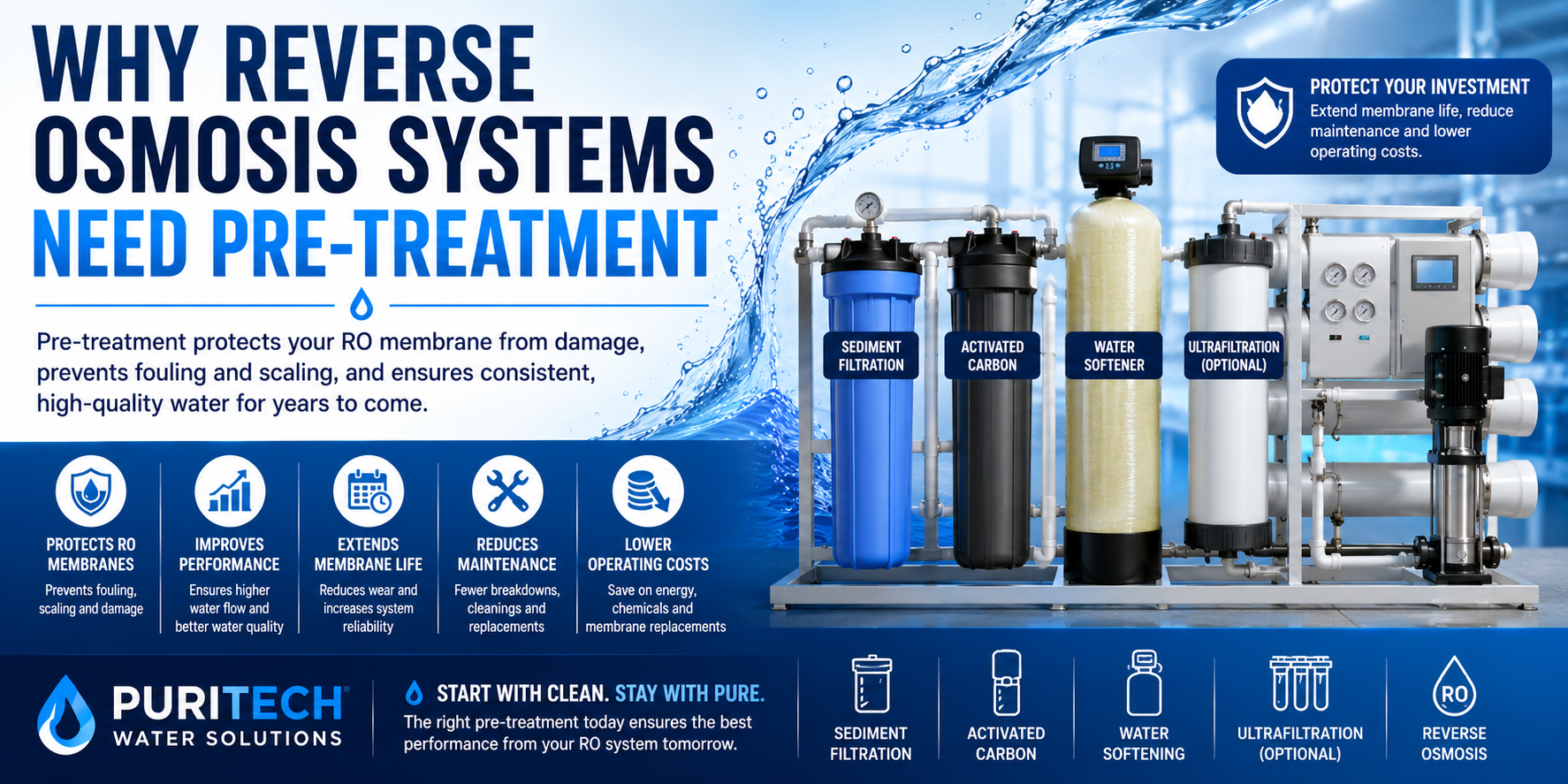
Poor water quality may require additional pre-treatment before reverse osmosis.
Professional water testing is recommended before selecting a system.
Step 4: Understand Recovery Rate
Not all incoming water becomes purified water.
Reverse osmosis systems produce:
- Permeate (purified water)
- Concentrate (reject water)
Recovery rate depends on system design and water quality.
For example:
If a system operates at a 70% recovery rate:
- 100 litres entering the system
- 70 litres become purified water
- 30 litres become concentrate
Recovery should be considered when determining the required reverse osmosis system size.
Step 5: Choose the Right Storage Capacity
Many commercial systems include purified water storage tanks.
Storage helps:
- Meet peak demand
- Reduce pump cycling
- Provide reserve capacity
- Improve system efficiency
The storage tank should match the expected daily water usage.
Step 6: Allow for Business Growth
When calculating your reverse osmosis system size, think beyond today’s requirements.
Ask yourself:
- Will production increase?
- Will additional equipment be installed?
- Will more staff be employed?
- Will customer demand grow?
Allowing room for expansion can avoid costly upgrades later.
Typical Reverse Osmosis System Sizes
The correct reverse osmosis system size depends on the application.
| Application | Typical Capacity |
|---|---|
| Home drinking water | 50–400 GPD |
| Small office | 400–1,000 GPD |
| Coffee shop | 500–1,500 GPD |
| Restaurant | 1,000–2,000 GPD |
| Water shop | 1,000–8,000+ GPD |
| Hotel | 2,000–10,000+ GPD |
| Factory | Custom-designed |
| Hospital | Custom-designed |
Actual sizing should always be based on water demand and water quality.
Industries That Need Correct Reverse Osmosis System Size
A properly selected reverse osmosis system size is essential for many industries.
Water Shops
Reliable production is critical for supplying purified drinking water.
Restaurants and Cafés
Consistent water quality improves:
- Coffee
- Tea
- Ice
- Soft drinks
- Food preparation
Manufacturing
Many manufacturing processes rely on purified water for consistent product quality.
Healthcare Facilities
Hospitals and clinics often require purified water for specialised equipment and hygiene applications.
Hotels
Hotels use purified water in kitchens, laundry facilities, and guest services.
Common Sizing Mistakes
Avoid these common errors when selecting a reverse osmosis system size.
Choosing the Cheapest System
Lower-capacity systems may not meet long-term business needs.
Ignoring Water Quality
Water quality affects membrane life, operating costs, and overall system performance.
Forgetting Future Expansion
Businesses often grow faster than expected.
Planning reduces future upgrade costs.
Skipping Professional Advice
Every installation is unique.
Professional water analysis and system design help ensure the correct solution.
Frequently Asked Questions
What does GPD mean?
GPD stands for Gallons Per Day, indicating how much purified water a reverse osmosis system can produce within 24 hours.
Can I oversize a reverse osmosis system?
A system that is significantly larger than your requirements may increase installation costs and reduce operating efficiency. The goal is to choose a system that comfortably meets current demand while allowing for reasonable future growth.
Does water quality affect system size?
Yes. High TDS, hardness, or other contaminants may require additional pre-treatment and can influence the final system design.
Should I include future expansion?
Yes. Planning for expected business growth can save money by reducing the need for major upgrades later.
Conclusion
Selecting the correct reverse osmosis system size ensures your business has a reliable supply of purified water while avoiding unnecessary operating costs and future limitations. By evaluating daily water demand, peak usage, water quality, storage requirements and business growth, you can choose a system that delivers dependable performance for years to come.
Puritech designs and supplies reverse osmosis systems for water shops, restaurants, hotels, factories, schools, hospitals and other commercial applications. Our team can help assess your water quality and recommend the ideal system for your operational requirements.