Currently Empty: R0.00

Commercial Water Filtration System: How to Choose the Right One
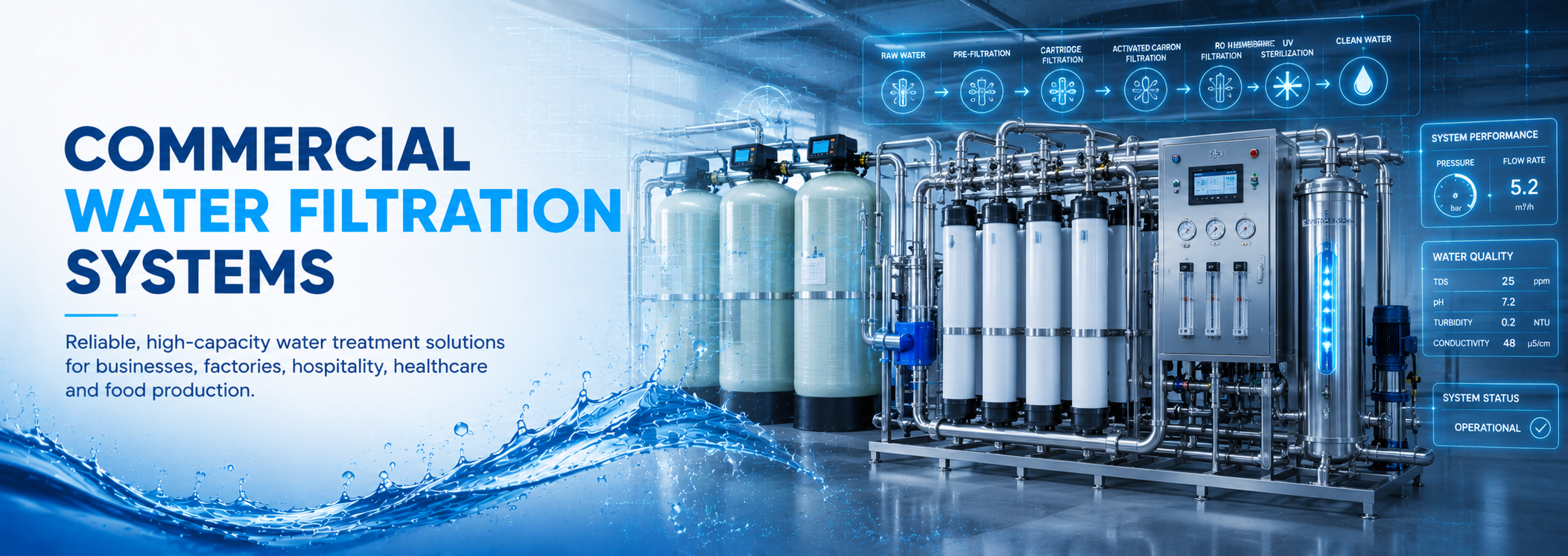
A commercial water filtration system is an essential investment for businesses that rely on clean, consistent water every day. Whether you operate a hotel, restaurant, factory, hospital, school or water shop, selecting the right system helps protect equipment, improve product quality, and reduce maintenance costs.
However, not every business has the same water requirements. Water quality, daily demand and the intended application all influence which commercial water filtration system will deliver the best results.
This guide explains the key factors to consider before investing in a commercial filtration solution.
What Is a Commercial Water Filtration System?
A commercial water filtration system is designed to treat larger volumes of water than a typical residential system. It removes contaminants that can affect water quality, equipment performance and production processes.
Commercial systems are commonly installed in:
- Restaurants
- Hotels
- Schools
- Hospitals
- Manufacturing facilities
- Food processing plants
- Water bottling businesses
- Office buildings
Unlike domestic filters, commercial systems are built for continuous operation and higher flow rates.
Why Businesses Need a Commercial Water Filtration System
Installing the correct commercial water filtration system offers several important benefits.
These include:
- Improved water quality
- Better tasting drinking water
- Protection for plumbing and equipment
- Lower maintenance costs
- Increased equipment lifespan
- Consistent production quality
- Compliance with water quality requirements
In many industries, clean water directly affects customer satisfaction and operational efficiency.
Start with a water analysis.
Before selecting any commercial water filtration system, test your water supply.
A professional water analysis identifies issues such as the following:
- High TDS
- Hardness
- Iron
- Manganese
- Chlorine
- Sediment
- Bacteria
- pH imbalance
These results determine the most suitable treatment process.
Understand Your Daily Water Demand
The size of the filtration system depends on how much water your business uses.
Consider:
- Number of employees
- Customer demand
- Production volumes
- Peak operating hours
- Future expansion
Oversized systems increase costs, while undersized systems may not meet demand.
Common Components of a Commercial Water Filtration System
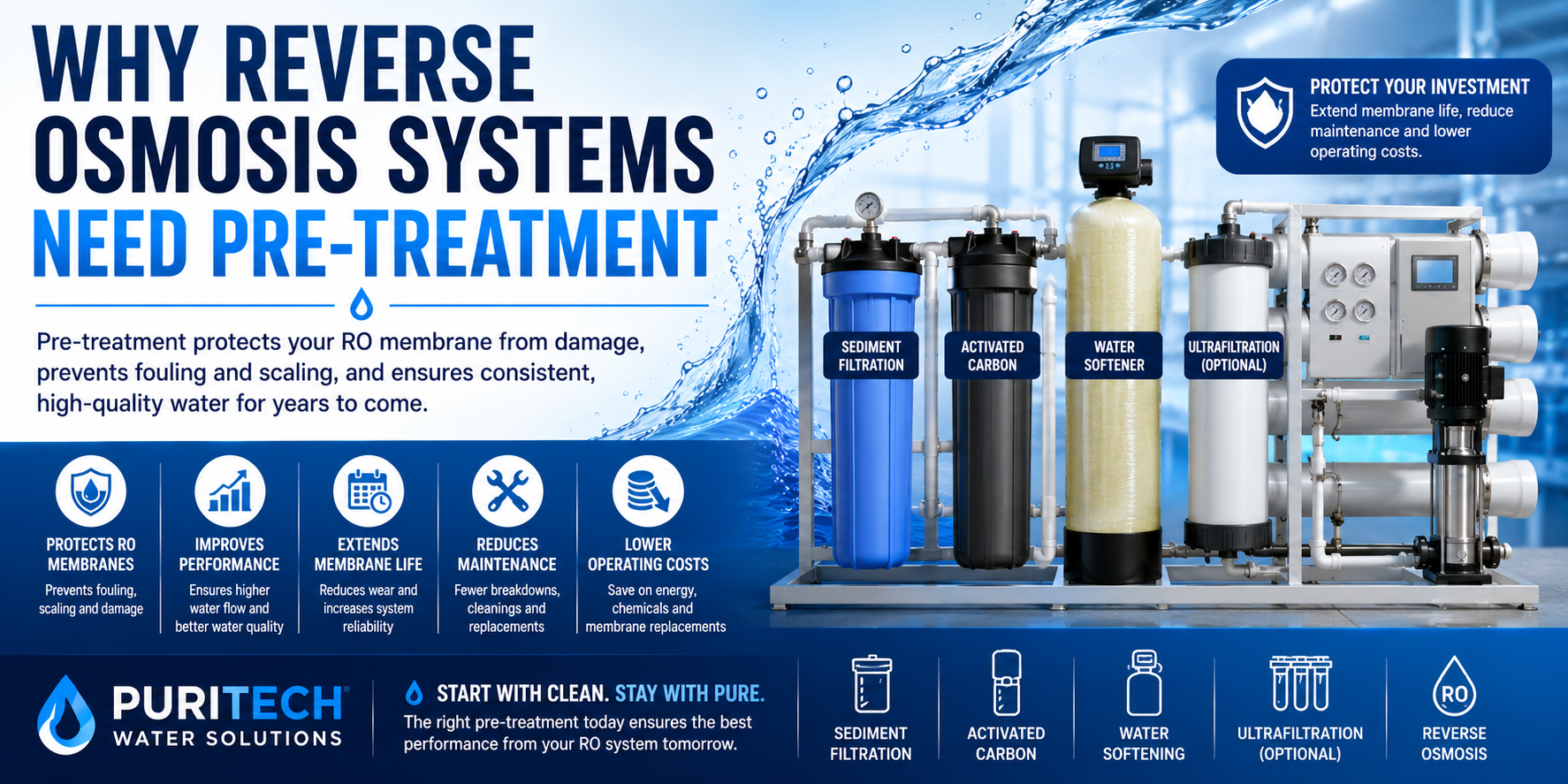
Most systems combine several treatment stages.
Sediment Filtration
The first stage removes:
- Sand
- Rust
- Dirt
- Silt
This protects downstream equipment.
Activated Carbon Filtration
Carbon filters reduce the following:
- Chlorine
- Taste
- Odours
- Organic compounds
This stage improves overall water quality.
Water Softening
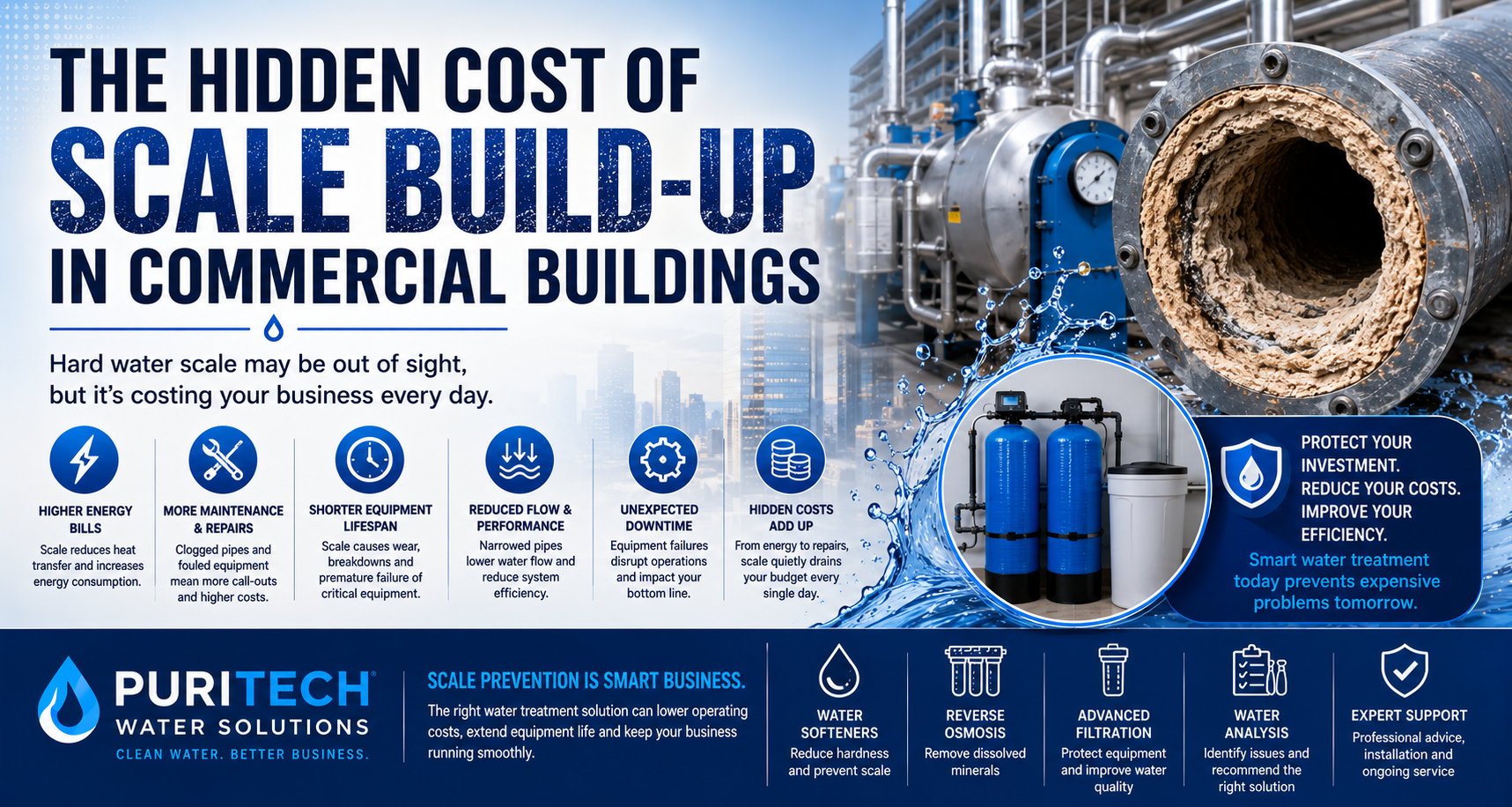
If hard water is present, a softener helps prevent limescale from damaging equipment.
Reverse Osmosis
Reverse osmosis removes many dissolved minerals and contaminants, making it ideal for applications requiring high-purity water.
UV Sterilisation
UV systems disinfect water by neutralising harmful microorganisms without adding chemicals.
Choosing the Right Flow Rate
Flow rate is one of the most important design considerations.
Your commercial water filtration system should supply enough treated water during peak demand without affecting pressure or performance.
Professional system sizing helps ensure reliable operation.
Industries That Benefit from Commercial Filtration
Many sectors depend on high-quality water.
Hospitality
Hotels and restaurants require clean water for cooking, beverages, ice production, and guest facilities.
Healthcare
Hospitals and clinics rely on treated water for hygiene and specialised equipment.
Manufacturing
Many production processes require consistent water quality to maintain product standards.
Education
Schools need safe drinking water for students and staff.
Water Retail
Water shops depend on reliable purification systems to produce high-quality drinking water every day.
Maintaining Your Commercial Water Filtration System
Routine maintenance helps maximise performance.
Recommended tasks include:
- Replacing filter cartridges
- Monitoring water pressure
- Testing water quality
- Cleaning membranes
- Servicing pumps
- Inspecting valves and fittings
Preventative maintenance reduces unexpected downtime.
Common Mistakes to Avoid
Avoid these common errors when selecting a filtration system.
Buying Based on Price Alone
The cheapest system may not meet your operational requirements.
Ignoring Water Testing
Choosing equipment without testing your water can lead to poor performance and unnecessary expenses.
Forgetting Future Growth
Allow capacity for increased water demand as your business expands.
Skipping Regular Maintenance
Even the best system requires scheduled servicing to operate efficiently.
Frequently Asked Questions
Can one commercial filtration system remove every contaminant?
Most installations combine multiple treatment stages because different contaminants require different filtration technologies.
How often should commercial filters be replaced?
Replacement intervals depend on water quality, system design and water consumption.
Does every business need reverse osmosis?
No. Reverse osmosis is only necessary when high-purity water is required or when dissolved contaminants must be reduced.
Why is water testing important before installation?
Water testing ensures the system is designed to treat the specific contaminants present in your water supply.
Conclusion
Choosing the right commercial water filtration system starts with understanding your water quality, daily demand and operational requirements. A properly designed system improves water quality, protects valuable equipment and helps your business operate more efficiently.
Puritech designs and supplies customised commercial water filtration systems for restaurants, hotels, factories, schools, hospitals, water shops and many other industries. Our team can help you select a solution that matches your water quality and business needs.