
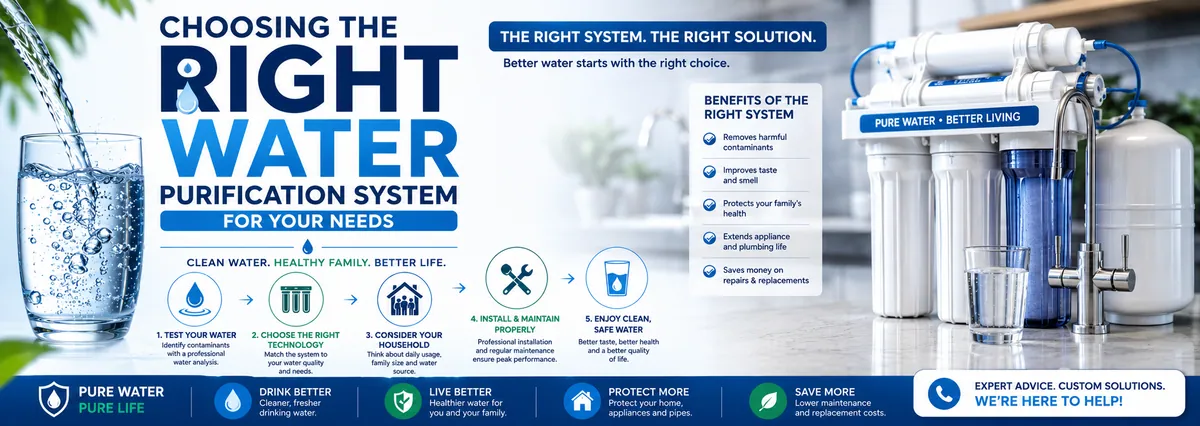
Choosing the Right Water Purification System for Your Needs
Clean, safe water is essential for every home and business. However, choosing the right water purification system can feel overwhelming because different water sources contain different contaminants. The right water purification system for one household may not be suitable for another. Therefore, understanding your water quality, daily water usage, and treatment goals is the first step towards selecting the right water purification system for your needs. Water testing is the most reliable way to determine which contaminants need to be removed before choosing a treatment solution.
Why Choosing the Right Water Purification System Matters
Every water source is unique. Municipal water, borehole water, rainwater, and well water all have different characteristics and may require different treatment methods.
As a result, selecting the wrong system may not solve your water quality issues. Instead, it could increase maintenance costs or reduce filtration performance. Fortunately, a professional water analysis makes it much easier to select the correct solution.
Start with a Professional Water Analysis
Before purchasing any filtration equipment, you should understand exactly what is in your water.
A professional water analysis can identify:
- Water hardness
- Sediment
- Iron and manganese
- Chlorine
- Total dissolved solids (TDS)
- pH levels
- Bacteria
- Other contaminants
Once you know your water quality, choosing the right water purification system becomes much simpler.
Consider Your Water Source
The source of your water plays a major role in determining the best treatment solution.
Municipal Water
Municipal water is generally treated before reaching your home. However, it may still contain chlorine, sediment, or dissolved minerals that affect taste and quality.
Common treatment options include:
- Activated carbon filters
- Sediment filters
- Reverse osmosis systems
Borehole Water
Borehole water often contains higher levels of minerals, iron, manganese, bacteria, and sediment.
Therefore, borehole water usually requires a combination of filtration technologies, such as:
- Sediment filtration
- Iron removal systems
- Water softeners
- UV sterilisers
- Reverse osmosis systems
Rainwater
Rainwater is naturally soft. However, it may collect dirt, leaves, bacteria, and other contaminants during storage.
A suitable treatment system may include:
- Sediment filtration
- Activated carbon filtration
- UV sterilisation
Match the System to Your Water Quality
Choosing the right water purification system means matching the technology to the contaminants present.
Sediment Filters
Sediment filters remove:
- Sand
- Rust
- Dirt
- Silt
As a result, they protect plumbing and extend the lifespan of other filter cartridges.
Activated Carbon Filters
Carbon filters help reduce:
- Chlorine
- Bad tastes
- Unpleasant odours
- Organic compounds
Consequently, drinking water tastes cleaner and fresher.
Reverse Osmosis Systems
Reverse osmosis (RO) systems remove many dissolved contaminants, including:
- Salts
- Heavy metals
- Nitrates
- Fluoride
- Many other dissolved impurities
Therefore, RO systems are ideal when high-quality drinking water is required.
Water Softeners
Hard water contains calcium and magnesium that cause scale build-up.
Water softeners help:
- Reduce hardness
- Protect appliances
- Improve soap performance
- Extend plumbing life
UV Sterilisers
UV systems destroy harmful microorganisms without using chemicals.
They are particularly useful for:
- Borehole water
- Well water
- Rainwater
- Homes concerned about bacteria
UV treatment is most effective when used after sediment filtration.
Consider Your Daily Water Usage
Water demand is another important factor.
Ask yourself:
- How many people live in your home?
- How much water do you use each day?
- Do you need drinking water only?
- Do you want whole-house filtration?
For example, a small under-sink RO system may be sufficient for drinking water. On the other hand, a large family may benefit from a whole-house filtration system.
Think About Installation and Maintenance
Every purification system requires routine maintenance.
Consider:
- Filter replacement frequency
- Membrane lifespan
- UV lamp replacement
- Water softener regeneration
- Annual servicing
Regular maintenance keeps your system operating efficiently while maintaining water quality.
Consider Long-Term Value
Although the purchase price is important, long-term operating costs should also be considered.
A quality water purification system often provides:
- Lower maintenance costs
- Better water quality
- Longer equipment lifespan
- Improved appliance protection
- Greater reliability
Therefore, investing in quality equipment usually delivers better value over time.
Why Choose Puritech?
Puritech designs customised water purification systems for residential, commercial, and industrial applications. Every solution is based on a professional water analysis to ensure reliable performance and effective contaminant removal.
Our solutions include:
- Reverse osmosis systems
- Whole-house filtration systems
- Water softeners
- UV sterilisers
- Sediment filters
- Activated carbon filters
- Replacement filter cartridges
Furthermore, our experienced team provides professional installation, servicing, and ongoing maintenance to keep your system operating at peak performance.
Conclusion
Choosing the right water purification system begins with understanding your water quality and treatment requirements. Whether you use municipal water, borehole water, or rainwater, selecting the correct filtration technology ensures cleaner, safer, and better-tasting water.
If you’re unsure which solution is best for your home or business, contact Puritech today. Our experts will analyse your water and recommend the ideal purification system for your specific needs.