Currently Empty: R0.00

Water Chlorination for Safe Drinking Water
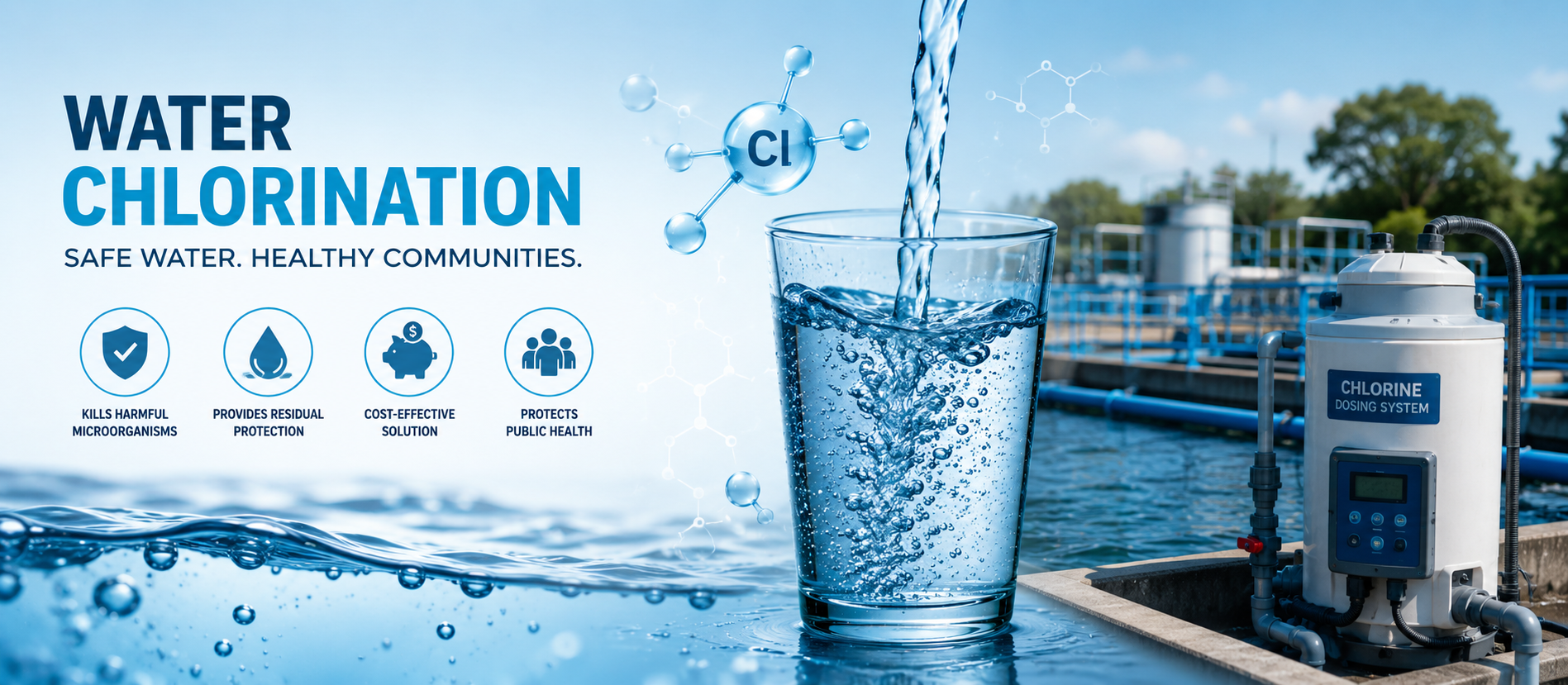
Water chlorination is one of the most effective ways to disinfect drinking water and protect people from harmful microorganisms. By adding carefully controlled amounts of chlorine, water treatment systems can eliminate bacteria, viruses, and other disease-causing organisms. As a result, this proven process continues to play an essential role in residential, commercial, municipal, and industrial water treatment.
Puritech supplies reliable treatment equipment and expert advice to help customers maintain safe, high-quality water through effective chlorine-based disinfection.
Understanding Chlorination in Water Treatment
Chlorination in water treatment involves adding chlorine or chlorine compounds to water to destroy harmful microorganisms.
First, chlorine is introduced into the water supply. Next, it reacts with contaminants and begins destroying bacteria and viruses. Finally, a small residual amount of chlorine remains in the water to provide ongoing protection while it moves through storage tanks and distribution systems.
Because of this lasting protection, chlorine remains one of the world’s most widely used water disinfectants.
Why Chlorine Is Used for Water Disinfection
Chlorine helps improve water quality by destroying many microorganisms that can cause illness.
It is highly effective against:
- Bacteria
- Viruses
- E. coli
- Salmonella
- Cholera-causing bacteria
- Many other harmful pathogens
Consequently, treated water becomes much safer for drinking, food preparation, and many industrial processes.
Benefits of Chlorine Water Treatment
Chlorine water treatment offers several advantages that make it a popular choice across many industries.
Reliable Protection
Firstly, chlorine destroys harmful microorganisms quickly and effectively. Therefore, it significantly reduces the risk of waterborne diseases.
Residual Disinfection
In addition, chlorine continues protecting water after treatment by maintaining a disinfectant residual throughout storage and distribution systems.
Affordable Operation
Compared with many alternative treatment methods, chlorine dosing systems are economical to install and operate. As a result, they are suitable for both small and large facilities.
Proven Performance
For more than a century, chlorine has helped improve drinking water safety around the world. Furthermore, modern dosing systems make accurate application simple and reliable.
Common Applications
This disinfection method is widely used in many industries.
Typical applications include the following:
- Municipal drinking water
- Borehole water treatment
- Hotels
- Hospitals
- Food processing plants
- Schools
- Commercial buildings
- Agriculture
- Manufacturing facilities
- Water storage tanks
Moreover, many treatment systems combine chlorine dosing with filtration, ultraviolet sterilization, or reverse osmosis for even better water quality.
Combining Chlorination with Other Treatment Systems
Although chlorine is highly effective against microorganisms, it does not remove every contaminant.
Therefore, many complete water treatment systems also include the following:
- Sediment filters
- Activated carbon filters
- Water softeners
- Reverse osmosis systems
- UV sterilisers
- Ozone generators
Together, these technologies provide comprehensive treatment while improving the appearance, taste, and quality of drinking water.
Selecting the Correct Chlorine Dosing System
Every water supply has different treatment requirements.
Several factors influence the correct dosing system, including:
- Water quality
- Flow rate
- Contact time
- Organic content
- Storage capacity
- Intended water use
Before selecting equipment, a professional water analysis should always be performed. This helps ensure the correct treatment solution is installed.
Maintaining Your Water Treatment Equipment
Routine maintenance helps maintain consistent water quality.
Maintenance should include:
- Monitoring chlorine levels
- Inspecting dosing pumps
- Cleaning injection equipment
- Checking storage tanks
- Replacing worn components
- Performing regular water testing
Likewise, preventative maintenance improves reliability while extending equipment life.
Why Choose Puritech?
Since 2006, Puritech has supplied professional water treatment solutions across South Africa.
Our products include:
- Chlorine dosing systems
- Reverse osmosis plants
- UV sterilisers
- Water softeners
- Carbon filters
- Sediment filters
- Industrial treatment systems
In addition, our experienced team provides technical support, installation guidance, and customized treatment recommendations based on your water quality requirements.
Frequently Asked Questions
What is water chlorination?
Water chlorination is the process of adding chlorine to water to destroy bacteria, viruses, and other harmful microorganisms, making the water safer to use.
Why is chlorine added to drinking water?
Chlorine protects drinking water by disinfecting it and providing ongoing protection while the water moves through storage tanks and pipelines.
Can chlorine remove all contaminants?
No. Chlorine disinfects water but does not remove dissolved salts, heavy metals, or certain chemicals. Additional treatment technologies may be required.
Is chlorine safe when used correctly?
Yes. When applied at the recommended dosage, chlorine is a safe and effective method of protecting drinking water.
Conclusion
Water chlorination remains one of the most dependable methods of producing safe drinking water. By combining effective chlorine dosing with suitable filtration and routine water quality testing, homes, businesses, and industries can maintain a reliable supply of clean water.
Whether you require a simple dosing system or a complete treatment solution, Puritech provides dependable equipment, expert advice, and ongoing support to help you achieve the highest water quality standards.